The scrapping of Mana Whakahono ā Rohe agreements, explained

Minister for RMA reform Chris Bishop. (Design: The Spinoff).
As part of its RMA reform, the government is telling councils to cut landmark deals with iwi authorities, replacing them with more narrow agreements. What does that mean for treaty settlements?
Mana Whakahono ā Rohe agreements, which specify how local councils and iwi authorities collaborate on resource management, are being scrapped. On Monday, minister for RMA reform Chris Bishop and prime minister Chris Luxon said they were amending the twin bills set to replace the Resource Management Act, which will soon have their second reading, so existing agreements would not be carried over into the new regime. The decision has been welcomed by critics like Federated Farmers and the Taxpayers’ Union, while iwi and other supporters of the agreements are condemning the move.
But there’s a wider issue at play, with some alleging the scrapping of the agreements potentially allow for the relitigation of treaty settlements – the cost of which could be astronomical.
What are Mana Whakahono ā Rohe agreements?
Mana Whakahono ā Rohe agreements were created in 2017 as formal, binding statutory arrangements under the Resource Management Act 1991. They specify how local councils and iwi authorities collaborate on resource management, setting clear processes for planning, sharing information and reflecting te Tiriti o Waitangi obligations, while leaving final decision-making powers with elected council members.
Although the agreements are broader mechanisms for general resource management engagement, planning and decision-making between iwi authorities and councils, several Mana Whakahono ā Rohe agreements also cover how councils give effect to treaty settlement obligations.
How so?
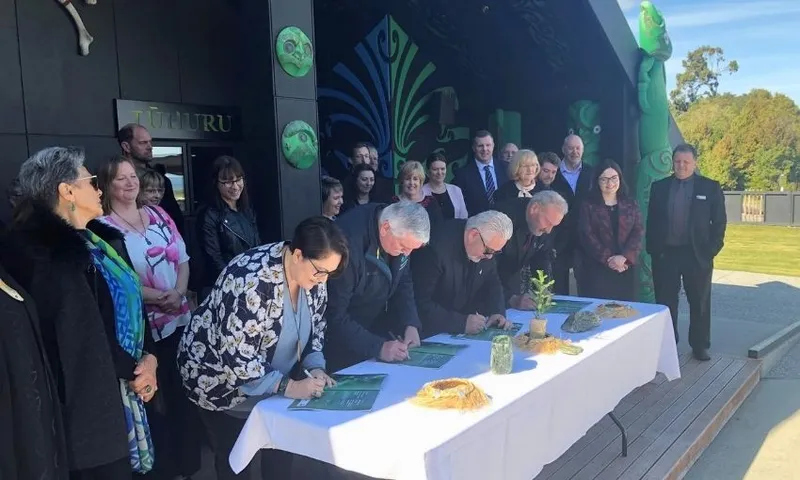
One example is the Mana Whakahono ā Rohe agreement between settled entity Ngāti Tūrangitukua and the Taupō District Council, signed in 2022. It was agreed between the parties after extensive discussion and negotiation, and reflected a provision in the Ngāti Tūrangitukua Deed of Settlement for the council and iwi to have a stronger partnership-based relationship. “The agreement will reflect the council’s desire to give effect to the Treaty of Waitangi principles of partnership, participation and protection in our services, activities and planning work,” says the council’s website.
What are the benefits of these agreements, according to supporters?
Supporters of the agreements argue they provide an explicit and practical list of ways in which local authorities can give effect to settlement obligations – something that has historically been lacking.
In practical terms, these agreements can cover anything from cultural impact assessments being provided for significant projects and resource consent applications to input into the development of policies, co-design of community infrastructure, reserve management, etc.
Why are they being scrapped?
The initial versions of the Planning Bill and Natural Environment Bill allowed for existing or initiated Mana Whakahono ā Rohe agreements to be carried over into the new RMA system, while not allowing for any new ones to be entered into once the new framework was in effect. When the bills came back from select committee earlier this week, the government announced that as well as making the changes recommended by the Environment Committee, it was further amending the bills so that existing and initiated Mana Whakahono ā Rohe agreements would not be carried over.
“Since the bills were introduced, we have become concerned about the rapid increase in new agreements and initiated processes between councils and iwi,” said Bishop in a press release on Monday. “Eight existed when the bills were introduced late last year. Since then, several dozen more have been agreed or initiated.”
Who is opposed to the agreements and why?
Vocal critics such as the Taxpayers’ Union and Federated Farmers, who lobbied for the change, say the agreements “override democratic decision-making”, representing “another layer of consultants, planners, lawyers and reports added to an already broken resource management system”.
Act Party leader David Seymour told media the government’s decision to scrap the agreements was “acting in good faith to all the other New Zealanders who expect to be treated as equals with equal rights before the law”.
Are they being replaced with anything?
In the press release, Bishop said councils would instead have the option of entering “narrowly scoped iwi participation agreements to record how iwi authorities will participate in statutory planning processes and processes required to give effect to Treaty settlement redress… Clear guardrails will be included in the legislation to prevent scope creep.”
With detail lacking on the new agreements, it’s unclear how they will differ from Mana Whakahono ā Rohe agreements, but Bishop told reporters “the agreements are a way of essentially putting in place a mechanism for how treaty settlement obligations are given effect to”, and said the change was about “streamlining and simplifying what that looks like in practice”.
So treaty settlement obligations will be upheld?
The government says yes. In parliament on Tuesday, asked by Te Pāti Māori co-leader Rawiri Waititi “how can we trust that Te Tiriti o Waitangi settlements will not be breached by his government’s RMA reforms?”, prime minister Christopher Luxon responded “because we will uphold our obligations under the law”.
But some have doubts. Labour leader Chris Hipkins said a potential flow-on effect was the relitigation of already settled treaty claims. This could lead to taxpayers being forced to stump up millions for legal challenges. “They’re potentially reopening treaty settlements that were long ago settled. And I think that’s a huge problem for the country,” Hipkins told RNZ.
Kaupapa Māori environment consultant Tina Porou shared a similar settlement, telling Te Ao Māori News the move represented an “outrageous renegotiation of treaty settlements… The government is expecting that there will be a two-year negotiation with settled iwi to essentially reopen their treaty settlements and have discussions over their engagement and participation in the resource management system.”
Tomairangi Mareikura, chair of Ngāti Rangi post-settlement entity Te Tōtarahoe o Paerangi, told the Waikato Times the move was “another disillusioning blow to the treaty relationship when the Crown fails to uphold the commitments and responsibilities that it has entered into with iwi”.
But aren’t treaty settlements full and final?
No parliament can bind a future parliament: to do so would be ultra vires or acting beyond its powers. This is why no settlement is ever full or final. The scrapping of Mana Whakahono ā Rohe agreements, particularly those relating directly to treaty settlement legislation, highlights the fluid nature of treaty settlement legislation.
While a Ngāpuhi settlement remains elusive for now, it is widely considered the last major treaty settlement outstanding. There are concerns a deterioration of the Crown-Māori relationship and backtracking of agreements contained within treaty settlements could open the gates once again for renegotiation.
Have any other government moves sparked fears of treaty settlements being breached?
There have been ongoing efforts to repeal two seats on Environment Canterbury allocated to Ngāi Tahu under its treaty settlement legislation. Despite being an agreement in the National-Act coalition deal, the government has been forced to concede that it will be unable to follow through with the request due to a legal technicality.
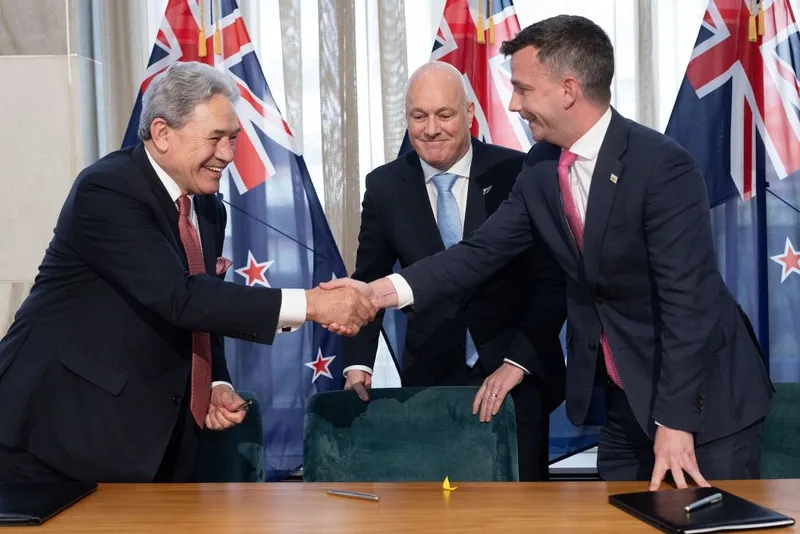
However, this technicality will likely be overridden by the abolition of regional council authorities. The ongoing reform of local authorities means several settled entities will be forced into new negotiations with new-look local authorities.
Would renegotiation be expensive?
Yes. According to a report published in April 2025 by the Audit Office, a total of $2.74 billion had been paid in treaty settlement redress. This did not include the legal and administrative costs involved with litigation, or account for the fact a substantial amount of the financial redress is returned to the Crown when settled entities purchase land back.
What happens next?
The amended Planning Bill and Natural Environment Bill now await their second reading, with the government aiming to pass the bills before parliament rises on October 1, 2026 for the election.

Liam Rātana
Liam Rātana (Ngāti Wairupe/Ngāti Kurī) is editor of The Spinoff's Ātea section. He is passionate about indigenous and minority issues. Liam enjoys cooking, poetry, photography, and exploring the outdoors.


