The battle for Te Tai Tokerau: Four candidates, one seat and a Māori political split

The race for Te Tai Tokerau is shaping up to be one of the most interesting battles this election. (Design: Emily Wong / The Spinoff).
Mariameno Kapa-Kingi’s split from Te Pāti Māori has blown open the race for the country’s northernmost Māori electorate. Could Labour, the Greens or her former party come through the middle?
Three years ago, I successfully predicted a groundswell of support for Te Pāti Māori at the general election in the face of growing anti-Māori rhetoric from the political right. The party went on to win all but one of the Māori seats, including the dethroning of Kelvin Davis in Te Tai Tokerau by Mariameno Kapa-Kingi.
In the lead up to the election, Davis – who was then deputy leader of the Labour Party – said he would resign if he failed to retain the electorate, which he had held for nine years. True to his word, Davis resigned from parliament in November 2023 after losing to Kapa-Kingi by just 517 votes – a margin of less than 2%.
Despite Davis’s defeat, Labour won a majority of the party vote in the electorate, attracting 44% compared to Te Pāti Māori, who won 27%. The Green Party managed to win just less than 10% of party votes cast in Te Tai Tokerau, with its candidate Hūhana Lyndon amassing 15% of candidate votes.
Kapa-Kingi has been at the centre of much political controversy this term, being booted from Te Pāti Māori after a much-publicised falling out with the party’s leadership last year, particularly party president John Tamihere. Kapa-Kingi subsequently launched her own political party, Te Tai Tokerau Party, with former Te Pāti Māori Te Tai Tokerau electorate chair Kyla Campbell-Kamariera recently named as the party’s sole list candidate.
Stepping in to fill the void left by Davis and hoping to reclaim the seat for the Labour Party is former Northland MP Willow-Jean Prime, who currently serves as a list MP for Labour and is going into this election at seven on the list. Prime holds a high profile in the electorate, having been born and raised in the mid-North, particularly Moerewa and nearby Kawakawa. Prior to current Far North District mayor Moko Tepania being elected to council in 2019, Prime was the youngest ever Far North District councillor, having first been elected in 2013 at 30 years old.
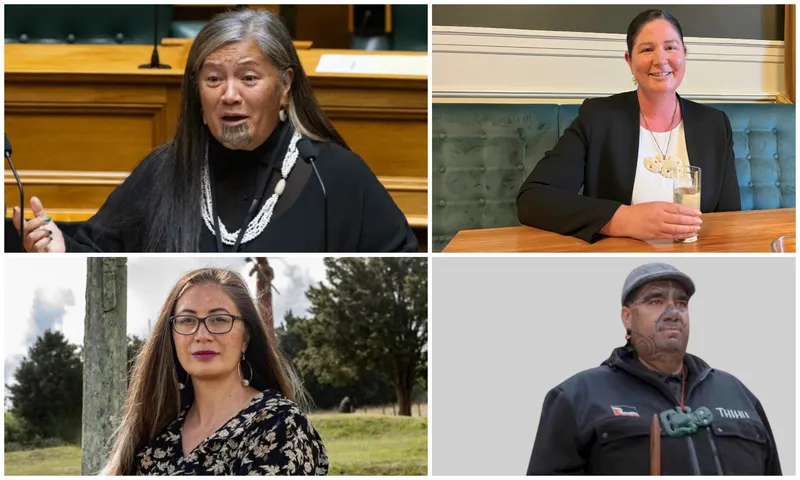
Lyndon is once again hoping to claim the seat for the Greens, having spent the past three years as a list MP for the party. Jokingly known as “Huihana” around the electorate, Lyndon has become renowned for showing up to many important hui around the motu. She has quickly risen through the party ranks in her maiden term, winning a place at seventh on the list for this election, effectively guaranteeing her a place in parliament regardless of the electorate result.
Rounding out the Te Tai Tokerau candidates is political newcomer Aperahama Edwards – the only contender without any experience as a member of parliament. However, Edwards is certainly not lacking in political experience, having served as chair of Ngātiwai iwi (alongside Lyndon, who was chief executive) for the last six years. He famously removed the microphone twice during David Seymour’s speech at Waitangi last year, receiving applause from some and criticism from others. Edwards could be a dark horse in the race, given his high profile in the urban centre of Whangārei and Te Pāti Māori’s success in the last election.
With Lyndon and Prime both holding high placings on their respective party lists, effectively guaranteeing them a return to parliament regardless of the electorate results, there is a chance for Te Tai Tokerau voters to think strategically this election. Te Pāti Māori has already called for electorate votes only, hoping to cause an overhang in parliament. With Te Tai Tokerau party also in the running, there is the potential for it to take two MPs to parliament, should Kapa-Kingi win the electorate vote and the party win around 1.7% of the total party vote, which is approximately 49,000 votes based on the last election.
Independent Māori candidates and those who have split from larger parties have had mixed success in the past, particularly in the North. Former Northern Māori MP Matiu Rata resigned from the Labour Party in 1979 to launch the Mana Motuhake Party, which was mostly unsuccessful. Te Pāti Māori, formed by the late Tariana Turia in 2004 managed a political resurrection at the 2023 election, securing a record six seats. Former Te Tai Tokerau MP Hone Harawira split from Te Pāti Māori to form the Mana Movement in 2011, successfully regaining the seat in a by-election and general election later the same year.
On November 7, supporters of Kapa-Kingi and Te Pāti Māori will be forced to choose where their allegiances lie, with a likely split of votes potentially opening the door for either Lyndon or Prime to walk through the middle and claim the seat. With many of the latest polls having the race too close to call, a successful Kapa-Kingi and Te Tai Tokerau Party could be well-placed to help choose the next government. With four strong candidates standing for election in the country’s northernmost electorate, the race is on. Just who might win, is anybody’s pick.

Liam Rātana
Liam Rātana (Ngāti Wairupe/Ngāti Kurī) is editor of The Spinoff's Ātea section. He is passionate about indigenous and minority issues. Liam enjoys cooking, poetry, photography, and exploring the outdoors.


