What te reo Māori taught me about the Irish language I never learned

Stan Walker and Marlon Williams are part of te reo revival efforts in Aotearoa, with Kneecap doing the same for Gaeilge in Ireland (Image: Tina Tiller/The Spinoff)
I was told that Gaeilge was a language of the past. Learning about te reo Māori showed me what had really been taken from us – and what it means to fight for a language’s future.
Growing up in Ireland, I attended a rural school with fewer than 60 pupils. Every morning, we’d clasp our sticky hands together and thrum the Lord’s Prayer. When the teacher called the roll, each child would say “anseo”, which means here – the first Gaeilge, or traditional Irish, word I learned. My teachers and family told me Gaeilge was a dead language; not a vital part of our heritage, but an inconvenient hour stuffed between maths and the lunch break. It was something we only needed to learn enough of to pass our exams. I spent years matching the shapes of the words to each other, never truly understanding their meaning.
It wasn’t until I was here in Aotearoa, on the other side of the world, that I realised I grew up less than an hour away from one of Ireland’s strongest Gaeltacht regions, in which the community speaks primarily in Gaeilge. My language was still very much alive and I could have been a part of it. When I feel the weight of this missed opportunity, it makes me want to scream loud enough to wake my younger self up.
When I was contemplating learning te reo Māori, I was hesitant because of my lack of Gaeilge. How could I ask someone to teach me their reo and expect them to trust that I would honour their language when I hadn’t honoured my own?
This week is the 51st Wiki o Te Reo Māori. Ireland has had Seachtain na Gaeilge (Irish Language Week) since 1902. September here, March there, both held at the beginning of spring, breathing in new life and uplifting the languages.
Our cultures are both deeply embedded in language, land and whakapapa. We were both colonised by the same country and, in some situations, the same people played roles in the colonisation of both countries. Some of the legislation used by the British in Ireland was implemented here, and the same tools of oppression used on the Irish were employed against Māori, including by some Irish settlers. Our timelines weave across each other like bruised rushes. Te tiriti was signed only six years before the Irish famine began.
We often only understand the colonisation of a country in the language of the coloniser, which prevents us from understanding the depth of grief, horror and significance of the pain caused. If we talk about a mountain or river being bought, sold or stolen in English, it means something entirely different to hearing the same story in te reo from a Māori person speaking of how their tipuna, their ancestor, was bought, sold or stolen. Just as it is impossible to represent in English what certain sacred Irish landmarks hold – the centuries of story, memories and meaning that are embedded in the language we use to speak about them cannot be replicated in the language of those who tried to rip it all away from us.
Irish Ogham inscriptions date back to the 4th century, while te reo Māori came from the Polynesian languages brought to Aotearoa from Hawaiki, arriving here around the 13th century. Our languages sustained us for centuries; they were how we expressed what we understood about the land, what to plant and when. As the late Manchán Magan wrote, the Irish have 32 words for a field, because we needed that many. Similarly in te reo, there are at least 30 names for different types of oneone or soils.
Our languages thrived until the English got involved. In the 1700s, while the Crown dug its claws into Ireland – destroying our Brehon legal system and enforcing English as the main language – James Cook was arriving on the shores of Aotearoa. Systematically, the native languages were pushed to the peripheries and associated with being rural and uneducated, while English was associated with prosperity.
Education was used as a weapon against both languages. Systematic physical and psychological abuse of indigenous children literally beat the language out of them and their homes. But it wasn’t violence that posed the biggest threat, it was shame. In Aotearoa, students were beaten for speaking Māori in front of their classes and whānau. In Ireland, children were made to wear a bata scóir or tally stick around their necks. Every time they spoke Gaeilge, a notch would be added to the stick – the number of notches determining their punishment.
Shame like that lasts generations, and produces adults who protect their children by denying them their indigenous language. The history of both Ireland and Aotearoa is scarred from the words torn from our ancestors’ mouths. An aching gap remains inside us as we try to reclaim what should never have been taken.
After the Republic of Ireland reclaimed its independence, Gaeilge was declared the country’s first official language in 1937. It became compulsory to learn it in school. However, the north of Ireland remains under British rule and people there continue to fight to keep the Gaeilge language alive. In 1987, te reo Māori became an official language of Aotearoa after the Waitangi Tribunal found te reo was a taonga protected under te tiriti.
Both countries reached a turning point when citizens focused on ensuring children could learn the languages again. This began healing the fractures between generations that had been unable to pass down their language. Kōhanga reo and kura kaupapa in Aotearoa, and gaelscoileanna in Ireland, were started by groups of parents and activists. Conradh na Gaeilge or the Gaelic League, the Gaeltacht civil rights movement in Ireland, the Māori language petition and Te Reo Māori Society of Wellington played essential roles in uplifting and sustaining our languages.
Ireland launched its first indigenous-language radio station, Raidió na Gaeltachta, in 1972, which was followed by iwi radio in 1987 in Aotearoa. TV stations came in the 1990s and 2000s: TG4 in Ireland and Whakaata Māori in Aotearoa. This helped bring the languages into present, daily life, beaming them into homes across the countries.
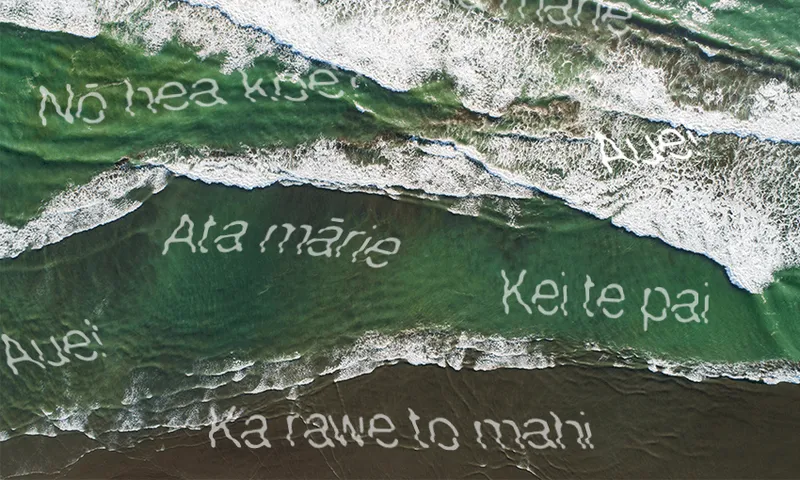
Still, the fight continues. Beyond these key moments, there have been ongoing, constant threats to the languages, and millions of people who have fought and fight, daily against these threats. According to Unesco, the world loses a language every two weeks, with at least 40% of the world’s 7,000 languages considered endangered. Gaeilge and te reo Māori continue to stand.
As time goes on, both languages have progressed into digital and mainstream media, with music providing one of the most significant revival efforts. Jordyn with a Why, Te Kahureremoa, Stan Walker and Marlon Williams in Aotearoa and Roís, Kneecap and Seo Linn in Ireland are all artists proudly uplifting their reo, laying a path for others to follow.
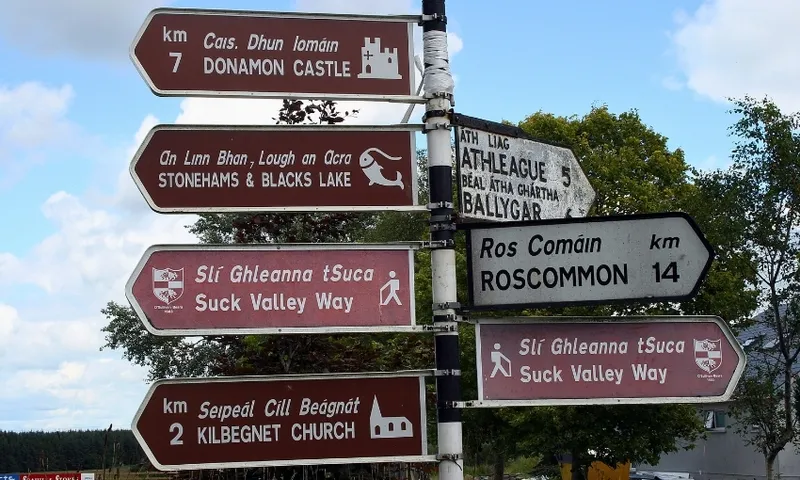
Irish signage features place names in Gaeilge first with English second. It grounds you in place, reminding you that you’re on indigenous land that some asshole tried to rename. The current president of Ireland, Catherine Connolly, made Gaeilge a central feature of her election campaign and won by a landslide. The Irish government is targeting 20% of public sector recruits to be Gaeilge-competent by 2030 as part of its ambition to become a fully bilingual public service.
Meanwhile in Aotearoa, the current government has aggressively stripped back reo in public institutions, with English being prioritised over Māori. Significant money and time has been spent securing English as an official language despite the move being widely criticised. This led to Green MP Tamatha Paul’s viral kōrero in which she called English a “bastard language” and questioned why the “snowflakes” in charge can’t cope with hearing a language outside of their own.
While it’s easy to think te reo is only being bludgeoned, there are also people working hard to uplift it. Those teaching their mokopuna, joining kura reo, signing petitions, speaking te reo at home and work, supporting their whānau. Grassroots community groups continue their mahi. Maihi Karauna – the Crown’s Māori Language Strategy – has committed to working towards one million people being able to speak conversational Māori by 2040 and 85% of Aotearoa to value te reo as a key part of its national identity.
It’s our responsibility asIrish here in Aotearoa to help provide Māori protection over their reo. We don’t get to be racist and Irish, and we don’t get to be Irish living on colonised land without honouring its history, people and language. To live as te tiriti partners, we need to understand each other, and that begins with language. We don’t need to learn te reo to do this, but we do need to show it our respect.

Gráinne Patterson
Gráinne is an Irish tangata tiriti writer and essayist living in Te Whanganui-a-Tara. Her work explores family dynamics and how they have shaped her relentless search for ways to be a well-adjusted adult human. She holds a masters in creative nonfiction from the IIML.


