What defines a ‘Kiwi’ – and who is allowed to bear the name?

Kiwi, kiwi and laser kiwi. (Design: Tina Tiller).
I grew up thinking I was a Kiwi. As a young person, I thought Kiwis were born in Aotearoa, grew up here, or made it home. I didn’t think there was any more to it – turns out I was wrong.
The word Kiwi comes from te reo Māori, but Māori speakers don’t use the word to describe New Zealanders. In Māori, it either refers to the flightless bird or the colour grey – that’s it.
By the late 1800s, the kiwi bird had become a symbol of New Zealand’s settler capitalist identity. The word and the bird adorned ships and numerous brands. During the first and second world wars, the use of Kiwi Shoe Polish – ironically owned by an Australian – by New Zealand troops solidified the name as a descriptor of them as a group. Prior to this, we’d been internationally referred to by other names, including Maorilanders.
While the international community still uses Kiwi to describe New Zealanders, the word has never been defined at a domestic level. It doesn’t reach the definition of an ethnicity, and we have better words for that anyway, like Pākehā, Tauiwi and Māori. Kiwi doesn’t define any cultural group, nor does the Kiwi identity have its own unique language, so, it’s not a language group definition either.
As our current government invests more in a culture war with itself, minister for Māori development Tama Pōtaka and other politicians have found themselves treading carefully by differentiating between a Kiwi and a New Zealander. Whatever a Kiwi is, the culture war of the coalition parties means a Kiwi isn’t even necessarily a New Zealander any more.
The government also wants new migrants to complete a multichoice quiz to see if they know enough about being a Kiwi to be here. Hell, we don’t even know enough about it.
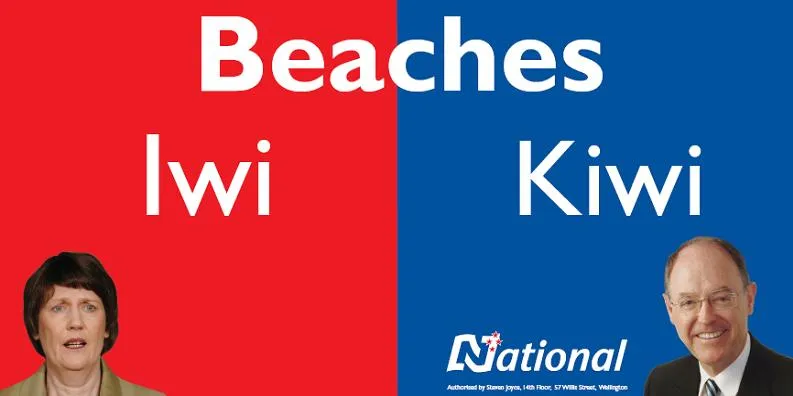
What we do know is political racism has always ensured Māori have never been Kiwis. The “us or them” culture war has allowed politicians to move Māori people further away from our democracy, and “Kiwi” has a role in that. The horrendous Iwi-Kiwi political campaign headed by the National Party in 2005 is the most obvious example. Don Brash, the party’s leader at the time, wanted to pitch New Zealanders against the Labour Party. Instead of critiquing the party’s policies, he chose the simplest campaign of all: ostracise Māori as outcasts, and align them with the opposition.
Brash was arguing that if Labour won the election, Māori would block Kiwi access to beaches. In reality, all governments of my lifetime have quietly shifted hundreds of thousands of hectares of land into private ownership. Taxpayers have paid millions to administer that process, and all New Zealanders are now banned from accessing that land. The Iwi-Kiwi campaign failed and National lost the vote, but Brash has since solidified a successful career in the Iwi-Kiwi industry. People who buy into that fear think Kiwi and Iwi are at odds. Ironically, people like that have Māori to thank for propping up their support-base. Without Māori, there would be no fearful Kiwi.
Abuse of the word kiwi has not only ostracised Māori people from democracy, but other communities too.
In defending his anti-immigration commentary about Indian people, Shane Jones wrote on Facebook that “no one is going to cancel me for being a voice for Kiwis concerned about immigration”. Given this comment arose in explanation of his “butter chicken tsunami” prose, Jones is talking about Kiwis who don’t like Indian migrants. Ironically, Jones is Māori so by political definition, not actually a Kiwi himself.
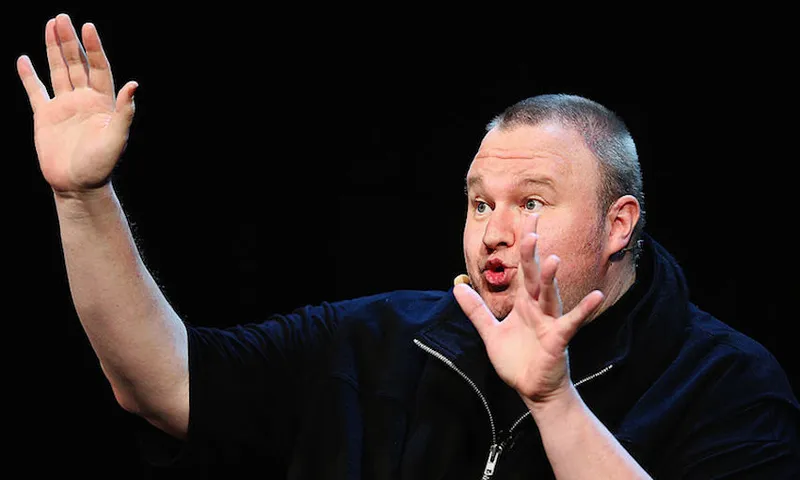
David Seymour – also Māori and therefore not a Kiwi – has recently said he wants an immigration tax to ensure the people coming here had “New Zealand values and the Kiwi character”. I’m unsure how an ability to pay that tax translates to having “Kiwi character”, but the last time politicians pulled that stunt, we got Kim Dotcom.
Majority shareholder of Kiwi Empire Confectionery and Act Party MP Parmjeet Parmar recently spoke on the party’s immigration stance. She briefly mentioned the values she wanted to see in immigrants, which she believes are “not just part of the Kiwi character” but “fundamental to our democracy”. This was strange because Parmar is an immigrant and therefore, not technically a Kiwi, because as Shane Jones points out, Kiwis and immigrants are at odds.
When it comes to being Kiwi, it seems no one passes the test any more – even those who throw the word around all the time. I work hard, participate in and contribute to society, act lawfully, support remaining in the country, try to be kind to people and stand up to bullies, bigots and bollocks. I’m proud of my heritage. However, none of those things are enough to make me a Kiwi.
Maybe if I order kiwi-hot at the takeaways next time, I’ll pass the test. Burn baby, burn!

Vincent Olsen-Reeder
Dr Vincent Ieni Olsen-Reeder is the Director of ReoPol Limited, a newly established pakihi Māori that believes in quality Māori language policy for the nation, removing government-imposed barriers and reestablishing te reo Māori as a functioning and flourishing language across the nation.


