Kapa-Kingi reinstated: Where to now for Te Pāti Māori?

Debbie Ngarewa-Packer, Rawiri Waititi and John Tamihere (Image design: Tina Tiller)
A high court ruling has blown open Te Pāti Māori’s internal conflict, exposing threats, budget disputes and deep fractures among MPs, leadership and electorate councils.
Kua rongo ake au
Na, tirotiro kau ana mō te aroha me te rangimārie
Mehe e tirotiro ana kei whea e rangimārie ka kitea e
Te aroha e
I have learned that …
If you look for love, you’ll find peace,
And if you look for peace, you will find love
Those were the words used by Justice Paul Radich in his decision regarding the expulsion of MP Mariameno Kapa-Kingi from Te Pāti Māori last year.
The judgment, released yesterday, addressed three key issues: whether the suspension of Kapa-Kingi from Te Pāti Māori was lawful; whether her expulsion from the party was lawful; and whether the reelection of John Tamihere as party president was valid. Radich found the suspension and expulsion of Kapa-Kingi from the party was unlawful, but upheld the election of Tamihere as party president.
After months of ongoing disputes, lengthy social media posts, and a very public falling out, party co-leader Rawiri Waititi told media he “looks forward to repatriating” Kapa-Kingi back into the party.
However, according to evidence given by the respondents from Te Pāti Māori in the court case, it seems those words might not carry much weight. “The respondents may opt to give fresh consideration to using the comparatively simpler cancellation power… especially given the friction within the Te Tai Tokerau Electorate Council,” the evidence read. “I do not see that as being a tenable course of action,” noted the judge.
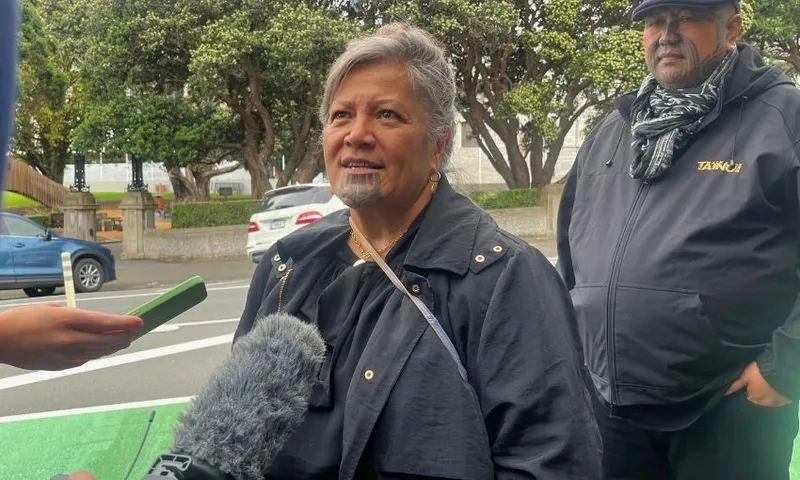
On the other side, Kapa-Kingi’s son Eru Kapa-Kingi – who was also a key figure in the controversy – recently posted to his social media saying he would “never support Te Pāti Māori again”. Despite the ongoing issues with party leadership, Mariameno Kapa-Kingi has consistently maintained her support for the party and the kaupapa.
The court case exposed what had taken place behind the scenes, painting an unflattering picture of the party’s senior leaders, particularly John Tamihere. There were budget issues in Kapa-Kingi’s office, attributed to her picking up the work of then ill Tāmaki Makaurau electorate MP Takutai Moana Natasha Kemp. In December 2024, the co-leaders of Te Pāti Māori approved a transfer of $33,000 from the Tāmaki Makaurau electorate to the Te Tai Tokerau electorate for the work that Kapa-Kingi and her office undertook for Kemp.
Kapa-Kingi requested a further transfer of $30,000 and ongoing monthly payments of $10,000 until Kemp’s return. It was claimed by Kapa-Kingi that party co-leader Debbie Ngarewa-Packer verbally agreed, which she denied.
Following Kemp’s death in June 2025, Ngarewa-Packer told Kapa-Kingi that she would help sort out her budget issues. A financial report for the period ending June 2025 projected that Kapa-Kingi would overspend her budget for the year by $133,000. It also forecast the co-leaders would overspend their annual Te Pāti Māori leaders’ budget by $42,000.
It was at this point that relationships within the party began to fray.
There were threats and accusations, with Kapa-Kingi claiming that as she left a meeting, Tamihere told her that “if she walked out the door, he would not endorse her candidacy for the next election”.
At another hui, Kapa-Kingi claimed the party’s general manager Kiri Tamihere-Waititi, daughter of the president and wife of the co-leader Rawiri Waitii, suggested a “ceasefire”, and that Tamihere responded that she should not speak for him. It was at this hui that Tamihere allegedly told Kapa-Kingi he was “coming for [her] boys” and “was going to have utu”.
In November last year, three Te Pāti Māori MPs – now independent Kapa-Kingi, Te Tai Tonga MP Tākuta Ferris and Tāmaki Makaurau MP Oriini Kaipara – wrote to the party’s national council expressing concerns about the party breaching its tikanga and failing to uphold its kawa. Only four days later, an urgent hui was held and the decision was made to expel Kapa-Kingi and Ferris from the party. Representatives of Hauraki-Waikato, the electorate of Hana-Rawhiti Maipi-Clarke, abstained from voting to expel Kapa-Kingi.
In his judgment, Radich found: “The short point is that there is no power to suspend a member under the kawa. And, given the detailed document that the kawa is, I cannot see a tenable basis to imply a power.”
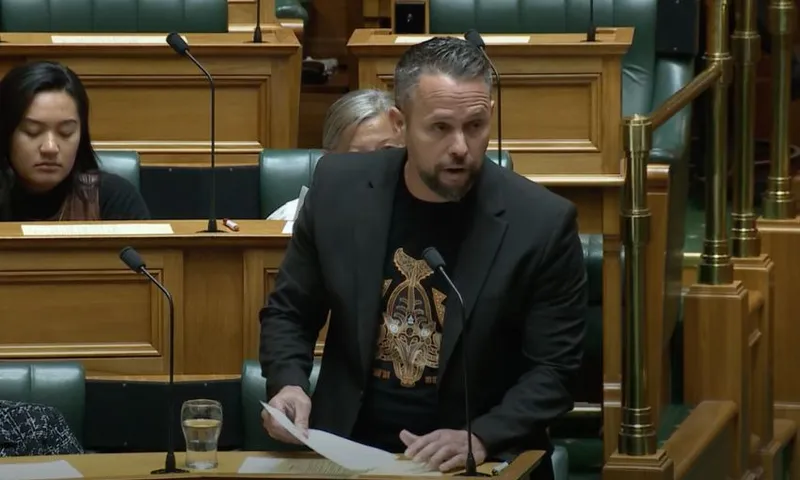
He went on to criticise the process followed by the party in expelling Kapa-Kingi, stating it “could not on any view be seen… as elevating and enhancing relationships, as working together with respect, as promoting whanaungatanga, as working for unity, as developing an environment that nourishes wairua or that reflects the attributes of rangatira”.
In discussing remedies, the judgment referred to the respondents’ assertion that “Requiring Te Pāti to take Kapa-Kingi back would be to compel them to associate with her, and to bear the consequent political disadvantage, when it is clear the relationship has completely broken down.”
This poses the question of where to now for Te Pāti Māori. If the haka of Tamihere-Waititi at Waitangi following her husband’s speech is anything to go by, reconciliation between Kapa-Kingi, the party’s co-leaders and senior leadership seems nigh on impossible.
The judgment illustrates a deep divide between the party’s co-leaders, its four other MPs, and electorate councils. The Hauraki-Waikato electorate abstained from voting to expel Kapa-Kingi. The Tāmaki Makaurau MP supported the letter sent to the party’s national council. Te Tai Tonga will undoubtedly be upset with how their MP was treated by the party. The other electorate councils have all expressed their disdain with the processes the party followed. With just eight months left until the election, the party will be desperate to swiftly – and privately – figure out the path forward. Central to this is the party president Tamihere.
His alleged threats to exert utu on the sons of Kapa-Kingi will be hard to recover from, even in the unlikely scenario he seeks reconciliation. The party’s failure to follow its own constitution reflects poorly on the political nous of its leadership, particularly Tamihere and his daughter and party manager Kiri Tamihere-Waititi. It shows a failure to follow any tikanga, be it the party’s constitution or tikanga Māori. Instead, the claims from Eru Kapa-Kingi of the party being run like a “dictatorship” appear to have been validated by the judgment and evidence within it.
While the circumstances of Ferris’s expulsion were not considered in this case, it’s likely the process followed was similar, and would be considered similarly invalid were it tested in court. While Ferris has publicly stated he would not go back to the party regardless of the outcome of the case, all politicians know to never say never.
There are great divides within the party, from its leadership to its electorates. Any sense of unity has been shattered. Labour – who lost all but one Māori seat at the last election – are licking their lips. As the party’s president, the buck stops with Tamihere.
Losing the support of the Eru Kapa-Kingi – who holds great political influence among rangatahi voters – only further damages the political standing of Te Pāti Māori. Maipi-Clarke and Kaipara will have some cut through with this cohort, but this drama will long linger over them. They will be asked about their party’s leadership and where they stand. People will be unhappy no matter the answer.
Regardless of the outcome of the case, there was never going to be an easy path forward for Te Pāti Māori. Without an unlikely clear-out of senior leaders, some accountability being taken, and a genuine apology to Kapa-Kingi, Ferris, its electorate councils and party members, the party risks slipping back to oblivion. Whether those at the top are willing to go down with a sinking ship will dictate the state of Te Pāti Māori come November.
It reminds me of a recent line from Tina Porou in a select committee hearing: You can polish poo, but you can’t polish diarrhoea.

Liam Rātana
Liam Rātana (Ngāti Wairupe/Ngāti Kurī) is editor of The Spinoff's Ātea section. He is passionate about indigenous and minority issues. Liam enjoys cooking, poetry, photography, and exploring the outdoors.


