‘I can polish poo – but I can’t polish diarrhoea’: Māori blast RMA overhaul

Chris Bishop has shit on his hands, according to some. (Design: Tina Tiller).
Iwi leaders, environmental experts and legal scholars warn the government’s new planning laws could weaken Treaty settlements and strip Māori of decision-making power over land and water.
“The Crown often gives me a piece of poo,” environmental consultant Tina Porou told MPs this week.
“For the last 20 years, a lot of those pieces of poo have been changes to the RMA. I polish that poo. I put sparkles on it, make it shiny, and give it back to my people and say: ‘This is the best I can get your poo.’
“But this government has given me diarrhoea – and I can’t polish diarrhoea.”
Porou’s blunt assessment captured the tone of many Māori submissions to parliament’s environment select committee this week. Iwi leaders, environmental experts and legal scholars warned the government’s proposed replacement for the Resource Management Act (RMA) could fundamentally reshape the role of Māori in environmental decision-making – and potentially weaken the legal protections underpinning Treaty settlements.
The government says its Natural Environment Bill and Planning Bill will modernise New Zealand’s planning system and reduce barriers to development. However, a number of Māori submitters say the reforms risk weakening Treaty settlements, narrowing Māori authority over land and water, and shifting environmental decision-making toward market allocation.
The backbone of environmental law
A main concern raised by several submitters is the removal of Part 2 of the Resource Management Act, long regarded as the backbone of New Zealand’s environmental law. Part 2 includes provisions requiring decision-makers to recognise Māori relationships with land and water (section 6(e)), have particular regard to kaitiakitanga (section 7(a)), and take into account the principles of te Tiriti o Waitangi (section 8).
Porou told MPs these clauses were not simply technical provisions, but formed the legal foundation on which Treaty settlements were negotiated.
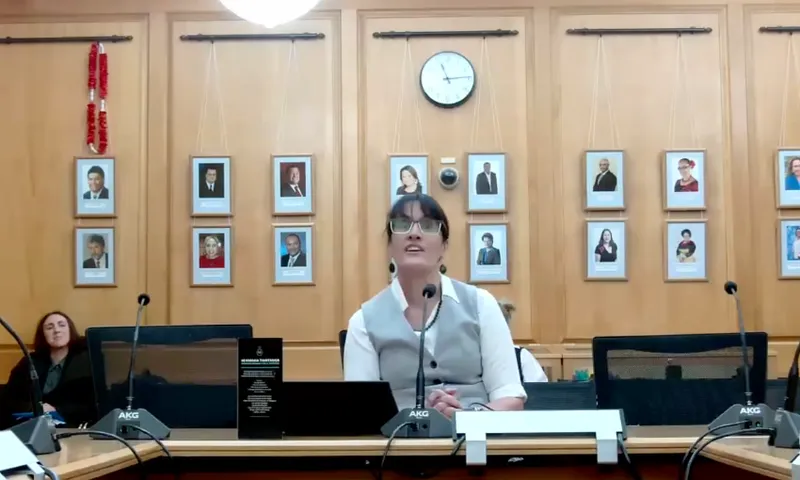
“Part 2 ensures the Crown will uphold and protect Treaty settlements,” she said.
The new legislation replaces Part 2 with a broader list of planning “goals”. However, Porou argued that the new framework fails to carry the same legal weight: “By removing Part 2 and not replacing it with an equivalent set of clauses with the same effect, the Crown is breaching every Treaty settlement.”
Her argument is that iwi negotiated settlements on the expectation that Part 2 would remain central to environmental decision-making. Without it, the regulatory context those agreements relied upon may no longer exist.
Who gets to define Māori interests?
Porou also criticised what she described as a “fundamental misunderstanding” of Māori relationships with land and water in the proposed planning framework. Under the legislation, Māori interests are largely recognised through mechanisms such as identified Māori land or formally recognised sites of significance.
Porou warned this risks confining Māori engagement to areas the Crown chooses to recognise. That framing ignores the whakapapa-based relationships Māori have with the taiao, she said, and reduces Māori authority to a set of discrete parcels of land.
Submitters fear the approach could allow the Crown to define the boundaries of Māori interests – effectively determining where iwi and hapū are permitted to participate in environmental decision-making.
“The fact the government is narrowing the flexibility of arrangements that we make in our own home is frankly unacceptable,” Porou said.
Porou also challenged the economic assumptions underpinning the reforms. While the government argues the changes will create a more efficient planning system, she told MPs environmental safeguards must remain the foundation of any system: “Markets want to ensure environmental safeguards are at the core of what we do.”
Without strong environmental bottom lines, economic development ultimately undermines itself, said Porou. Degraded ecosystems impose long-term costs that cannot easily be reversed, particularly when it comes to freshwater and biodiversity. According to Porou, environmental protection is not simply one interest among many – it is the requirement for every other economic outcome.
Some submitters warned the new planning framework could shift environmental risk onto future generations. In its written submission, Ngāti Te Rangiunuora – a hapū of Ngāti Pikiao – described the reforms as creating an “intergenerational transfer of risk”, arguing the system may allow the present generation to meet immediate economic needs by “cannibalising the inheritance of mokopuna”.
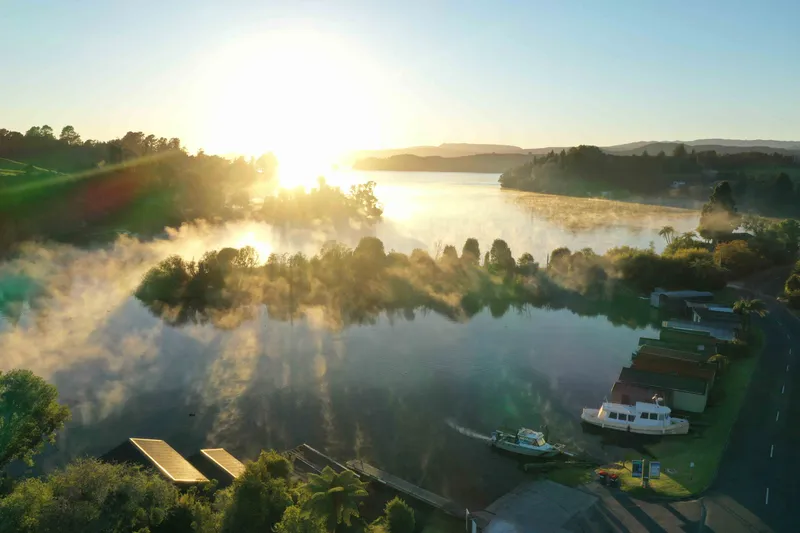
For some iwi, the debate is also about how the law understands the environment itself. In its written submission, Ngāti Pikiao argued the new planning framework treats water largely as an economic resource rather than a living ancestor. “Te Rotoiti is not a water body. It is our tupuna,” the submission read. “Its health is our health. Its mauri is our mauri.”
Using the Mauri Model decision-making framework, the iwi assessed the bills across their environmental, cultural, social and economic dimensions. It concluded that prioritising infrastructure efficiency over environmental protection risks undermining the life-supporting capacity of ecosystems.
For many Māori, the concern is that the planning system is shifting toward reactive management – intervening only once environmental damage becomes measurable – rather than preventing harm in the first place.
Consultation or partnership?
George Davis of Rangitāne o Manawatū Settlement Trust told MPs the legislation also risks locking the Crown’s interpretation of te Tiriti into law.
“The Treaty clauses in both bills fix the way in which the government interprets te Tiriti to the point at which the legislation is enacted,” Davis said. “In doing so, the drafting fails to acknowledge that te Tiriti is a living instrument whose interpretation develops over time.”
He also raised concerns about the legislation’s definition of “iwi authority”, which he said fails to explicitly recognise post-settlement governance entities – the organisations created to represent iwi following Treaty settlements: “Like every iwi and Māori in the country, we want to make sure that we’re there in partnership making decisions about our taonga and what’s happening within our own whenua.”
“Settlement trusts and those that have settled must be main players,” said Davis.
Many submitters, not just Māori, criticised the pace at which the reforms are being developed. Graham Young of Te Rūnanga o Ngāti Ruanui Trust pointed to the government’s own regulatory impact statement, which acknowledged Treaty analysis had been constrained by the speed of policy development. The statement noted there had been limited opportunity to engage with Māori on the proposals.
Young said the proposed system offers Māori only a narrow window for engagement, with ministers deciding what counts as “adequate” consultation and no obligation to adopt iwi views.
Beyond Treaty law, submitters also raised concerns about how the planning system treats Māori land. Māori freehold land accounts for only around five percent of land in Aotearoa. Much of it is fragmented, collectively owned and often difficult to develop under standard planning frameworks.

The Māori Trustee, Te Tumu Paeroa – which administers more than 77,000 hectares of Māori land on behalf of over 100,000 owners – warned that market-based allocation systems could disadvantage Māori landowners. Tendering processes tend to reward those with the most capital. Because Māori land has historically been underdeveloped – often landlocked or constrained by multiple ownership – owners are unlikely to outbid large commercial developers.
Critics say this risks turning ancestral responsibilities to protect taonga such as water and geothermal resources into what Porou described as a contest for permits, capital and administrative advantage.
Future of Treaty settlements and environmental authority
Legal scholar Carwyn Jones warned MPs the proposed reforms will weaken the role of te Tiriti within environmental law. “These provisions significantly water down the protections that are currently provided by the Resource Management Act,” he said. “They limit teTiriti rights to a narrow set of procedural mechanisms.”
According to Jones, Māori involvement in environmental management should extend beyond consultation: “The default position ought to be that Māori interests are protected in a way that allows Māori to be making decisions about environmental management.”
Instead, he argued, the reforms risk shifting the system from Treaty partnership toward consultation: “With the previous actions I’ve seen this government taking, I’m not surprised they are not interested in Māori rights, te Tiriti, evidence, or good public policy.”
For decades, Treaty settlements have promised iwi a meaningful role in decisions affecting the lands and waters within their rohe. The question raised by these submissions is whether the government’s new planning system honours those commitments – or quietly rewrites them.
If environmental authority becomes something defined by markets, planning goals and Crown-determined boundaries, many Māori say the promise of partnership embedded in Treaty settlements may prove far more fragile than expected.

Liam Rātana
Liam Rātana (Ngāti Wairupe/Ngāti Kurī) is editor of The Spinoff's Ātea section. He is passionate about indigenous and minority issues. Liam enjoys cooking, poetry, photography, and exploring the outdoors.


