Review: Sgt. Haane is a triumphant documentary of a harrowing event

The dramatisation portion of the film was shot in west Auckland. (Photo: Supplied).
War is not pretty, but is worth remembering. Liam Rātana and Emma Gleason discuss what Sgt. Haane gets right and what it omits.
Sergeant Haane Manahi is a war hero. His feats at Takrouna, Tunisia, during the second world war are a story of triumph in the midst of a bloody battle. More than a hundred thousand New Zealanders fought in the second world war. Each one of them has a story worth telling. Manahi’s is particularly inspiring.
Directed by Tearepa Kahi (director of 2022’s Muru), Sgt. Haane is dramatisation-heavy documentary, recounting an operation led by the 28th Māori battalion at Takrouna on April 19, 1943. In the middle of the second world war, the Axis powers – Germany, Italy, Japan – held the strategically vital maunga, described as “an impregnable fortress” littered with heavy machine artillery. The battalion is charged with claiming the maunga for the Allied powers.
After a collapse of the command, Manahi finds himself leading a small group of B company soldiers – all of whom are related – to the top of Takrouna, which they call Ngongotahā in reference to their ancestral maunga in Rotorua. To the surprise of many, the group successfully takes the maunga. Led by Manahi, the group’s feat becomes legendary – a war story told for generations to come.
Manahi is recommended for a Victoria Cross medal by three generals and a field marshal. However, one unnamed British War Office official strikes out the recommendation, leaving arguably one of the country’s greatest war heroes without the level of recognition many believe he deserves.
Emma: OK Liam we’ve both seen this film. I found it quite affecting and well done. How did it make you feel?
Liam: I was overcome with emotion. With a grandfather who fought in the second world war, the film was awfully close to home. Imagining what he and all the other young men that went to war must’ve experienced made me shed some tears watching this.
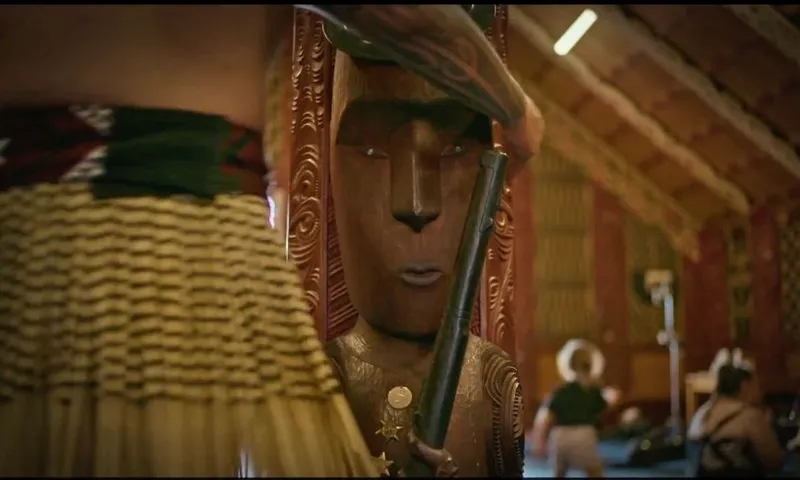
EG: The score moved me – it was done by the New Zealand Symphony Orchestra with composer Mahuia Bridgman-Cooper – and of course the characters. These are very heavy, very real roles for the actors to take on. I was impressed. Alex Tarrant is in the title role, putting in a strong performance as Manahi, with stoic gravitas and the necessary physicality. His co-stars Niwa Whatuira, Vinnie Bennett, Matu Ngaropo, Poroaki Merritt-McDonald and Rihari Te Are are all commendable as members of B Company, handling the tools of soldiering as believably as they did the emotional demands of young infantry men far from home. Especially considering it was quite a quick shoot.
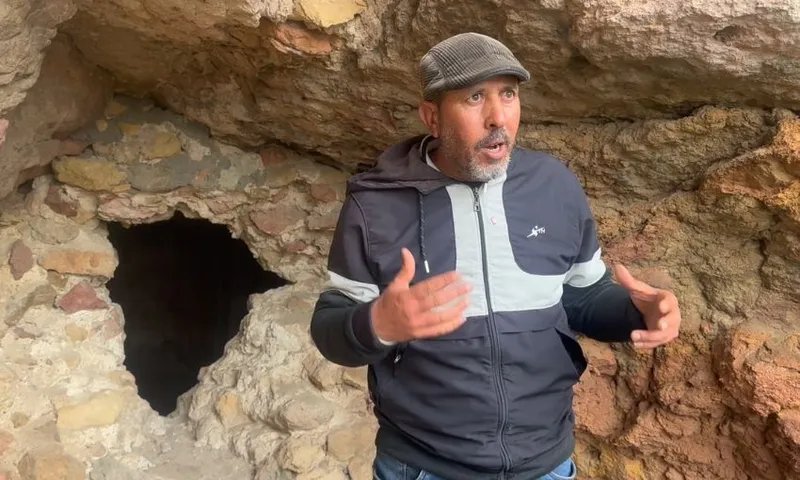
LR: The inclusion of Nizar Chhoubhi – the last resident of Takrouna today – extended the mana of Manahi beyond the shores of Aotearoa. Chhoubhi’s family was protected by Manahi and members of his unit during the operation, and he credits Manahi with the survival of his whānau and whakapapa. His kōrero that has carried down through the generations is the perfect illustration of the impact of Manahi’s actions that night.
EG: Totally. Both in Tunisia and back here in Aotearoa, whānau are shown passing on their stories of Manahi to their children. Its inclusion by the filmmakers presents a clear message around the active work required to preserve memories. Manahi and the other members of the 28th are part of their identity, shaping how the community defines itself, including in their own homes. He’s a totemic figure. But in 1943, they were also young men getting through a war in a foreign land.
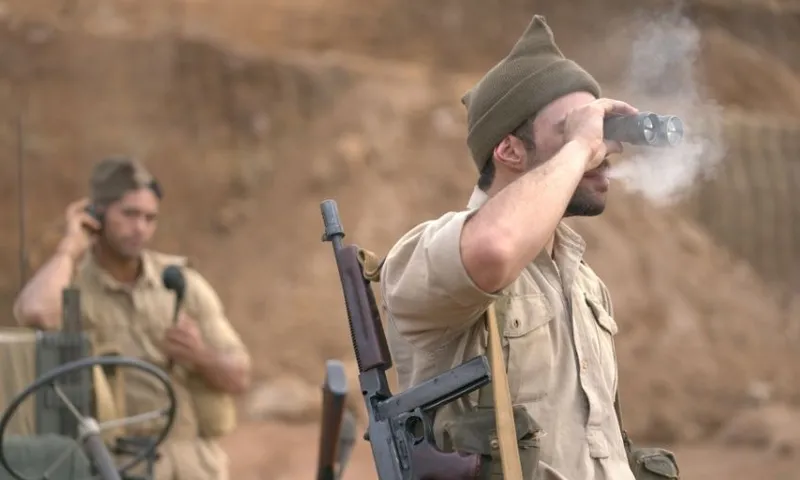
LR: This multigenerational kōrero is also reflected back here in Aotearoa, with whānau of Manahi sharing what his legend means to them. It’s clear to see his mana reverberates throughout their community, remaining a source of pride for all of them. I particularly appreciated the dialogue and references (like constant smoking and the regular appearance of cabin bread) that added an air of authenticity to the dramatisation. The costume design is impeccable, and the entire film, particularly the dramatisation, is beautifully shot.
EG: The locations for the reenactments also feel thoroughly believable, with filmmakers transforming West and South Auckland, respectively, into the rocky terrain and olive groves of Tunisia. How did you find the mix of documentary and reenactment?
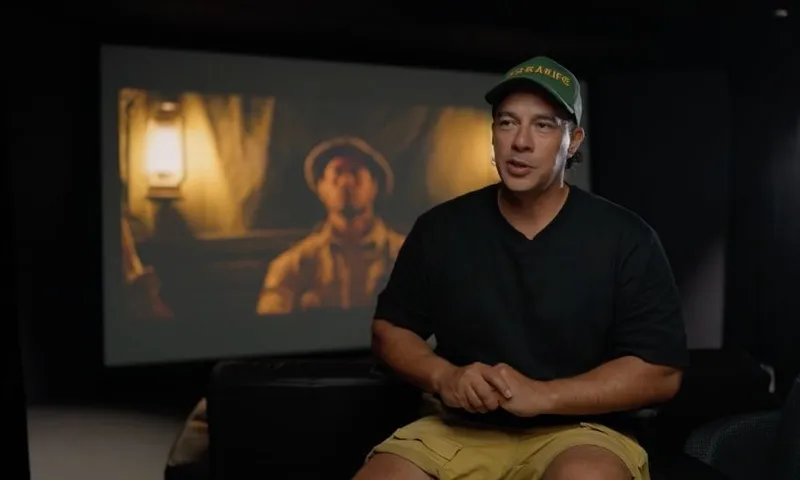
LR: At first, the cutting between dramatisation and documentary was jarring. However, it felt like Kahi figures out how to make it more natural as the film progresses. One shortfall of the film for me was that it felt unnecessarily dragged out following the climactic conquering of the maunga. I wondered if it perhaps would have been better for the film to sit entirely in the dramatisation, with a separate documentary.
EG: Where do you decide to stop a story? Especially one with so much weight.
LR: It’s hard to say.
EG: As someone with personal history with the 28th, did you feel proud watching the film?
LR: Although I left feeling awe-inspired and prouder than ever to be a descendant of a member of the 28th Māori Battalion, I have since wondered about the need for these stories to be told in this way. On one hand, I understand there is value in recounting these heroic feats – it helps preserve the mana of these men, depicts some of the realities of war, and honours their memories in a meaningful way.
EG: But…
LR: Well on the other hand, I see a glorification of war and dying for God, king, and country. While there are many war heroes, war is a horrific event. I felt that Sgt. Haane glosses over the brutal violence of these events, providing a light-touch at best. There may be some benefits to this approach, but it also risks leaving a story only half told.
EG: Rendering the bloody reality of war is a complex and oft-debated issue of the genre. Some argue that any depiction of action is problematic. On the other hand, there’s a case to be made that the violence and sacrifices required by military combat should be explicit so as to not be forgotten. By omitting the more grisly aspects of combat, Sgt. Haane is opened up to a wider audience by way of the ratings system, sharing this story that should be remembered with more New Zealanders.
LR: For sure. I fear that the manner in which we recount these stories risks encouraging our rangatahi to want to emulate such feats. Yes, we should want them to be strong, courageous and fearless in times of trial, but do we want them joining the New Zealand Defence Force too? Do documentaries like this risk becoming a piece of propaganda? For me, it’s a double-edged sword without a definitive answer.
EG: It’s an important question, and one that a war film should have us asking. Whether documentary or dramatisation – or in this case, both – the genre plays an important role in helping us reflect on past history and future actions. “What ifs” are something we should be considering.
LR: You’re right, and I’m not trying to belittle our armed forces here. The men and women that have served and actively serve in the New Zealand Defence Force are courageous in their own right, with a willingness to help defend our nation, should the need arise. But I also know people who have served that will tell you about the realities of that service. About the taumhatanga – the heaviness – that comes with it.
EG: There’s a sacrifice that comes with this service. And I think we saw that with Manahi. Near the end of the film, his niece recalls how he never spoke about the war with her. He was just “Uncle Haane”. A lot of this history has gone unsaid.
LR: It really has. I appreciated the film’s exploration of the injustice of Manahi not receiving a Victoria Cross. As a child, I was always in awe of my grandfather’s service in the Māori battalion. It amazed me that he ventured to the other side of the world to te mura o te ahi, the heat of the battle, and returned after achieving incredible feats. In my eyes, he was a hero. For him – and many others – however, the weight of what they experienced never left them.
Films like Sgt. Haane provide perspective and keep the memory alive of men like Haane Manahi. While important, it’s the unintended consequences of the glorification of war that concerns me. All up, this is a great film, recounting an important story of a heroic man. I recommend watching it in the cinema while you can. Just remind your tamariki, war isn’t all it’s made out to be.
Sgt. Haane is currently showing in cinemas nationwide.

Liam Rātana
Liam Rātana (Ngāti Wairupe/Ngāti Kurī) is editor of The Spinoff's Ātea section. He is passionate about indigenous and minority issues. Liam enjoys cooking, poetry, photography, and exploring the outdoors.


