Racism has no place in kapa haka, or Aotearoa

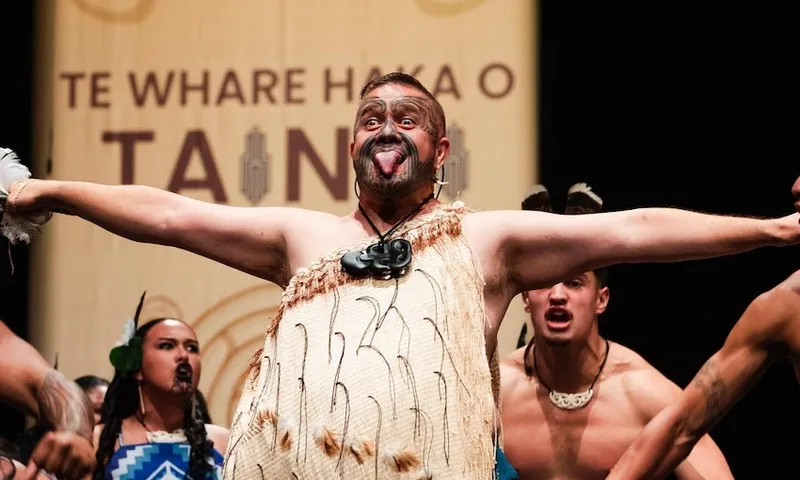
Members of Te Pae Kahurangi perform a haka at the 2026 Tainui kapa haka regionals. (Photos: Te Matatini Enterprises. Additional design: Tina Tiller).
A haka in the news for mocking Indian cultural elements reminds Liam Rātana of a saying about racism that we should all take note of.
Our attention shouldn’t be on the haka by Te Pae Kahurangi that took aim at Act MP Parmjeet Parmar.
It’s Te Pou o Mangatāwhiri who we should be talking about. They claimed first place, going one better than their second place result in 2024, at the regional kapa haka competition in Tainui – the cradle of the Kīngitanga – over the weekend.
But here we are talking about Te Pae Kahurangi because, led by former Te Pāti Māori president and Māori consultant Che Wilson, they performed a haka that included gestures mockingly referencing Indian cultural elements and directed at Parmar.
We’re talking about it because it was something else. I watched it online and was dumbfounded by what I saw.
I wasn’t the only one. Influential figures like academic Tina Ngata have called it out. Ngata described what Te Pae Kahurangi did as “a perfect example of how colonial harm turns into lateral racism”.
Speaking to Kereama Wright on Te Arawa FM, Wilson doubled down, defending the group’s right to use kapa haka as a place for debate and provocations.
Provocative is one way to describe the haka. I’d call it flat out racist.
Using kapa haka as a vehicle for protest or political messaging is not new. Parmar’s views on issues like Māori spaces at universities and the performance of a haka in parliament are inflammatory. But that doesn’t give anyone a right to attack her culture or ethnicity. What was it that Wyclef Jean said about two wrongs?
When I was a kid, I was told something that changed my perspective on life and other cultures: If we don’t want people to be racist to us, then we can’t be racist to other people. It’s advice that has stuck with me. When the oppressed becomes the oppressor, we have emulated our coloniser to the best of our ability.
Wilson’s claim that the haka was only directed at Parmar, not Indians in general, falls flat. By using cultural references, Te Pae Kahurangi made it about more than just one person. Mockingly using the Hindu position of prayer, particular head movements and using an Indian accent, while calling Parmar a “bloody Indian curry muncher” in te reo Māori, insults more than just a person, it insults an entire culture.
Watching the haka, I was overcome with a sense of sadness and shame, followed by confusion and anger. It reminded me of the haka followers of Brian Tamaki performed on Queen Street during protests against foreign religions (because Christianity is obviously native to these shores). Our Māori people performed these haka with so much pride and conviction, yet caused us so much embarrassment, and hurt others.
Rangatahi from across the motu would have been at the Claudelands Arena and Events Centre on the weekend for the kapa haka competition. Many more would have been tuning in online, watching closely as their culture was used to belittle another. What would they have thought? That it’s Māori to mock Indians? Kāo. Te Pae Kahurangi might have chosen to do it, but they don’t represent the entirety of Māoridom.
Te Pae Kahurangi is a kapa haka group connected with renowned kapa Te Iti Kahurangi. They could have taken a more nuanced approach, rooted in uplifting our own mana instead of diminishing that of another culture – and subsequently our own. You would have expected them to, given their leaders include Che Wilson and Kingi Kiriona, a former journalist who was recently announced as Labour’s candidate for Hauraki-Waikato.
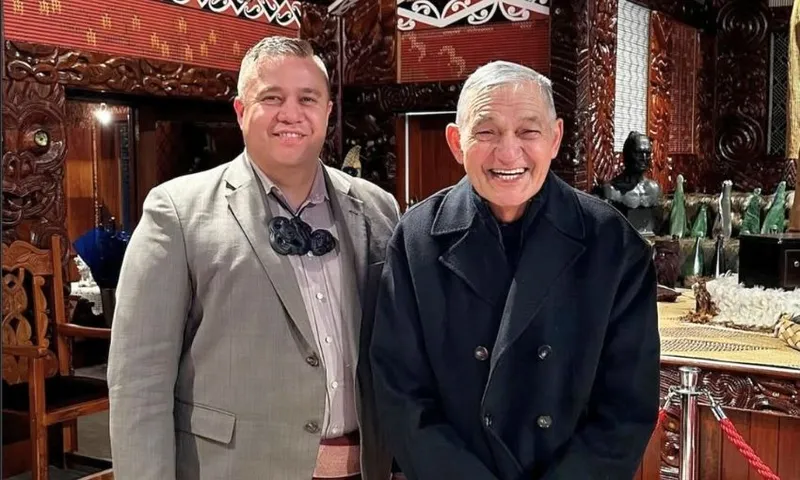
Wilson is more than just a consultant and former president of Te Pāti Māori. In 2023, he was chosen to chair the Tekau-mā-rua, an advisory council for the Kīngitanga and Kuīni Ngawai hono i te po. He’s also an iwi representative for Ngāti Rangi. He has played a pivotal role for the Kīngitanga in recent years, manning the paepae at Tūrangawaewae during the tangihanga of Kīngi Tūheitia Pōtatau Te Wherowhero VII and the first koroneihana celebrations for Kuīni Nga wai hono i te po.
A key message of the late Māori king was one of kotahitanga – unity amongst Māori and all of Aotearoa. “Mana motuhake has room for everyone,” Tūheitia famously said at the 18th anniversary of his coronation. I wonder what he’d think of the haka performed by Te Pae Kahurangi and whether it was a good promotion of kotahitanga.
At a time where anti-immigrant sentiment is growing in Aotearoa – especially towards our Indian migrant community – this haka only adds to the feelings of discomfort. As Māori, we love to champion manaakitanga as one of our core virtues – an inherent aspect of our culture. Manaaki tangata is about caring for people, particularly visitors to this land. This haka does the opposite. It sends a message to the Indian community that Māori do not like them, or want them here. “Hoki ki Īnia,” Wilson said during the performance, “go back to India”.
Does that apply to all of our Māori whānau with Indian whakapapa too? What about our Indian whānau that have been here for generations, working alongside Māori in the māra and pāmu? Did Wilson stop to consider their feelings?
It’s all good to be the rōpū with the tough haka calling out a person with ideas you don’t like. But when that haka attacks that person’s culture, when you disrespect a person’s identity, then you should be prepared to suffer the consequences. You should be prepared for that culture to come for yours. If you want to be racist to others, then be prepared for others to be racist to you.

Liam Rātana
Liam Rātana (Ngāti Wairupe/Ngāti Kurī) is editor of The Spinoff's Ātea section. He is passionate about indigenous and minority issues. Liam enjoys cooking, poetry, photography, and exploring the outdoors.


