A decade of Matike Mai Aotearoa: How far have we come?

Moana Jackson and Margaret Mutu led the Matike Mai Aotearoa group. (Design: The Spinoff).
It’s been 10 years since an independent report outlined a path for constitutional transformation. Here’s a look back at what’s happened since.
A decade ago, a quiet but radical proposition emerged from hundreds of hui across the country: Aotearoa could remake itself. This wouldn’t be by just tinkering at the edges of power, but by reimagining its very foundations.
The report of the working group, Matike Mai Aotearoa, offered a vision grounded in tikanga, shared authority, and the enduring promise of te Tiriti o Waitangi. Ten years on, the question is no longer whether constitutional transformation is imaginable, it is whether Aotearoa is any closer to it – or whether the past decade has only exposed how far there is still to go.
Matike Mai Aotearoa was born out of a proposal to establish a working group on constitutional transformation at a meeting of the National Iwi Chairs Forum in 2010. A key motivation was to establish a constitutional framework that prevented the repeated undermining of te Tiriti and the need to reactively defend Māori rights.
Ngāti Kahu leader and academic Margaret Mutu was appointed as the chair of the working group and the late Moana Jackson was invited to be its convenor. The importance of their intellectual leadership and careful stewardship of the working group cannot be overstated. Other members of the working group were nominated by iwi or other organisations, or otherwise invited to join.
The terms of reference directed the working group to “develop and implement a model for an inclusive constitution for Aotearoa”, based on kawa and tikanga, He Whakaputanga o te Rangatiratanga o Niu Tireni of 1835, Te Tiriti o Waitangi and “other indigenous human rights instruments which enjoy a wide degree of international recognition”.
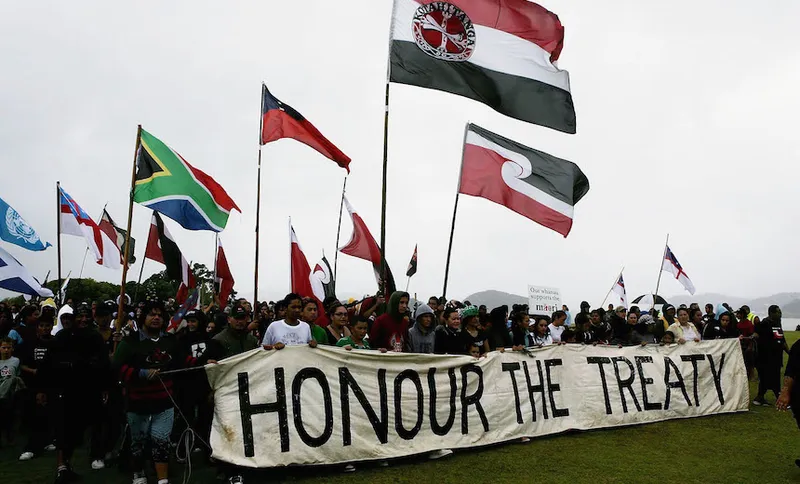
The working group adopted the name Matike Mai Aotearoa, meaning arise or rise up Aotearoa. Matike Mai Aotearoa facilitated more than 250 hui between 2012 and 2015, with an additional 70 wānanga convened by a parallel rangatahi group co-ordinated by Veronica Tawhai. The kōrero from these hui was collated into a report – He Whakaaro Here Whakaumu mō Aotearoa – released on Waitangi day in 2016.
The report defined a constitution as “the kaupapa or set of rules that a community sets about who can make the rules and how the people should abide by them and live amicably together” and “a code used to describe how the government will function”. It set out western and indigenous ideas about the exercise of public power and explored the ways in which people think about the constitutional foundations of Aotearoa.
The most significant aspect of the report was the articulation of a set of values hui participants suggested should underpin the constitution of Aotearoa. These values came from discussions with Māori, and drew specifically on ideas from te ao Māori.
These values – tikanga, community, belonging, place, balance, conciliation and structure – meant a constitution for Aotearoa must embody the core ideals of tikanga to foster a strong community where everyone belongs and a relationship with Papatūānuku is fiercely protected. To achieve this, the report determined the constitution requires transparent structures and mechanisms for conciliation that promote a fair, consensual democracy, all while deliberately balancing the shared and relational authority of both rangatiratanga and kāwanatanga.
The report also identified a set of indicative models – high-level models, based on the Waitangi Tribunal’s conceptualisation of the Tiriti relationship as reflecting two spheres of influence: a tino rangatiratanga sphere and a kāwanatanga sphere. The indicative models in the Matike Mai report represent variations of how the tino rangatiratanga sphere and the kāwanatanga sphere might connect with one another and what the relational space between them could look like.
Matike Mai Aotearoa made recommendations to progress the kaupapa of constitutional transformation. This included a number of steps to be taken by 2021, working towards 2040 as a goal for some form of constitutional transformation.
Amidst the Covid-19 disruptions, there were demonstrations of the positive outcomes of the effective exercise of tino rangatiratanga. Maria Bargh and Luke Fitzmaurice-Brown’s study of roadside checkpoints led by Māori showed how hapū organised and acted from within a Māori sphere of authority to keep their communities safe during the lockdown period. These were examples of tino rangatiratanga, grounded in community leadership, and led by values – very much in alignment with the vision of Matike Mai.
The He Puapua report built on the work done by Matike Mai Aotearoa but also became caught up in the impact of the pandemic. Commissioned by the government to create a plan for implementing the UN declaration on the rights of Indigenous peoples (UNDRIP) in Aotearoa, the report was completed at the end of 2019. However, it was sidelined as the government’s focus was consumed by the pandemic response.
Regardless, He Puapua was an important contribution to the constitutional discussion, explicitly connecting the Matike Mai vision of constitutional transformation in Aotearoa to standards of rights protection recognised by the international community in UNDRIP.
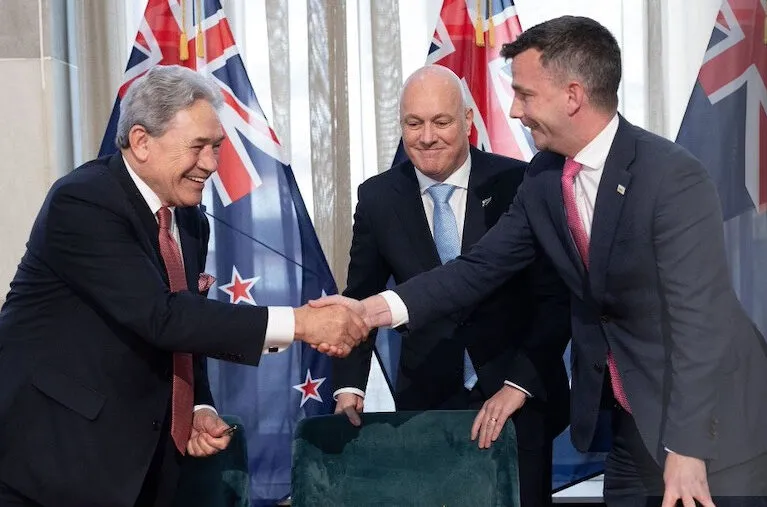
Subsequently, the careful analysis and constructive proposals of He Puapua were deliberately misrepresented to generate fear for political gain, foreshadowing the full-frontal assault on Māori rights that has characterised the current coalition government.
The current coalition has been the most anti-Tiriti government New Zealand has seen for decades. One might think that this would make for a difficult environment in which to discuss constitutional transformation that is grounded in te Tiriti, however, the radical nature of the coalition’s policy programme and the barefaced racism of many of its initiatives has made the need to build a new constitution for Aotearoa – with te Tiriti at its centre – all the more obvious and urgent. The mask has slipped and many more New Zealanders now see the problematic colonialism and other flaws of the current system, recognising the need for a different approach to the exercise of public power.
There is no better time to keep the conversation about constitutional transformation progressing. As the Matike Mai report notes, this should not be a Crown-led process, but instead a conversation built from the flaxroots. Further discussion still needs to take place within Māori communities about the need for and possibilities of constitutional transformation. Then there can be broader, local conversations. Those local discussions may lead to technical work and engagement with the Crown. But the legitimacy of a constitution comes from the people and so the potential of constitutional transformation must be built from the ground up.
The work of Matike Mai provides a starting point for the conversation and shows us that a different world is possible, grounded in good relationships and shared values.

Carwyn Jones
Carwyn Jones (Ngāti Kahungunu) is Kaihautū of Te Whare Whakatupu Mātauranga at Te Wānanga o Raukawa and teaches into the Māori Laws and Philosophy programme there. He is also an Honorary Adjunct Professor at Te Kawa a Māui (School of Māori Studies) at Te Herenga Waka – Victoria University of Wellington. He is one of the authors of Treaty Law: The Principles of the Treaty of Waitangi in Law and Practice.


