‘I couldn’t walk properly for weeks’: Kenneth Chapman can’t resist a challenge

Kenneth Chapman’s debut children’s novel is already a bestseller.
Made possible by
Welcome to The Spinoff Books Confessional, in which we get to know the reading habits of Aotearoa writers, and guests. This week: Kenneth Chapman, author of Lonasei and the Mystery of Origin Grove.
The book I wish I’d written
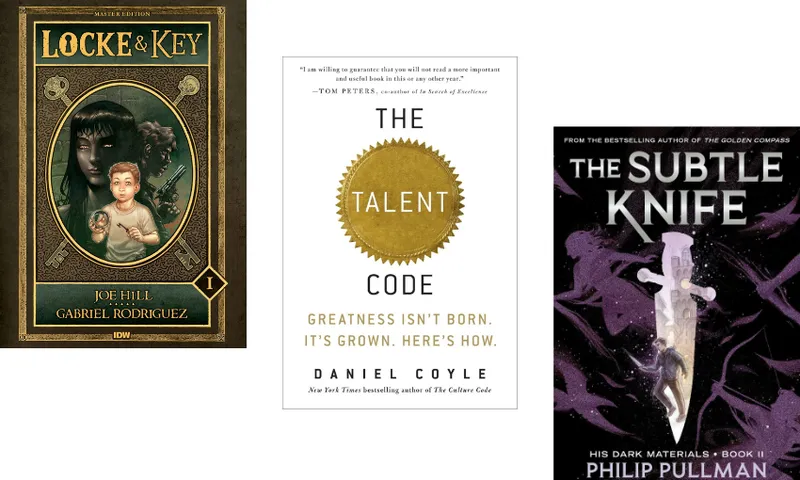
Locke & Key by Joe Hill. In the world of this story, a group of grieving siblings discover magical keys that literally unlock abilities in their minds. This completely captured my imagination, and as I was reading it, I wished I’d come up with what seemed like such a simple but genius concept. But what really got me, as I moved through the issues, was just how well Hill balances exciting and thrilling adventure with deeply moving character arcs. He leaves you on the verge of tears while at the same time itching to know what happens next. As a terribly slow reader, I’ve read this series multiple times, and I’m sure I’ll be reading it again soon.
The book everyone should read
The Talent Code by Daniel Coyle. I don’t know if there’ll ever be a book that should be read by everyone so I’ll just say a few words about the non-fiction book that’s had the most real-world impact on my life. The first time I finished reading The Talent Code, I put the book down and was confused. Not because the book was confusing but because the book so convincingly demystified something that most people either don’t understand (like me at the time), or think that we don’t actually have an understanding of, which is talent. So, in this way, I was confused at how it wasn’t one of the best-selling books of all time.
I believe most people, if not all, want to develop their talents. Whether it’s a sport, an instrument, a language, a subject in school or a craft or trade. The Talent Code uses a combination of science and real life case studies from all walks of life and varying fields of interest to prove how talent is cultivated, and how best to upskill in whatever it is you’re doing. It has helped me with tennis, piano, university assessments, skateboarding, writing, and now it’s helping me with bouldering and I’m sure I’ll be thinking about it with whatever I try next. If you want to know the book’s secret, you’ll have to read it!
The book I want to be buried with
The Subtle Knife by Philip Pullman. At one point while reading this book, I was left in the family van with a few of my sisters, entertaining ourselves as we did, waiting for our parents to return back when people used to leave their kids unattended for unknown periods of time. Sometimes that was 10 minutes, other times it felt like hours. But that day I didn’t notice the time. I could’ve happily waited in that 1990s Mitsubishi Sportspac all day because time stands still when you’re that engrossed in a book. I remember feeling so excited about the world the book had conjured in my head, specifically the imagery of this magical knife cutting open portals to other worlds. I wished so badly at the time that I could share what I was seeing in my head with other people because it brought me so much joy. I felt like the author and I were a team. As if Pullman’s words were the vehicle to ignite my imagination, to prove to me that the thing floating in my head was capable of so much more than memorising times tables and capital cities.
Never was I more passionate and excited by reading than I was during primary and intermediate. No one can really teach a child how to use their imagination the way we teach them how to ride a bike or tie shoelaces. One day you find yourself listening to a story or reading a book and it just happens. All of a sudden a handful of words lead to the creation of an entire world and it’s one of the most wonderful experiences I can think of. I feel like in part, my writing is simply a way to reach back and communicate with the version of myself that fell in love with this feeling. So, if I am to be buried with a book, I want it to a story like The Subtle Knife, which introduced me to my own imagination.
The book that haunts me
Can’t Hurt Me by David Goggins. This book haunts me because it’s an endless reminder that I could be doing more to discover what I’m truly capable of. Anyone who knows me knows that I’m the kind of person who reads a book or listens to a podcast and goes out and tries stuff even if it sounds ridiculous. When I read that Marina Abramović suggested sitting at a table and counting grains of rice for sixteen hours straight to become more present, I did that (turns out I misread and it was only meant to be like six hours, lol). No food, no water, no music, no nothing. When the artist David Choe suggested on a podcast to go spend a month alone in the middle of nowhere with no internet to help boost your creativity, that’s what I did. So when I read Can’t Hurt Me, and Goggins preached about the positive impacts of suffering through running 100 miles (160km) in a single day, I did that too. I couldn’t walk properly for weeks afterwards.
Were there benefits to all these things? Definitely. Did counting twenty-four thousand grains of rice to the point I couldn’t even feel my feet increase my patience? Yes. Did spending a month alone boost my creativity? Yes. Did slogging through over twenty hours of physical suffering make me more resilient? Yes. Were these experiences fun? Absolutely not. And that’s why this book haunts me. It reminds me that there are experiences out there waiting for me that are horrible, but that I know deep down will give me the kind of growth that can only be achieved in a state of intense discomfort.
The book that made me cry
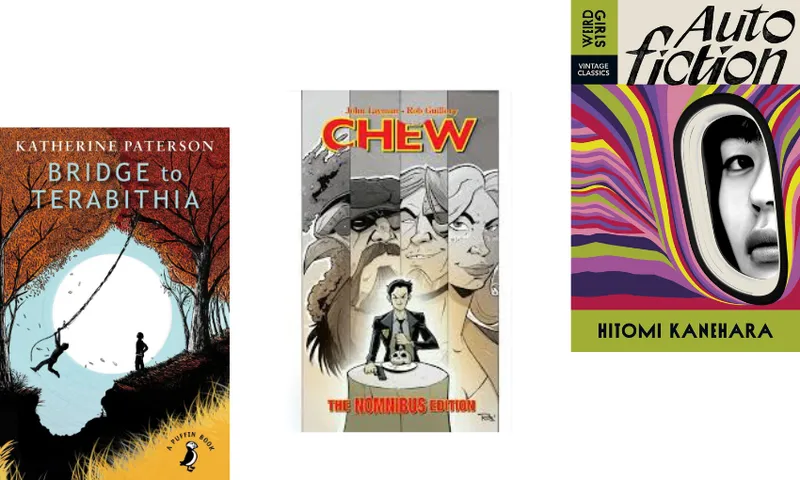
Bridge to Terabithia by Katherine Paterson. I first encountered this story as a teenager through the film adaptation. I vividly remember watching it by myself after school one day and having a big old cry. Years later, after having seen the film multiple times, I finally read the book, and it moved me just as much, this time I was crying at the dining table over breakfast.
The book that made me laugh
I never thought I’d read a book about cadavers and I definitely never thought I’d read a book about cadavers that was funny. Stiff: The Curious Lives of Human Cadavers by Mary Roach is both deeply informative and hilarious at the same time. A strong recommendation for all those with a bit of morbid curiosity. It was a few years after leaving high school and I was going through what I’ve now realised is a very cliche transition for a young man, which is to begin reading a lot of non-fiction. I must’ve heard about Roach’s book on a podcast and I was glad I did. Who knew how many wildly useful things humans have figured out how to do with a dead body? From medical to forensics, cosmetic to decomposition, I found it fascinating. Roach writes with such an ease and humour (despite the morbid subject matter) that you fly through as if it was a gripping narrative, laughing in places that will almost certainly make you feel guilty at times.
Encounter with an author
In 2023, I attended an online Zoom workshop with Graci Kim. It was a small workshop through NZSA where aspiring authors like me were eager to learn from Graci’s experience in getting a literary agent. At the end, she offered to be contacted by email if anyone had any further questions so I nervously reached out. I wasn’t sure whether she was simply being polite, but she soon got back to me and next thing I know, we’re sitting at a cafe together and sharing our stories. I thought I might be lucky to get 30 minutes with her but somehow I was blessed with hours of her time. She asked me about my manuscripts and I told her about Lonasei and the Mystery of Origin Grove. She loved the idea, offered to provide feedback and just three days later I received an email. She had already read the manuscript and written a list of amazing feedback points for me to action if I agreed.
I honestly don’t think this book would be published without her. She completely understood what I was trying to do and the readers I was writing for and knew exactly how I could make it better. She even provided the spark that led to something crucial in the entire lore of the series. I couldn’t be more grateful for Graci’s help. If you haven’t read her book Dreamslinger, you totally should. It’s an absolute delight. My favourite thing about Graci is that you can feel her enthusiastic and deeply kind personality shine through in her writing in the best way. I can’t wait for Royalslinger to come out this winter.
Greatest New Zealand writer
I haven’t read nearly enough New Zealand literature to make a claim like this, but over the last year or so, I’ve been reading more New Zealand junior fiction, and I adore Rachael King’s work. Having grown up in Wellington and now living in Auckland, Red Rocks was a beautifully nostalgic experience for me. The Grimmelings I loved even more. It’s hands down one of the best books I’ve read in years. There’s an atmosphere created in this book that haunts you just as much as it moves you, getting beneath your skin and making you feel like you’re under her spell. It moved me, thrilled me, and made me desperate for more like it. It’s also been so much fun reading her new Violet and the Velvets series (looking forward to the next two!), and I can’t wait to read Song of the Saltings. I love an author who is unafraid to write for different age groups and she does it so well. I feel honoured just to know that my book might soon be sitting alongside some of hers in bookstores around the country.
Best thing about reading
That it turns me into a filmmaker. As someone who is absolutely obsessed with movies, my favourite thing about reading is getting the chance to direct the film adaptation of every book I read in my head, complete with shot choices and editing, colour grading and music (I often listen to film scores and instrumental music that I think suit the book as I read), casting, set design and more. Unlike movies, where everyone is watching the same actors, hearing the same sounds, every imaginary adaptation by every book reader is going to be different. I think that’s the most wonderful and fascinating thing about reading. That we can all read the same words, but depending on who we are and how we imagine things, our experience of the book is going to be singular to us.
Best food memory from a book
In the wonderful comic series Chew by John Layman and Rob Guillory, the lead character is able to find out detailed information about food after eating. For example, if he eats an apple, he will know what tree it was picked from, who picked it, whether it was sprayed with pesticides and so on. He uses this ability to solve crimes which is a whole lot of fun to read. But, for some reason, the one food that doesn’t trigger his abilities is beetroot. And so, for his own sustenance, he eats and drinks nothing but beets and beet juice. As you can imagine, if every time you ate, you were bombarded with information and visions, it’d get pretty overwhelming, especially if those visions involved animals being slaughtered. I found Chew endlessly entertaining, the beetroot decision very curious, and I loved how crucial the role of food played in the solving of crimes. Highly recommend.
What I’m reading right now
Autofiction by Hitomi Kanehara. It’s told in four long chapters, each from a different year in the protagonist’s young life, starting at 22 and working back to when she was 15. Reading her experiences in reverse order is a fascinating way to learn about her. Her behaviour and perspective make more sense as you learn more about what she’s been through. I’m finding myself able to empathise with her more as the book goes on. It’s turning out to be quite a deeply heartfelt character study and one that feels quite telling in a time where so much is taken out of context, not necessarily from a lack of humanity, but a lack of time, energy and attention, in a world that seems to be moving faster every day.
Lonasei and the Mystery of Origin Grove by Kenneth Chapman ($28, Bateman) is available to purchase at Unity Books.
The Spinoff Books section is proudly brought to you by Unity Books and Creative New Zealand. Visit Unity Books online today.

The Spinoff Review of Books
A smorgasbord of books thoughts and formats by The Spinoff.


