‘What is a volvo?’ The joys of teaching kids about puberty

Image: The Spinoff
Once the initial giggles have passed and the students get more comfortable with the subject, the lightbulb moments begin to happen, writes Alana Palleson.
“Everyone repeat after me…penis!”
Shock saturates my students’ faces. Then I sing penis in a high-pitched voice. Slowly but surely, more and more join in. Before you know it, I have a class choir proudly repeating my “penis, vagina and breasts” calls.
Welcome to puberty education.
Every year when it’s time to teach puberty, I smile when writing “Health” on the whiteboard timetable. My students, aged 11-13, think they know what’s coming. Puberty education is about to make its grand appearance and I am ready and waiting with my laminated body parts. Before we even start, some are squirming in their seats. Some are wide eyed, others cover their faces, and a flush of pink radiates off cheeks.
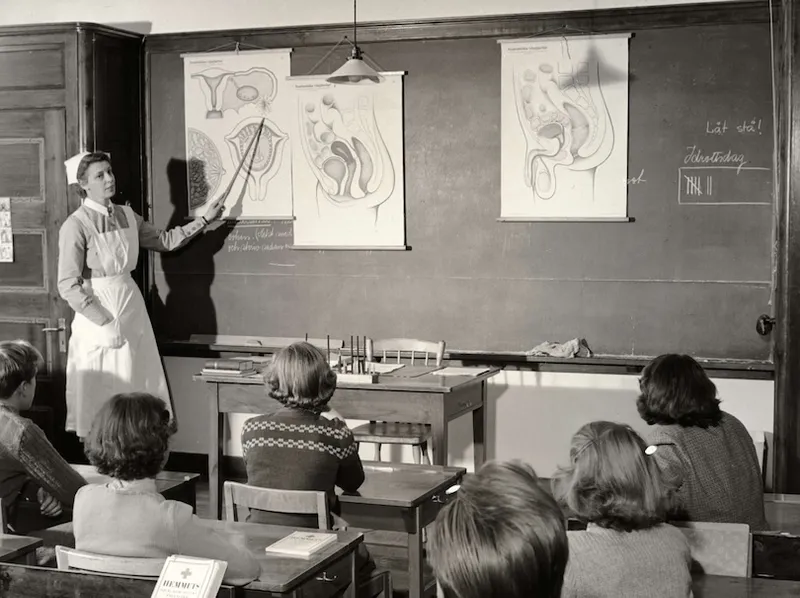
I always start puberty the same way, by laying out printed outlines of bodies, instructing the class to go around and label them. Nothing is off limits. If a student labels something as balls or boobs, I don’t correct them right away. The goal of the activity is to see what they already know.
Once the initial giggles have passed and the students get more comfortable with the subject, the lightbulb moments begin to happen. When students learn something new about their changing bodies, that initial dread turns to love. Students get excited at the thought of another puberty lesson and are sad when it comes to an end. I even had one student write on an anonymous folded piece of paper, “Thank you for not making this class weird.” If I was ever to receive a compliment for teaching, that was it.
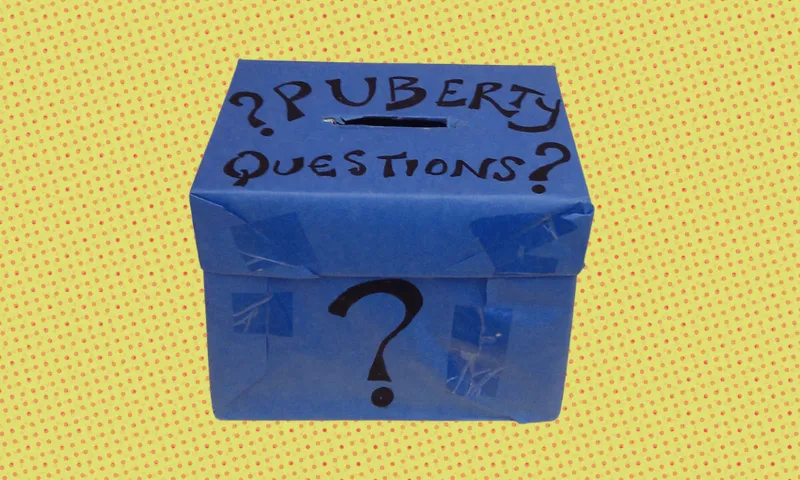
When the students feel safe, that is when the real magic happens. The anonymous puberty question box is often filled with goodies, and keeping a straight face can be a hard task. I always read the questions first to make sure they’re appropriate, and I use the correct terminology when I read them aloud. But even after a decade of teaching, the students never fail to surprise me. Here are just a few:
Can I shave my cooch?
Why is my penis so long?
Will I see my egg come out in my period?
What is the white stuff coming out of my penis?
What is a volvo? (bless, they meant vulva)
What hole does a tampon go in?
Why is one testicle bigger than the other?
The questions are wild, vulnerable and honest, and you really just never know what you are going to get. At first, some spend ages trying to disguise their handwriting so I won’t recognise it. Then suddenly they don’t care any more and will ask out loud why one testicle can be bigger than the other. That’s when you know you’ve created a safe space for curiosity to flourish.
Unlike my school days when the girls were sent to another classroom for the period chat, I have never separated boys from girls. Everyone learns about everything. I once asked my class why it was important for everyone to learn about periods. One young man replied, “Because I might have a wife one day.” He wasn’t wrong.
Girls learning about wet dreams and boys learning about periods creates understanding and empathy, and eliminates those curious questions before they even make it to the anonymous box.
I also never dip a tampon in a glass of water to demonstrate how it absorbs and expands. For some students this is utterly terrifying. Instead, all the period products get passed around so everyone can see, touch and understand how they work.
I still get asked the same questions year after year. There are a few reasons for this. Some students haven’t hit puberty yet, so everything is new and they’re simply curious. Some haven’t had these conversations at home, so they have a list of things they’re wondering about, and some teachers feel uncomfortable teaching puberty and only cover the basics, leaving even more questions.
Whatever the reason, puberty doesn’t have to be a serious subject. In my classroom we laugh a lot. I learn alongside my students and never hide that. When a student asks something I don’t know, I say so, and we find out together. No question is silly. We laugh with each other, not at each other. It is a safe space where curiosity is celebrated.
Some parents worry they need to have all the answers, but you don’t. You don’t need to know that girls have three holes and boys have two, which is a very real concern for students asking which hole a tampon goes in. I quickly assure them it won’t fit in the urethra, they’ll know if it has gone somewhere else, so the last opening is the only one left. Problem solved.
You just need to be the safe person your child can ask – and don’t worry, you can leave the choir to me.

Alana Palleson
Alana Palleson is a teacher, writer and poet. She has spent over a decade teaching puberty education across primary, intermediate and secondary schools.


