Silvia Cartwright on being thrown into the Unfortunate Experiment inquiry

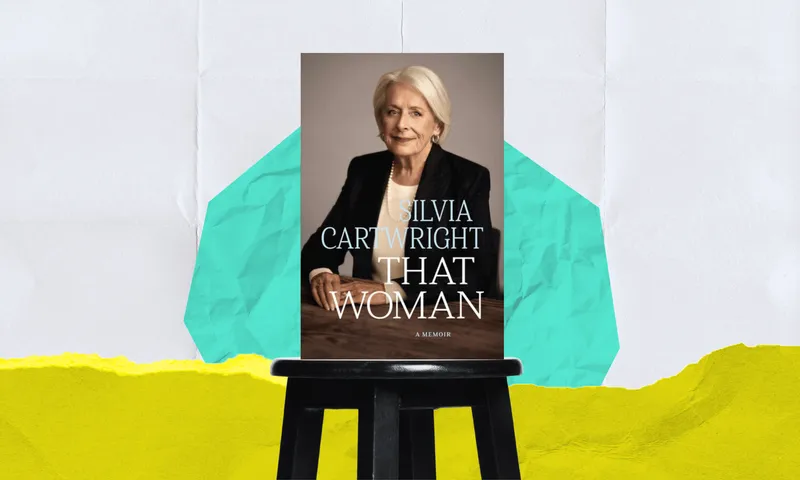
Sylvia Cartwright (Photo: supplied)
In an extract from her memoir, Dame Silvia Cartwright writes about how she became a key player in the aftermath of the Unfortunate Experiment bombshell.
At Queen’s Birthday weekend in 1987 we were staying at our beach house at Waihī Beach when Peter read a Metro magazine article titled "An unfortunate experiment", alleging unethical and dangerous research on women gynaecological patients. He suggested I read it, but I decided it looked too gruesome. I left it at the beach house when I flew to New Plymouth for my family court circuit.
I had been on the bench for nearly six years and was 43. I was not looking forward to this circuit list, which included far too many undefended paternity applications. On about the Thursday, the registrar came into court to tell me Peter was on the phone. I said I would ring him back in the adjournment. The registrar came back. "It’s the Attorney-General on the phone now." Obviously, I should have adjourned to take the call, but I stubbornly declined to do so until I had finished the matter in front of me.
When I returned Geoffrey Palmer’s call, he asked if I would undertake a "short, sharp" inquiry into the allegations made in the Metro article. Not having read it, I had only a vague idea of what he was talking about but said I would check to see whether I could be freed from court for the six weeks he mentioned, thinking it would be a marvellous break from all these paternity cases. Geoffrey told me that Peter had approved it, and I asked why on earth he had asked my husband before me. The mystery was quickly cleared up – he meant Peter Trapski, principal family court judge, and I apologised for my feminist irritation.
Geoffrey, who by this stage in my life was a highly respected legal academic and politician, asked me to come to Wellington the next day to review the terms of reference. There, he took me through the terms of the proposed inquiry, which still meant little to me – I must have been the only person in New Zealand who had not read the Metro article. I also discovered that Geoffrey’s "short, sharp" inquiry bore a much longer name: Committee of Inquiry into Allegations Concerning the Treatment of Cervical Cancer at the National Women’s Hospital and into Other Related Matters. One of the promises he had already made, at my insistence, included no press conference. I certainly was in no position to answer questions.
He took me along the corridors of the Beehive to meet Michael Bassett, minister of health, in whose name the inquiry was to be launched. Then we went through more corridors and I was shocked to find myself at a press conference, with cameras flashing and at least 20 journalists. I was peppered with questions, only two of which I recall: "How old are you?" and "Have you ever been a patient at National Women’s Hospital?" Neither question was any business of the public but, reluctant to be precious, I answered them.
Years later I was reading about the whole medical and ethical tragedy in a book by Sandra Coney, who along with Phillida Bunkle had researched and written the Metro article. I was delighted to be reminded that I had been asked how I would run the inquiry differently from a male judge. According to Coney, I had said I had no idea as I had never been a man.
I flew back to New Plymouth that evening clutching a copy of the magazine article and the inquiry terms of reference. The next day I drove as usual to Hāwera Court to do a day of family court work. As I nosed into the carpark through a crowd outside the court I wondered what famous person was to be on trial that day. I spent an uneventful day in the Family Court, which is closed to the public, only to discover that the crowd had been there to film me but, because I was an unknown, had missed me altogether.
Back in Auckland, with the inquiry due to start in about a fortnight, I attended to my usual court lists while frantically trying to put together an inquiry team and corral the necessary medical and other experts who would give evidence. First, I needed to grasp the scientific issues I was to deal with in a professional field with which I was completely unfamiliar. The inquiry centred on a series of informal experiments carried out on women by National Women’s Hospital gynaecologist Professor Herbert Green. It transpired that Green was well known within medical circles; that many of his colleagues were fiercely loyal to him and his research, while others were not. That meant I had to look offshore for independent, world-class experts in the field. I had been given a list of leading experts, and I recall, in adjournments between court hearings, calling them in Australia, Scotland, Norway and the US to persuade them to come to New Zealand as advisers or expert witnesses. The fact that I had a toll-barred telephone in my chambers did not help.
Bear in mind that I had absolutely no knowledge of any medical topics, that I had never had children, that I had only the vaguest understanding of my own anatomy and a distinct distaste for anything to do with surgery or hospitals.
Geoffrey Palmer suggested Lowell Goddard as counsel assisting, a role I did not even know was needed but was more than happy to accept. Together we inspected the proposed inquiry premises, decided that the slightly confused first registrar appointee would not work, as he kept disappearing into a cupboard instead of the kitchen, and planned as well as we could for the hearings ahead. Fortunately for me, Lowell was a gifted lawyer, well liked by other counsel and a lot of fun. She also knew how to organise the hearings, and managed counsel and others, including Phillida Bunkle and Sandra Coney, while I worked on the shape of the hearings to come and the experts needed.
I set a date for the initial hearing, which was intended to establish procedure and deal with any issues the parties involved might have. I also confirmed the list of parties who had sufficient connection to the matters to be heard. On the morning of this initial hearing, I dealt with a couple of family court chambers matters and, with my handwritten notes for the hearing in hand, literally ran down the hill from the family court to the inquiry rooms in the Bledisloe building. I arrived a few minutes before the hearing was due to start, expecting a few people, maybe a couple of journalists and perhaps three lawyers.
It was one of the worst moments of my thus far laid-back judicial life. The hearing room was quite large – it could seat about 100 people – and it was jammed with attendees, including press. The first few rows were packed shoulder-to-shoulder with lawyers, of whom perhaps one or two were women. I saw at the back of the room a number of women whom I correctly assumed were patients or former patients of National Women’s Hospital, but they were completely obscured by members of the legal profession. Most of the lawyers were unfamiliar to me; many came from Wellington, briefed by the medical insurers who were meeting the cost of legal representation for the medical practitioners whose conduct was in question. Others I knew vaguely, such as David Morris, the Auckland crown solicitor. But I had not encountered most of these great men of the profession, and nor had they had a chance to assess me. The only indication I had of their initial assumptions about me came at the end of the inquiry, when David Morris in his Scottish accent said, "Well, judge, we never thought you could do it." I think it was a compliment.
That Woman: A memoir by Silvia Cartwright, published by Allen & Unwin Aotearoa New Zealand, $49.99, is out now.


