Why New Zealand is the world's flavour guinea pig

As a wise man once said, we don't know how lucky we are (Image: The Spinoff)
Ginger Coke, Caramilk, even Eftpos – we had them all first.
We’re the first to see the sun rise on a new year, we were the first country to give women the right to vote, and one of our own was part of the duo that first conquered Everest. And we were also the first to … try out a ginger flavoured Coca Cola?
That’s right. As you trawl the aisles of Woolworths or Pak’nSave you may be doing more than the weekly shop – you may be part of a global market test. Mondelez, the company who owns Cadbury, has openly described New Zealand as a testing ground where it can “trial and incubate” snack innovations before taking them elsewhere.
In 2005, New Zealand became the first country in the world to try the official version of something we’d long been partial to ordering “off menu” – Coca-Cola Raspberry. But not as we knew it (ie simultaneously sprayed from a Coke tap and poured from a cordial bottle by the skilled mixologist at your local Cobb & Co). Now, it came premixed in can and bottle form. Not everyone agreed that the official version was better than the original. “The ratio was all wrong,” one long-time Raspberry Coke enthusiast told me, “and it didn’t have the syrupy sediment at the bottom”.
Of the release, Coca-Cola explicitly described the country as a “test-market” referencing Kiwis’ reputation as early adopters of new experiences.
Then came Caramilk.
In 2017, the caramelised white chocolate was resurrected after a 23-year hiatus, to be sold exclusively in New Zealand, and the response was unhinged. One million of the chocolate blocks sold out within three weeks. Frantic shoppers travelled from supermarket to supermarket to hunt down the hallowed blocks. Countdown Ponsonby said it was bringing in an additional security guard specifically to cope with the expected demand of the coveted treat.
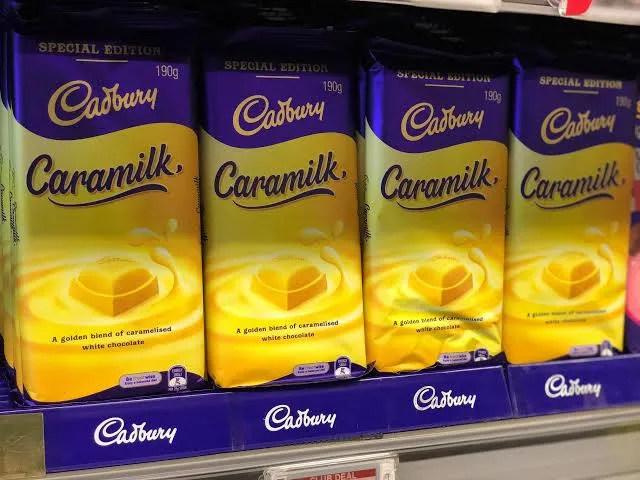
Some entrepreneurial Kiwis cashed in, selling frenzied Australian fans the $3 blocks on eBay for upwards of $40. By early 2018, Cadbury had taken notice of the Trans-Tasman demand and announced it would bring the chocolate to Australian shelves.
Kate Goodwin, head of marketing at Griffin’s explained why New Zealand makes an appealing test market. “We can launch, learn and refine an idea relatively quickly and understand whether it has the potential to travel,” she said. Our consumers are “relatively adventurous”, with a strong food culture and diverse population affording companies “quite a lot of licence to explore new flavour combinations”.
But predicting what will go down well is another matter. Griffin’s was unsure how its limited-edition Black Liquorice Toffee Pops would land, owing to the notoriously polarising ingredient. But the product “significantly exceeded expectations”.
Other experiments may simply be too avant-garde. Griffin’s Savoury Nice & Natural muesli bars combined sweet and savoury at a time when the mix was still relatively unfamiliar to consumers and failed to gain the traction the company had hoped for. Sweet and savoury snacks have since become considerably more mainstream. “It is a good reminder that being ahead of a trend doesn’t always mean the timing is right,” said Goodwin.
Professor Joanne Hort, Fonterra-Riddet chair in consumer and sensory science at Massey University, says New Zealand makes a good test ground, attributing our small size to lower risks. “If it succeeds, great,” she says. “If it doesn’t, well, that’s no big problem.”
But not every strange flavour is necessarily angling for a permanent spot on supermarket shelves. Hort says limited editions can serve another purpose altogether by keeping us thinking about the brand. Whittaker’s is a prime example. Hort says their limited releases are “a good way of trying out flavour, but it also keeps Whittaker’s in people’s minds – it's a marketing and branding exercise.”
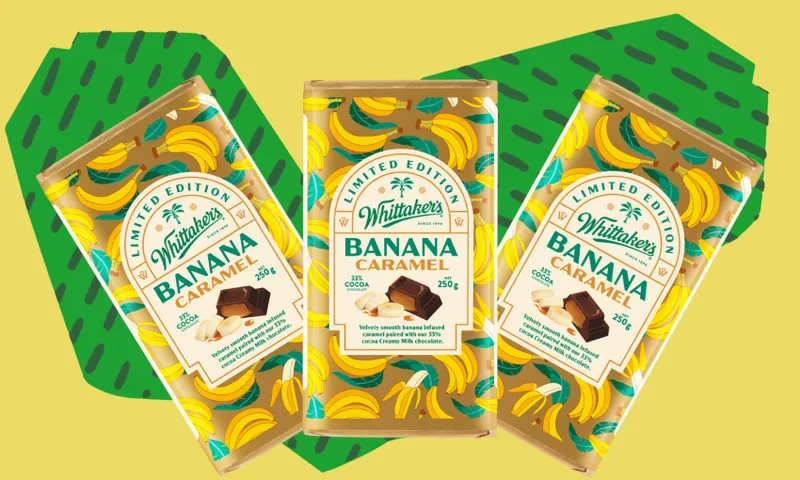
Novelty is also attractive. “We’re hardwired to want to try new things,” Hort says. If it comes from a brand we already like, “you’re keen to try something different.”
Nestlé’s New Zealand foods lead Fern Castellanos also describes the country as “an attractive market for innovation”, pointing to Maggi air fryer seasoned coatings, which launched here first after Nestlé noticed Kiwis’ growing use of air fryers, before inspiring similar products in other global markets.
But we’re not just a flavour test zone, we’re also the perfect subjects for trialling formats. This year, PepsiCo decided to shape-shift some of its savoury sundries, taking four beloved Bluebird chip flavours and reincarnating them as oven-baked crackers. Elsewhere in the revamp, familiar snacks were shrunk to mini size and stuffed into tubular canisters to “bring three of New Zealand’s most popular snacks into portable, grab-and-go formats featuring fun and differentiated mini sizes”. Perfect for anyone who has ever found a crinkly bag of chips cumbersome, preferring instead a sleek cylindrical container for more aerodynamic snacking. You know the old saying: if it ain’t broke, differentiate its size.
On investigation, our status as guinea pigs extends beyond just food. New Zealand has long held a reputation internationally for being a test ground for all manner of new technology and products, we’ve been inaugural samplers of everything from Pokémon Go and drone-delivered pizza to Eftpos, which was first trialled right here in New Zealand in the 80s.
Not everyone welcomed this contemporary currency, with some fearing big brother recording their transactions. In what will no doubt go down in history as an absolutely red-hot burn, the banks retorted that they had “neither the time nor the inclination” to follow customers’ movements. Another major concern at the time was whether people would cope with the extremely complex task of having to remember a four-digit PIN.
When it comes to pioneering new flavour profiles, we’ve had some hits, but we’ve also had some distinct misses. In 2020 in the midst of Covid, Bluebird decided to kick us while we were down by imposing a new limited-edition flavour – the lamington chip. The chip went down like a shit sandwich, with The Spinoff’s renowned chip connoisseur Madeleine Chapman delivering the scathing verdict: “honestly the worst chip I’ve ever eaten, it’s so bad.”
I can relate to Chapman’s dismay, for I, too, have fallen victim to another snack company’s crime against the lamington.
On a domestic Air New Zealand flight, I was offered a light cabin refreshment. What was handed to me shook me to my very core: A raspberry lamington cookie.
I like a lamington as much as the next New Zealander, but the main appeal is its soft, spongy texture – its moist cakiness, the dollop of whipped cream and jam quivering atop its pillowy centre. None of this je ne sais quoi could be replicated in cookie form. They took a lamington and a cookie, smushed them together, baked them within an inch of their lives, then finished with a sad sprinkling of coconut.
But that was just one minor transgression in Cookie Time’s long list of absolute bangers. Over the years it’s wowed us with a vast array of tantalising flavour profiles. But in 2023 they introduced a product so pivotal, it deserved a plaque in front of the Beehive – and possibly a public holiday: The Cookie Time ice cream.
Soft vanilla ice cream sandwiched between two chewy cookies, perfectly al dente from the servo freezer – the kind of dessert that could make you briefly forget your 4-digit PIN, but remember exactly why you live in New Zealand.
Kiwis lost their collective minds over them. They became an instant bestseller, with Cookie Time soon fielding export enquiries from Australia to Japan, all keen to stock the novelty ice cream.
I’m proud of our status as snack testing champions, and I’m more than willing to continue trailblazing the thrilling road of new flavour profiles. Just please, for the love of god, leave the lamington in the bakery, where it belongs.

Rose Hirst
Rose Hirst is a Christchurch-based mother and freelance writer who writes humorous observations about modern Kiwi life, nostalgia and the strange rules we all live by.


