What Bezos did at the Washington Post could happen in NZ

Anna Fifield was one of hundreds of journalists laid off by the Washington Post earlier this year (Photos: supplied; Getty Images. Design: The Spinoff)
Pro-Trump media ownership is influencing journalism in the US. Think it couldn’t happen here? Anna Fifield argues developments over the past year say otherwise.
The walls inside the Washington Post building on K Street – the flash new premises provided by Jeff Bezos after he bought the newspaper in 2013 – are covered with inspirational quotes.
There’s this one, from Ben Bradlee, the editor-in-chief at the time of the Watergate scandal: “The truth, no matter how bad, is never as dangerous as a lie in the long run.”
And this: “There is only one good reason to enter journalism: When we do our job we can make a difference.” That’s from Don Graham, scion of the family that owned the Post for 80 years before selling it to Bezos.
Whenever I went back to head office during my years as Tokyo then Beijing bureau chief, and most recently as Asia editor, I found them inspiring. This was my calling. It might sound trite (or self important) but to this day, I believe that a free and flourishing press is crucial to democracy.
On my last visit to the mothership, however, I noticed that a new inscription had appeared on the walls. It was from Bezos and it said: “What’s dangerous is not to evolve.”
At the time, I snickered, but I shrugged it off as an owner’s right to install himself among these lions of journalism.
After all, he’d been a great owner for the first 11 years: He had invested heavily in the Post and backed the Star Wars-sounding motto, Democracy Dies in Darkness, but had not inserted himself into editorial operations. It seemed he was truly interested in journalism as a democratic institution, rather than pursuing the Post as a vanity project (after all, he had his space programme for that).
I should have seen that quote on the wall as a portent. Boy, did he evolve in his ownership of the Post – and in ways that would soon feel dangerous.
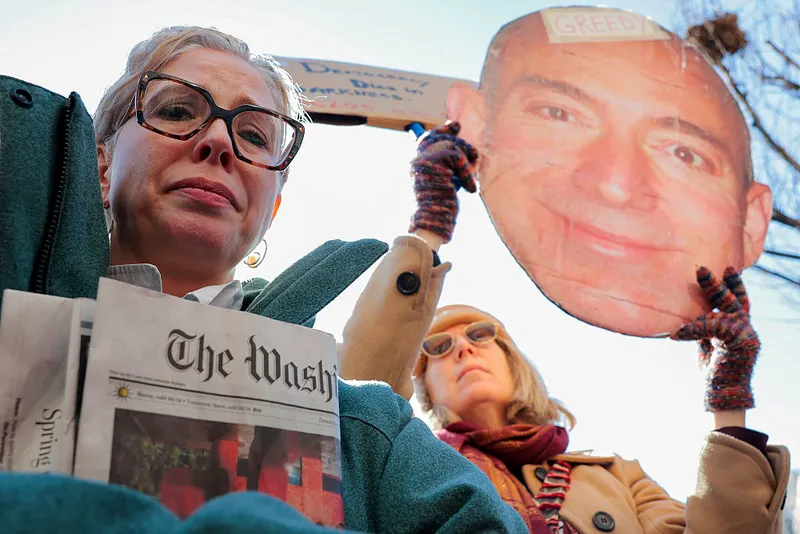
In the run-up to the 2024 presidential election, Bezos would spike the Post’s endorsement of Kamala Harris, a decision that saw the exodus of several hundred thousand subscribers and many brand-name, Pulitzer Prize-winning journalists.
Then came the Amazon founder’s edict that the Post’s opinion page would henceforth be devoted to “personal liberties and free markets”.
Another exodus. A round of devastating buyouts.
Then came the biggest blow of all: Some 375 journalists – including me – were laid off in a single day in February this year. It was brutal. Almost everyone on the international desk – including the entire China, Middle East, Ukraine teams – gone. Sports, gone. Books, gone. The flagship Post Reports podcast, gone. The local, climate, photo, technology and video desks were left as shells of their former selves. Almost half the newsroom disappeared overnight.
Cost cutting was the ostensible reason — although the Post is owned by one of the world’s richest men.
This same trend is occurring across the United States. Billionaire David Ellison bought the CBS network and appointed Bari Weiss, a right-wing columnist with no television experience, as editor-in-chief. It’s been haemorrhaging viewers, as well as journalists, who are complaining about pro-Trump editorial interference.
Ellison has now set his sights on Warner Bros. Discovery, the owner of CNN, a well-established global channel that Trump regularly labels a “corrupt organisation” that he says is publishing “fake news”.
That would make the overall media eco-system friendlier to Trump and his “alternative facts”. And that’s without even mentioning the pro-Trump propaganda over at Fox News, the president’s preferred TV channel, and the substantial reach he has with his all-caps, late-night blast medium, Truth Social.
It’s easy to look at what’s happening in the US as an aberration in their system, the result of an increasingly authoritarian president going unchecked by a cowed Congress. But we shouldn’t be too blasé. This past year has seen some worrying developments in New Zealand involving a seemingly politically-driven billionaire seeking media influence and a government that looked like it was attempting to intimidate media figures.
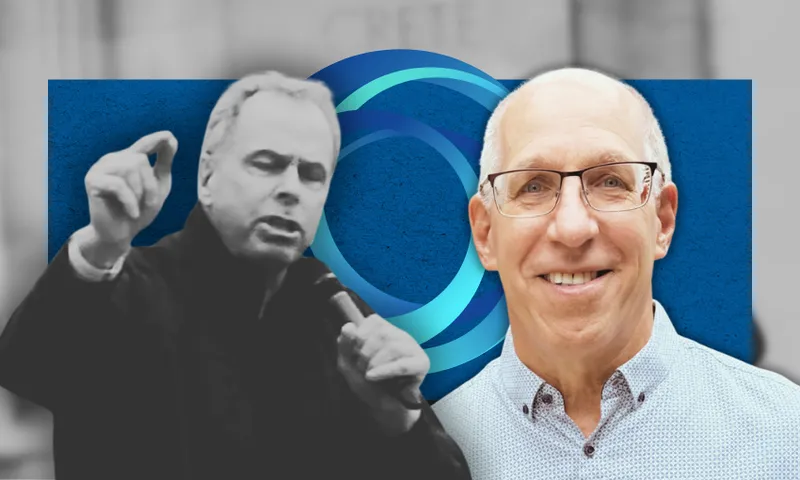
Canadian-born private equity billionaire Jim Grenon, a New Zealand resident who has backed anti-vax conspiracy theorists, is now the largest shareholder of NZME, owner of the New Zealand Herald and Newstalk ZB, and is a director on its board.
He may have failed in his board takeover attempt – at least for now – but he has continued to use his financial resources to fund challenges to other reporting he dislikes.
He funded a defamation case taken by Julian Batchelor, the conspiracy theorist and organiser of the “Stop Co-Governance” roadshow, against TVNZ and disinformation expert Sanjana Hattotuwa – and tried to keep his involvement secret. In both cases, Grenon tried to shape NZ media and public discourse from behind the scenes, which is precisely what worried NZME’s board and shareholder groups from the outset.
Then there’s concerns about government attempts at interference.
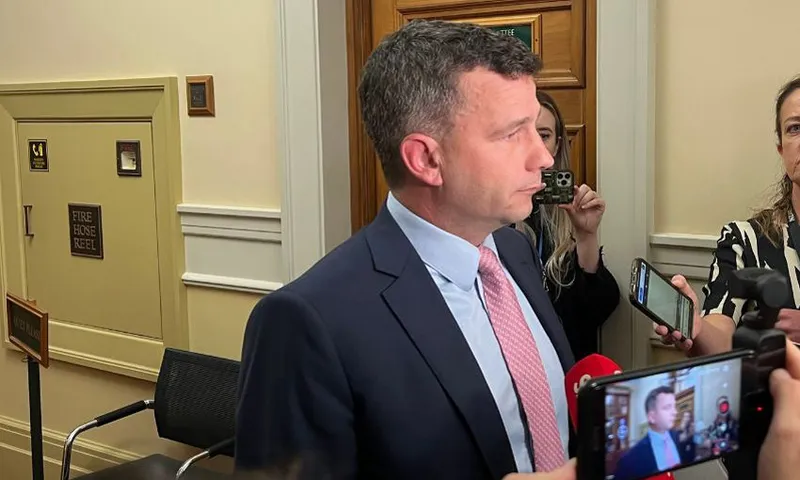
Act leader and deputy prime minister David Seymour – who is also a shareholding minister for both RNZ and TVNZ – earlier this year sharply criticised the management of both state broadcasters.
Seymour attacked RNZ’s decision to appoint John Campbell as co-host of Morning Report, saying opinion pieces Campbell wrote while working for TVNZ should have put the idea of him hosting the flagship programme “out of the question”. Referring to RNZ chief executive Paul Thompson, Seymour said “that guy’s got an awful lot to answer for, and I suspect that he won’t be answering the call at RNZ for much longer”.
RNZ chairman Jim Mather strongly defended RNZ and its management, saying it is editorially independent, and indeed, legislation prohibits ministers from interfering in editorial decisions at RNZ or TVNZ. Seymour denies he stepped outside the bounds of law.
Fast forward, and Thompson has announced he’ll leave his position at the end of the year – a decision he said he made at the end of 2025, before Seymour weighed in – while Mather’s term came to an end last month.
Paul Goldsmith, the minister for media and communications, distanced himself from Seymour’s remarks, but has – at the same time – proposed changes that have also raised concerns about the erosion of standards and the institution of the media as a pillar of democracy. This includes closing the Broadcasting Standards Authority, the regulatory body governing radio and television – something experts have said is “politically expedient” and “democratically indefensible”.
None of these efforts have had any discernible effect on the way RNZ and TVNZ operate – and none of it is remotely comparable to the intimidation and interference happening in the US.
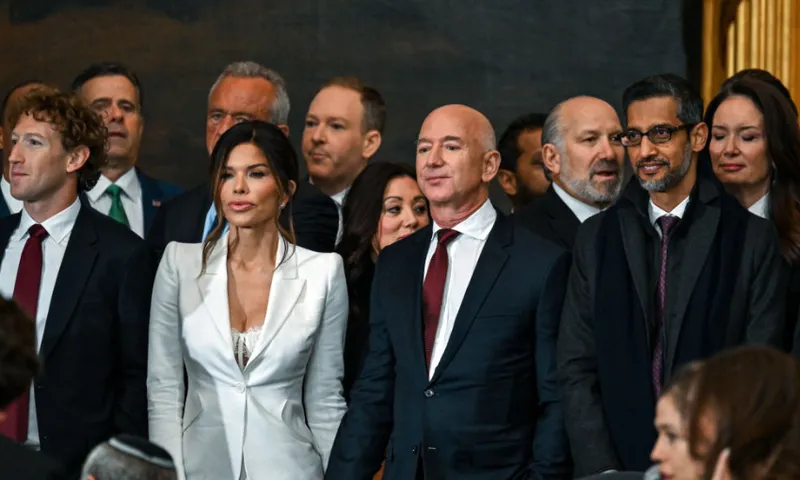
But if you had asked me three years ago if I could imagine Jeff Bezos prominently seated at Trump’s inauguration, then soon after aligning the Washington Post’s editorial page to Trumpian ideals, I would have laughed and said it wouldn’t – it couldn’t – happen.
If there’s one thing I’ve learned over the past year, it’s not to take anything for granted.
The media sector in our small country is economically stressed: It’s battling international tech giants and AI models gobbling up digital revenue, and we’re all dealing with news fatigue and its cousin, hope fatigue.
The challenges are real, and becoming existential. Just look how many journalist jobs have been lost in the past decade (and it’s worsened in the past few years, with further job cuts and the closure of Newshub).
But there are still lots of journalists in New Zealand doing their very best in this tough environment, holding power to account on behalf of all of us. Because there’s another lesson for Aotearoa from the US: When the media is eroded or disappeared, our democracy clearly suffers.
In the US, media analysts have noted the appearance of “news deserts” – places where there is virtually no credible local journalism. “Democracy suffers as citizens become less engaged and more polarised, and as government corruption flourishes because the watchdog has gone silent,” Margaret Sullivan, a former media columnist at the Washington Post and public editor at the New York Times, has written.
One study with a particularly jarring title, echoing the Post’s tagline – “Financing Dies in Darkness?” – found that when a newspaper closed, the city council had more trouble borrowing money. The markets concluded that local newspapers held their local governments accountable and kept costs low.
Other studies have shown that “news deserts” – in the US, as well as in the UK, Australia, Norway and Switzerland – have increased political polarisation, and reduced civic knowledge and voter turnout.
Despite everything that’s happened in the past few years, it is still clearly true that democracy does die in darkness. Here’s to sunlight.
Anna Fifield now writes about New Zealand’s place in the world on Substack and compiles the Spinoff’s weekly World Bulletin newsletter.

Anna Fifield
Anna Fifield is the former Asia-Pacific editor and Beijing bureau chief of the Washington Post. She is bow the editor of The Spinoff’s World Bulletin newsletter and writes on New Zealand’s place in the world on her Substack, Between Giants.


