Kiri Allan is open about her mental health and a closed book on other parts of her life

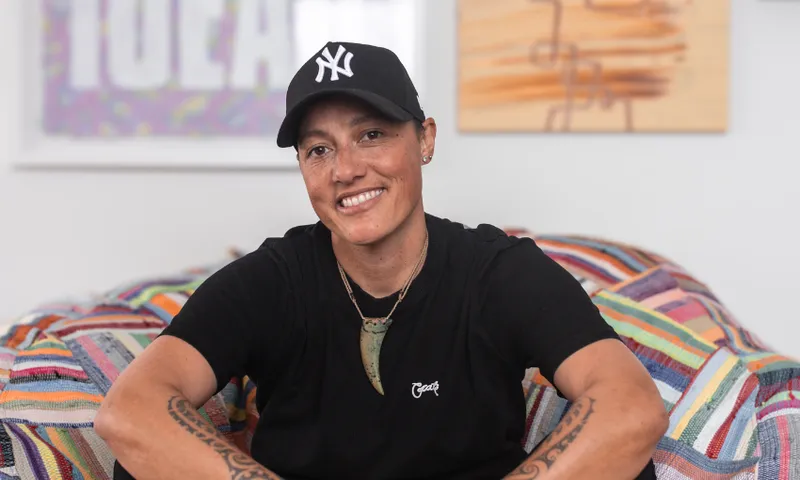
Kiri Allan (Photo: supplied)
Made possible by

The way Kiri Allan writes about her mental health struggles stands at odds with an entirely closed approach to other aspects of her life.
This article discusses self harm and suicide. Please take care.
Kiri Allan’s autobiography opens, quite literally, with a bang. That’s the sound of the minister of justice, alcohol in her system and tears running down her cheeks, losing control of her car and careening into a parked ute.
It was a brave decision to begin Go Hard or Go Home on a dark night of the soul, on a dark street in Wellington, handcuffs around her wrists, a police officer pushing her body onto the bonnet. It was also the only sensible choice, given that her crash that July 2023 evening turned a deeply personal crisis into a political and public one.
That dramatic night, which ended her political career, was the result of a long, slow unravelling. Allan, who had six months away from parliament after being diagnosed with cervical cancer, writes that she returned to work too quickly after brutal treatment and drove herself hard while dragged down by intense fatigue. She was also dealing with the end of a relationship and was upset at allegations about the way she treated staff.
On top of that, the Labour minister was deeply distressed at the direction the government was taking, after Jacinda Ardern stepped down in January 2023. “Through the first couple of months of 2023, I began to experience a real loss of hope, particularly with some of the policy direction we had transitioned to. And I guess, in all honesty, I started to doubt some of my colleagues when decisions were made that seemed to fundamentally go against what I considered was the ethos of our party,” she writes. “We were the party of the working class yet we took off the table any form of wealth tax of capital gains tax, putting us at odds with several comparable countries.”
She stops short of landing her grievances at the feet of Ardern’s successor, Chris Hipkins, but, even if others rubbed her up the wrong way too, it’s interesting to watch how she mostly refers to Ardern during her years in power as “Jacinda” and to Hipkins during his only as “the prime minister”. (Ardern, it should be noted, also ruled out a capital gains tax.)
Allan was at odds with others in the Labour caucus too, particularly Stuart Nash, who was police minister. She takes an easy shot at him, reheating his shameful “pussy and a pair of tits” line, but her beef with him lies further back. He wanted to respond to loud concern over ram raids – and the young people sometimes involved in them – by getting “tough on crime” and locking up youth offenders. It was anathema to Allan, who worried about the impact on Māori. She had also seen her brothers go through the criminal justice system and had, in part, been motivated by their experiences to enter parliament. She wanted to tackle the youth crime situation with a supportive approach, but eventually she lost the battle and the government introduced new penalties for young offenders.
Allan writes that she went out and sold the policy to reporters, but “my soul felt destroyed”. She should have surrendered her ministerial warrant or crossed the floor, she writes. But she didn’t, and her mental health deteriorated.
Allan found a therapist, but was so busy she’d often miss the appointments. She began drinking and self-harming, and writes that on the night of the crash, she wanted to kill herself.
The openness at which Allan writes about her mental health struggles (she recovered at a respite retreat in Thailand) stands at odds with an entirely closed approach to other aspects of her life. While she peppers her book with warm mentions of her ex-wife, Natalie, for instance, Allan’s long-term partner and one-time fiancee, journalist Māni Dunlop, has been erased from her history. Her name doesn’t appear at all, but then an intimate detail is casually dropped in, as Allan writes about how cancer treatment torpedoed her libido. “It turns out sex is important in an intimate relationship and libido is important for sex. Like many lessons in life, I learnt that one the hard way.”
There is other patchiness. Allan includes an entire campaign diary she wrote for The Spinoff ahead of the 2017 election. It takes up close to six pages and goes into detail that would have been interesting at the time, but that, close to a decade later – and dumped in the middle of a book – is a needle across a record. The diary’s inclusion only seems more odd when she delivers just three paragraphs about her 2020 campaign.
While we’re counting, there are seven words about the furore over an ill-advised speech she made at RNZ in 2023, which saw her accused of coming close to directing the state broadcaster (ministers are not allowed to give editorial or operational direction), but repeated, seething mentions of journalist Andrea Vance, who reported allegations of Allan’s treatment of staff. One of Vance’s reports, she writes triggered “an explosive breakdown at work”.
There are also loose ends. Allan writes that she wasn’t surprised that, aside from Willie Jackson, almost all of Labour’s Māori and Pacific Island ministers from the 2017 government opposed her ascension to cabinet the following term, but offers no explanation for their resistance. She writes repeatedly (and repetitively) about why she pleaded not guilty to a charge of resisting arrest, flowing from the car crash, but she doesn’t mention – let alone offer an explanation – as to why she changed her mind and pleaded guilty.
Anyone writing a biography must decide what to leave in and what to leave out, whose privacy to protect and who to write into history, but when your public life is as recent as Allan’s and you decide to leave out well-known people or skip over events, you’re asking readers to pretend their own memories – and the internet – don’t exist.
Perhaps that’s why some of the chapters dedicated to her life before politics feel more illuminating. They trace an incredible path from high school drop-out to law school and on to parliament, from a Pentecostal Christian afraid of being gay to a proud, out lesbian, from a woman ashamed to be Māori to a champion for her people. It’s an inspiring story, but a shame the telling feels so uneven.
Go Hard or Go Home: My story by Kiri Allan is released today.
Helplines
Lifeline – 0800 543 354 (0800 LIFELINE) or free text 4357 (HELP). Here to listen and help.
Samaritans – Free call 0800 726 666 for support for anyone who is lonely or in distress (24/7).
Need to talk? Free call or text 1737 any time for support from a trained counsellor.
Suicide Crisis Helpline – 0508 828 865 (0508 TAUTOKO). If you, or someone you know, may be thinking about suicide, call for support from a trained counsellor.
The Spinoff Books section is proudly brought to you by Unity Books and Creative New Zealand. Visit Unity Books online today.

Veronica Schmidt
Veronica Schmidt is the editor of The Spinoff. She has worked in newsrooms in New Zealand and the UK for more than 20 years, yet still gets excited to hit publish.


