Christopher Luxon: The Nat with nine lives, or a man on borrowed time?

Christopher Luxon rose through the political ranks at a record pace, but is now deeply unpopular for a first-term prime minister. (Photo: Hagen Hopkins/Getty Images)
He has survived a series of leadership challenges, but how many more times can Christopher Luxon come out on top? In the first of a series of major profiles, Veronica Schmidt looks at the National Party leader.
It was bold, really, to invite the media to see Christopher Luxon make a policy announcement at Sunset Bar. How many times is it now that the sun has threatened to set on his leadership? Two if you count Chris Penk’s attempt to roll him and that unreal day in April when Luxon called a confidence vote in himself. Three if you believe the rumours Chris Bishop has always denied, that National’s number three was after the party’s reins late last year.
But as media and tourism types assemble on the rooftop of the downtown Auckland hotel, the sun sits high in the sky, flooding the bar with light that catches on the silver fern pin on Luxon’s lapel and bounces off his well-polished shoes. He’s here to announce that if National gets another term, it will distribute some of the international visitor levy to councils.
He makes his way around the guests (one stuffs an Air NZ lanyard into her bag as she arrives), touching upper arms on approach, or hugging or handshaking. That upper row of perfect teeth are on show as he laughs. He looks assured, relaxed, cheerful.
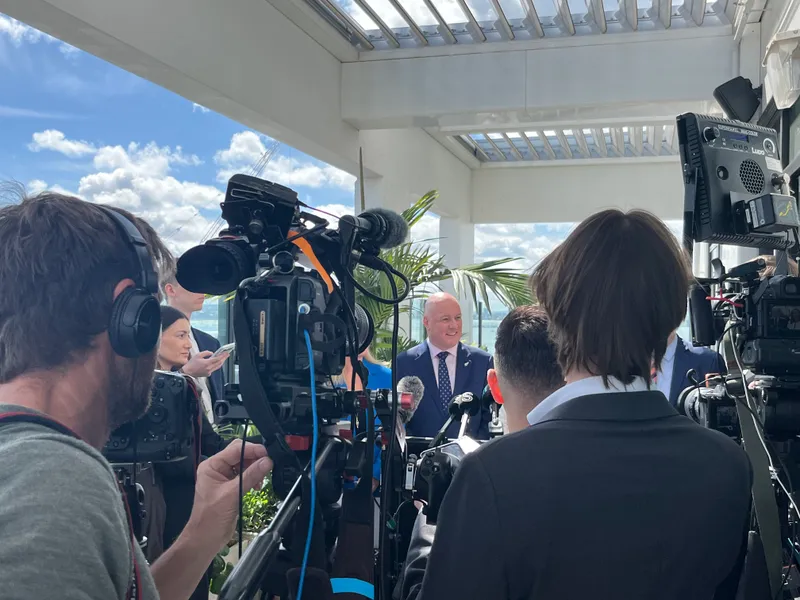
And then he doesn’t. It’s like watching a switch flick. He leaves the guests inside to mingle beside the sushi and mini croissants, and assembles shoulder-to-shoulder with Nicola Willis, Louise Upston and Chris Bishop on the bar’s balcony to take reporters’ questions. It’s almost as though he leaves himself inside too. The warmth drains away, his jaw hardens and as the cameras start recording, his speech finds those well-worn grooves. “Can I just be really honest with you?” “I just say to you…” And yes, “What I would say to you is…”
This seems a microcosm of Luxon’s challenges. Critics will tell you he has struggled to make the shift from the business world to politics. He has been pulled up for describing voters as customers and for referring to himself as a CEO. He has been pilloried for his corporate speak, for littering sentences with deliverables and core competencies and value chains. They say the way he speaks might connect with a boardroom, but it alienates the average New Zealander.
It is true that he is deeply unpopular for a first-term prime minister – his most recent net favourability rating resembles an Arctic weather report: -30. That’s well below other party leaders (Chris Hipkins is on a still nippy -8) and miles off long-gone prime minister Jacinda Ardern’s, who still sits at +10. The polls are also tight (National sits around 29% and Labour is in the mid 20s) and neither the left or right blocs can feel comfortable they are on track to form a government. If the votes go against Luxon on November 7, he could be the first ever National leader to drag a government to defeat after only one term.
His supporters, though, will tell you an entirely different story. They see a man who has risen through the political ranks at record pace, has sacrificed to lead through economically brutal times and has kept a three-headed coalition together. As for all the talk of coups: who, they ask, has come out on top each time?
***
John Key is on the phone. He sounds like he always did: warm, unflappable. As prime minister, he was endlessly described as the type of guy people wanted to have a beer with. He has, in other words, what Luxon does not. Even Luxon knows that. In April, after another bad poll, he did a series of interviews acknowledging “not everyone wants me at their barbecue”.
So, why has Key, a famously popular prime minister, mentored Luxon into parliament and through his political career? “Of all of the business people over that period of time when I was PM that sort of came to me and said, ‘Oh, I'm thinking about running, I'm thinking about giving it a go’, he was the only one I genuinely believed would actually follow through with it.”
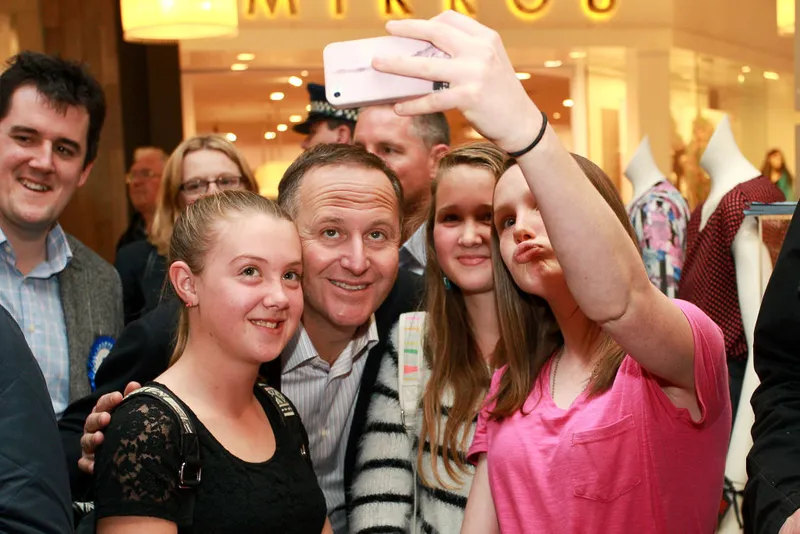
Luxon had a hefty corporate CV. He had moved all over the world (Sydney, London, Chicago, Toronto) as he landed bigger and bigger jobs at multinational Unilever, with his last position at the company as CEO of Unilever Canada. After 16 years abroad, he returned to New Zealand in 2011 to become group general manager of Air NZ. In 2013, he took over from Rob Fyfe as CEO.
That’s when Key got to know Luxon (Key would later sit on the airline’s board while Luxon ran the company). Luxon had vision and determination, but what set him apart, Key says, is he was prepared to make the financial sacrifice. Indeed, in 2020, Luxon gave up a $4.2 million salary as Air NZ CEO to become an MP earning a base salary of $164,000. “People that make that decision clearly aren't motivated by money,” Key says.
What is Luxon motivated by then? “I think Chris has a big social conscience. You know, lots [has been] made of his faith, and my experience of being around him, you know, there's no question that… he's religious.”
Key says some people have tried to “slant” Luxon’s faith negatively. His beliefs were raked over during his early years in politics, particularly after he confirmed he was anti-abortion. Some speculated it would drive his premiership, and even – despite his assurances – threaten abortion access. There’s been no hint of either.
Key says that when he was on the board of Air NZ, he watched Luxon’s beliefs push him to uplift others. “Away from the cameras and everything else, he was the person standing up for, you know, gay rights and equal opportunity in the workforce.” Air NZ launched a diversity and inclusion strategy, introduced gender-neutral bathrooms, received the Rainbow Tick and began pay gap reporting under his leadership.
He was raised a Catholic in Christchurch and Auckland by his father, Graham, who left school at 15, became a salesman and then worked his way up to general manager, and his mother, Kathleen, who went to university at the same time as Luxon to study social work. He now calls himself a non-denominational Christian.
Key says Luxon doesn’t talk to him about religion, but he can see that it permeates his view of how the world should be. “I think there's a lot of people [who] hold a religious view that would say the world needs to be a fairer, more decent place, and I think he has got a lot of that in him.”
***
Pure of heart, then, but heavy of foot. Trip, trip, trip, even when the ground is clear, even when it’s a home game.
There he is at a Rotorua Business Chamber event telling small business owners struggling in a gruelling economy that they need to be more “adult”.
Over to the Beehive Theatrette where he is announcing that National is ruling out working with Opportunity. Or is he? The press pack stares at him as he leaves the podium. Did he just make that announcement or not? His team has to confirm later exactly what he was trying to say.
Oh boy, he’s talking about Iran. Did he really just say New Zealand would support “any actions” that stopped the country from obtaining a nuclear weapon? What about carpet bombing, asks one reporter. Trip, trip, trip. “Well, I mean, we obviously understand – we’re not saying that, what we’re saying is, we understand there’s – I don’t know how to be any clearer, guys.”
He’s on ZB now, live, answering listeners’ questions. One wants to know his thoughts on MMP. This time he trips and crashes into his coalition parties. “I don’t need some yahoo or numpty from some other party around that table,” he says. (A “power grab”, “ignorance”, Winston Peters will later label it.) Luxon’s not done. Would he hold a referendum on MMP? “Yeah, I think I would,” he says, knocking into the rest of his team, sending them flying. Here they are on the tiles at parliament, reporters in their faces, seeking details on this newly announced referendum. Look at Mark Mitchell trying to get up: “Firstly, guys, um, I’d have to- I haven’t seen the prime minister’s comments on that.”
Luxon has refused to give the quick-footed Jack Tame an interview on political show Q+A since December 2024. In April, he pulled his regular slot on TVNZ’s Breakfast shortly after making several unforced errors during interviews (he seemed to forget Tama Potaka was in his cabinet at one point) with the show’s new host, the former Newshub political editor Tova O’Brien.

Don’t go blaming his communications staff for his troubles, says former National Party chief press secretary Janet Wilson, who worked with Todd Muller and Judith Collins. “You are only as good as the material you are given in the first place,” she says. Ouch.
Her assessment is that communications specialists who take him on have a two-fold problem that presents one hell of a bind. He comes across as wooden, partly because he “loathes” the media, Wilson believes, but if you get him to relax and loosen up? “He's come out with stuff that's completely inappropriate.”
“I think the best example of that was when he decided to have a go at Air New Zealand for its end-of-year annual loss, which was in the several millions of dollars.” The airline had been struggling with engine issues. “It took Rob Fyfe, another former Air New Zealand CEO, to pull Luxo up by the bootstraps and tell him, ‘Well, actually, the decisions about those engines would have been made either by me or you, Luxo, so you better be careful what you're saying… I think that story encapsulates his lack of judgement.”
***
Perhaps, though, the problem is not Luxon, but his predecessors. Have we been spoiled? Ben Thomas, a political commentator and former National press secretary, thinks so.
“It's no secret that he doesn't have a sort of easy everyman kind of way of communicating. He doesn't have the charisma that John Key or Jacinda Ardern had. And to be fair, you know, no one else does… In New Zealand, we probably got used to this idea that we would have these world-class, basically generational communicators and political practitioners leading us, and, you know, Luxon, like pretty much everyone else in the current parliament, isn't one of them.”
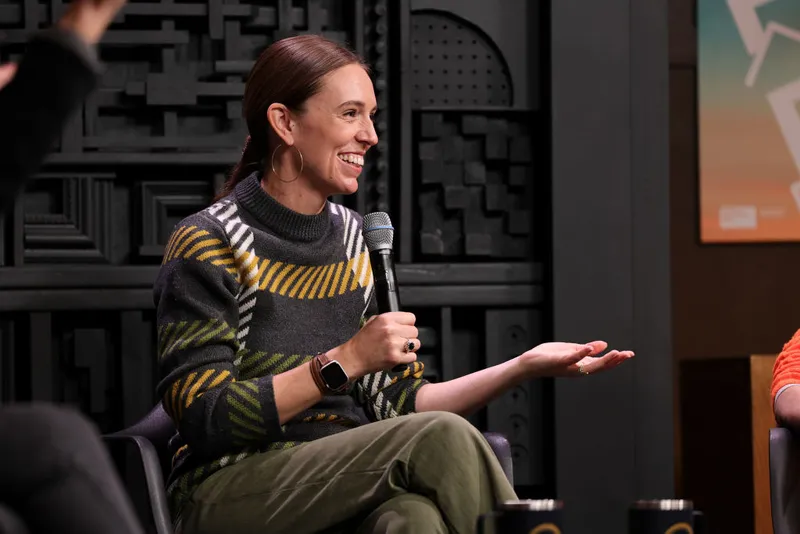
Thomas thinks the focus on how he speaks and his gaffes has, at times, been unfair. “Quite recently, when he was finishing off his 20 public meetings, they were apparently very well received, but there were a number of things that were picked up and, you know, seized on as gifts. One is the thing about the Molesworth cycle lane. I mean it's a ridiculous cycleway – he's got a point – and of course he says, ‘Oh, it made it very hard to get from my apartment.' Now, obviously it didn't make it very hard to get from his apartment, which is one minute away, but it's not really a big thing. But that became a news story.”
Thomas says his stumbles are hardly what’s driving Luxon’s low personal approval ratings or the party’s poll results, which are eight points down on the 2023 election result that put it in power.
“I don't think there's any real mystery to it. I mean, the major reason is the economy. You know, you can't disentangle his unpopularity from what's happening around the world with incumbents for at least the last three or four or five years, since 2022, really, which is that the economy has been – and particularly New Zealand – sluggish for much longer than anyone, including Luxon, predicted… That ties in with his campaign promises in 2023, which were totally centred around cost of living and a recovering economy, and that hasn't materialised yet.
***
The British mockumentary The Office is on Janet Wilson’s mind. “I think Matthew Hooton coined this to be fair to him: he said he's the David Brent of New Zealand politics. Well, I think that that's been well used by now, but he keeps on being the David Brent of New Zealand politics, because, you know, everything's all fabulous and wonderful, and look what we've done – and they haven't done anything.”
National’s 2023 campaign material featured a smiling picture of Luxon alongside the words “National’s commitment to you: we will get our country back on track”. The number one pledge (adorned with Luxon’s personal guarantee, complete with his signature): “Lower inflation and grow the economy to ease the cost of living and create better paying jobs.”
“What they promised coming into government has not been acted on at all. So… the party is now forced to talk about things that no one wants to talk about, which is tax, because there's no communist under the bed or bogey under the bed with tax, but they're trying to create one because that's all they can talk about. They haven't got a record to talk about.”
Wilson accepts that the government inherited difficult circumstances and has been buffeted by economic shocks but says it fumbled what was in its control. “They're just reallocating money into different pots all over the show, and they're spending as much, if not more, than Grant Robertson… I think they've completely lost their way as a party.”

Economist Shamubeel Eaqub says there’s only so much control anyone in power has. “People think about managing the economy in terms of economic cycle, but that's actually not where government has much sway.”
That doesn’t mean they have no power though. Eaqub questions some of the government’s decisions. “Philosophically, they have said that they want to spend less... I think they went first with a tax cut without having a principled approach to reducing spending.”
“Also, mismanagement in my mind was around delaying and pausing many infrastructure projects, because infrastructure spending during downturns is a net positive for the economy, because it's stuff you do anyway [and] you do it at a time when people need work, and you get it done on time, under budget.”
He questions why National has waited until now to look seriously at market competition, suddenly campaigning on breaking up supermarket giant Foodstuffs. “When they're in government, they didn't do much when it came to competition in supermarkets and other things, other than to essentially do wet bus ticket stuff, a grocery commissioner, etcetera... Did it actually achieve anything? Probably not.”
***
The day Luxon was sworn in as prime minister, annual GDP growth was at 2.6%, quarterly unemployment was at 3.9%, the labour cost index (measuring wage and salary growth) was at 4.3% and annual inflation was at 5.6%. Against the grand backdrop of Government House, with its chandeliers and fresh cut flowers, he gave his first press conference: “Our number one job is to rebuild the economy so we can lower the cost of living so everyone can get ahead, and in our 100-day plan, you’ll see a series of actions addressing that,” he said.
It’s been more than 1,000 days now, and voters are more concerned about the cost of living and unemployment than they were when National was voted in. Annual GDP growth tanked to -1.1% in June 2025, and has now clawed its way to 1.7%. Unemployment is at 5.6%, the highest rate in more than a decade. Inflation is down to 4.1%, but wage and salary growth isn’t keeping up – it sits at 2%.
What about the books? In 2023, National campaigned on reaching a surplus of $2.9bn in 2026/27. At the Pre-election Economic and Fiscal Update (Prefu) last week, Treasury forecast a $8.7bn deficit for the period. It was no surprise – National had already pushed out its surplus goal and when the books were opened, the forecast actually looked improved on what had been expected, with a $4bn surplus predicted in 2028/29. Much of the commentary, however, focused on how the improvement was built on fiscal drag (where rising incomes push people into higher tax brackets).
Polls show a warping of historical norms, with Labour now more trusted than National to manage the economy and cost of living, and Greens leader Chloe Swarbrick more trusted to manage the country’s finances than National’s Nicola Willis.
Would these results have pleased the Luxon that entered parliament as an opposition MP, representing Botany, in 2020? We wanted to ask him, and repeatedly requested an interview, but he didn’t come through (neither did Willis). We can only guess what he might now make of the markers of success, aimed at the Labour government, he outlined in his maiden speech.
“New Zealanders look to the government to get things done, and it’s not good enough saying you’re going to lower greenhouse gas emissions but not to do it, it’s not good enough saying you’re going to reduce child poverty but not actually do it. Talking about it gets you a headline, but doing makes a difference, and I’ve entered politics to make a difference. I want to solve problems and I want to get things done.”
***
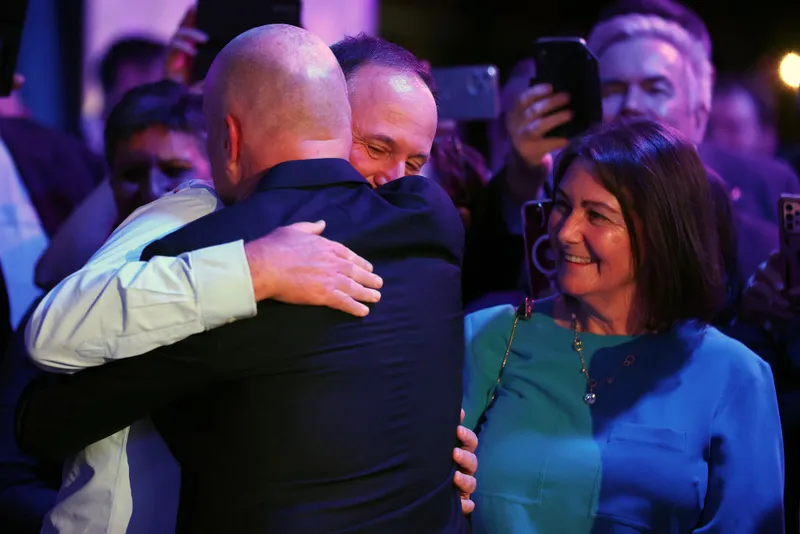
John Key knows he’s playing Mr Positivity. “I'm a feverish National Party supporter, so obviously, I want him to do well.” He will admit Luxon has one issue: “Sadly, he doesn't play golf. It's a real failing.” He won’t give an inch on how he has done on the economy though.
“It's just really difficult to turn the economy around quickly, as much as we're actually a small country,” he says. “Economies are like super tankers. You know, they take a while to stop, a while to turn, and a while to get going in the other direction. And that hasn't been made easy...”
“So for a start, the Reserve Bank engineered a recession in New Zealand because the previous government had spent so much money. That's just reality. They cranked rates up to slow the economy down, and guess what? It worked. And then you've had, you know, tariff policy out of the United States, which has been challenging, or war in Iran, that's been challenging.”
Key is hopeful. “I do think the core of the economy is starting to show some real strength, and we just need to give it a little bit of time and a bit of patience.”
***
Patience seems in short supply: the country is sick of doing it hard. Janet Wilson says the National Party could be restless too. “If they are returned [at the level of current polling] they're going to be returned as a much smaller [party in] government, right?” she says. “I think the calls will be up for his head.”
Thomas zooms out. “Despite all the issues and all the chatter, if you were looking at the metrics… you would say that his career was entering parliament, becoming the leader after about a year, becoming the prime minister within three years, and then, if all goes according to plan, returning his party to a second term.”
You could add to the list of Luxon’s achievements the free trade deal with India. When he announced during the 2023 election campaign that he would land the country an agreement, he was met with waves of doubt. Trade experts thought dairy exporters would nix any deal before it even got off the ground. This month the deal comes into force.
While he doesn’t sprinkle star dust, the narrative that he’s just bumbling along doesn’t add up, Thomas says. “Supposedly there's all these much better politicians in his caucus who are all sort of manoeuvring to depose him, and supposedly, he's up against a much more experienced opposition leader, Chris Hipkins, who was a previous prime minister, and had been a minister for ever… Well, this doesn't seem to be giving Luxon too much trouble.
“He's consistently headed off, you know, any nascent or otherwise attempts on his leadership. I don't think any objective observer would think that National is doing anything other than dictating the terms of engagement with Labour right now.”
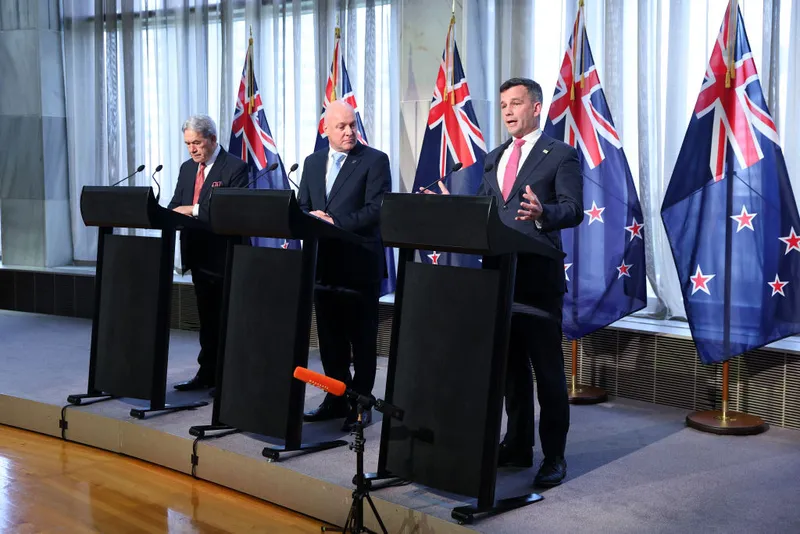
Remember, Thomas says, Luxon has kept a “very unlikely coalition” together. Both NZ First's Winston Peters and Act's David Seymour will have given him sleepless nights for all sorts of reasons, but who can forget Peters, the foreign minister, telling the Greens' Chinese-born, New Zealand-raised Lawrence Xu-Nan to go back to his own country, or Seymour refusing to move on from the divisive treaty principles bill.
Thomas argues Luxon has also made some deft team calls. He put Judith Collins in his shadow cabinet when he replaced her as National leader to ensure he retained her support and skills, and made Nicola Willis economic growth minister. “I think prior to that she had probably been seen as the frontrunner should an unpopular National leader need to be replaced, and, you know, he really tied their fortunes together so that her survivability and success depended on his success, and vice versa with the economy.”
***
A Nat with nine lives, who can survive economic hard times and multiple attempts on his leadership, or a clumsy leader who failed to deliver and is not long for the political world? Luxon, it’s widely agreed, is good on the campaign trail, so who knows how the electorate will perceive him in a month’s time, when ticks of approval truly matter.
For now, petrol prices are up and interest rates are on the rise. The cost of living continues to stalk Luxon. It has seemingly even followed him here to Sunset Bar to infect the playlist. George Benson’s ‘On Broadway’ plays:
They say the neon lights are bright on Broadway
They say there's always magic in the air
But when you're walking down that street
And you ain't had enough to eat
The glitter rubs right off and you're nowhere
This is the first in a series of political leader profiles.

Veronica Schmidt
Veronica Schmidt is the editor of The Spinoff. She has worked in newsrooms in New Zealand and the UK for more than 20 years, yet still gets excited to hit publish.


