Echo Chamber: Christopher Luxon’s worst week in parliament

A global conflict has put the spotlight on a prime minister in conflict with himself.
The thunder rolled in early in the week, with New Zealanders waking up on Sunday to the news that a US-Israeli bombardment on Iran had killed the country’s supreme leader. It’s the kind of geopolitical turbulence that tests even the strongest steadying hands of world leaders, but prime minister Christopher Luxon had found a novel approach. He’d learned to stop worrying and love the bomb.
The Beehive theatrette, of 1pm Covid update fame, hadn’t seen a post-cabinet press conference like it in Luxon’s entire term. Here was the leader of New Zealand, resolutely backing anything that would stop Iran from getting its mitts on a nuclear weapon and “killing their own people”. He said that “any action” would be a good thing.
OK, so does that mean we’re pro-carpet bombing? Should we call for an attack on North Korea? Shall we just come out and say that killing more than 160 school children is worth it, in the grand scheme of things? Well, Luxon replied, we can’t possibly know the US and Israel’s reasoning for their actions as we’re obviously not privy to their private conversations, but we won’t be bothering to find out what those talks covered, either. Stumbling and increasingly agitated, Luxon couldn’t believe the message wasn’t resonating with the crowd.
Members of the press gallery were flummoxed. The only person who seemed to be on Luxon’s side was The Platform’s Sean Plunket, who groaned and muttered expletives under his breath any time some wokester in the lamestream media had the gall to question Aotearoa’s blind faith in the US. No fighting in here, please, gentlemen and journalists; don’t you realise this is the war room?
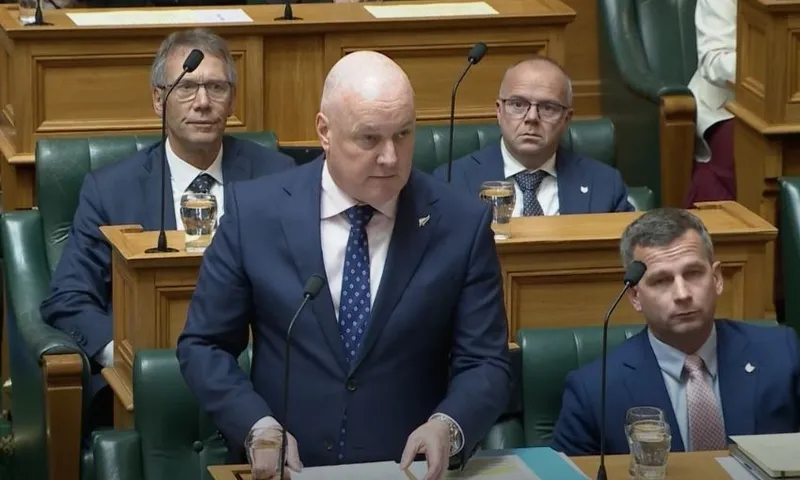
The Middle East was centre stage again preceding Tuesday’s question time, but this time around, Luxon dropped “any action” from his lexicon. With foreign affairs minister Winston Peters away in Argentina, it was Luxon’s show to lead, and he had backup in the form of NZ First minister Shane Jones barking through the opposition’s speeches. Act Party leader David Seymour pined for the opportunity for Iranians like Mahsa Amini, who was beaten to death by state police in 2022, to finally live in freedom. “Sadly, not her,” he said. Nor the school girls who have lost their lives already, but someone, somewhere in Iran.
Luxon’s speech included a pledge to a blanket extension on visas for those in New Zealand whose home country is Iran. And during oral questions, Greens co-leader Chlöe Swarbrick got Luxon to double down on a visa extension like that which was granted in the wake of the Ukraine war (“I understand that we are doing that”) – until the prime minister had to come back into the House around 9pm on Tuesday and set the record straight. Actually, it’s less of an extension, and more like Immigration NZ taking a “pragmatic approach” on a case-by-case basis.
Not all hope was lost for democracy that day in the debating chamber. After question time, final speeches were given for the first reading of the English Language Bill, which would finally make speaking English legal. But despite Labour MP Kieran McAnulty describing the bill as “nonsense”, Labour left their left-block mates in the Greens in the lurch by failing to lend their voice to a party vote. So the bill passed its first reading and will move on to the select committee, with the Greens being the only party to register their opposition.
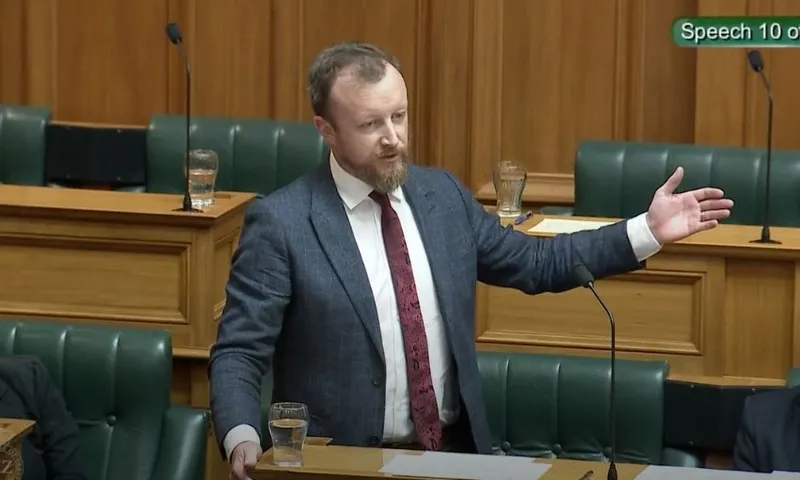
On Wednesday, Luxon came back to the House with something to prove. He had the perfect person holding his feet to the fire: press gallery kaumātua Audrey Young of Ngāti NZ Herald. Her scathing review of Luxon’s post-cabinet performance was enough to reignite coup whispers around the building, and see the prime minister get a bit too rowdy in the House.
After describing Labour leader Chris Hipkins as an “economic vandal” and “arsonist” during oral questions, speaker Gerry Brownlee scolded the prime minister for reverting to “personal insult”. Luxon thought himself brave enough to stand up to the teacher and rose for a rare point of order. “The record is abysmal and you’ve got to understand context,” he told the speaker.
“That’s now, with all due respect, challenging the chair and it’s not a wise thing to do, because even prime ministers aren’t beyond being removed from the House,” Brownlee warned him. Luxon shrugged him off, and later offered a rare supplementary question to his finance minister Nicola Willis, who was being hit by Labour’s finance spokesperson Barbara Edmonds’ barbs over grocery prices.
His supplementary question was cut off by Hipkins before Luxon could even ask it: “he’s given up on trying to answer them.”
By Thursday, with parliament’s party leaders returning to their electorates, the building had a new distraction. After a 1News segment aired last week showing the country has three more gang members than police officers, media and communications minister Paul Goldsmith revealed TVNZ board chair Andrew Barclay had called him and discussed the coverage. During question time on Wednesday, police minister Mark Mitchell hinted that a TVNZ staffer had also apologised to him for the story.
The situation gave Labour MP and media spokesperson Reuben Davidson cause for concern. His unusually long questioning of the media minister lasted for 14 supplementaries. Whatever seriousness Davidson tried to give to the situation was lost as soon as Goldsmith recounted conversations with TVNZ executives at a Country Calendar anniversary party, which had the government benches aw-ing and ah-ing. “Best thing on TV!” cooed Judith Collins.
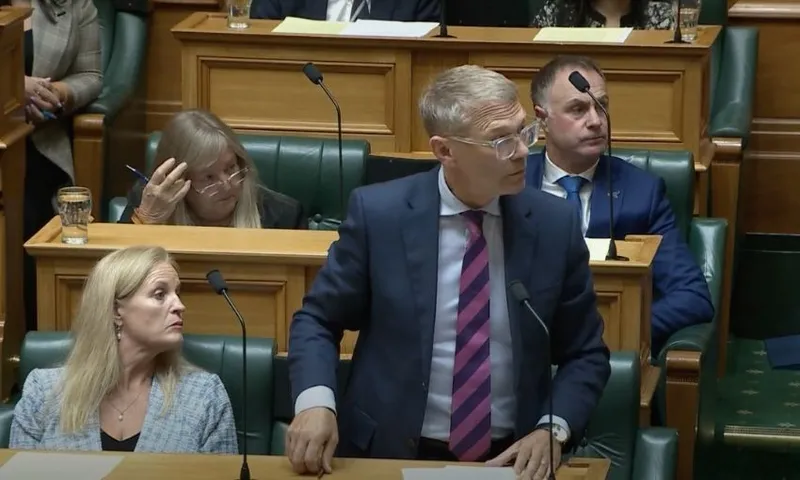
Was it appropriate for a minister to complain about media coverage in a public forum, asked Davidson? Well, Goldsmith replied, it certainly happens from time to time – “But I’ve often made the observation that a politician complaining about the media is like a farmer complaining about the weather: you may be right, but it makes no difference.”
Good advice for the minister to pass onto his leader. Maybe Luxon could start arguing that it wasn’t his fumbling that was a problem this week, but what the media made of it – as long as he doesn’t expect it to make a difference.

Lyric Waiwiri-Smith
Lyric is an award-nominated politics reporter at The Spinoff. She covers parliament from the press gallery, pens the weekly column One MP, One Pint and is endlessly curious about what makes our decision-makers tick. Off the clock, Lyric loves a live gig, a cold brew, and being a Wellingtonian (on a good day).


