A blockade in the Taiwan Strait would hurt NZ much, much more than Hormuz

If I were Nicola Willis I’d be worrying about this, writes Anna Fifield.
This story was originally published on the author’s Substack, Between Giants.
As US president Donald Trump finds himself mired in a war of his own making in the Middle East, the Chinese internet has become awash with memes showing Trump as “Don Tzu,” a play on the Chinese strategist Sun Tzu and his “Art of War” doctrines.
The implication is clear: Sun Tzu emphasised careful preparation and a solid understanding of one’s enemy. “Don Tzu” has shown neither.
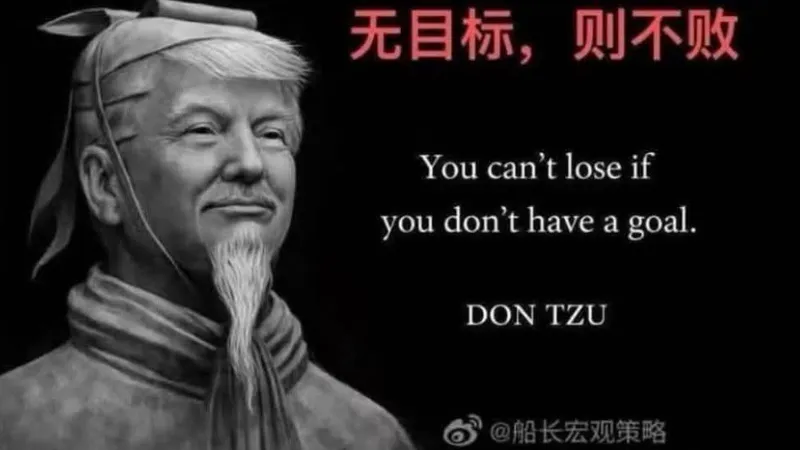
Throughout this whole crisis, China has been learning valuable lessons about American pressure points – and about the power of an economically important waterway.
Some experts are now concerned that China will take inspiration from the Hormuz precedent and consider a blockade in the Taiwan Strait, one of the world’s busiest shipping lanes.
That would be a far bigger deal for New Zealand than the closure of the Strait of Hormuz. More than NZ$4 trillion worth of goods – amounting to more than 20 percent of global maritime trade – passes through the Taiwan Strait each year.
Chinese leader Xi Jinping has repeatedly stated his goal of “re-unification” with Taiwan, which Beijing views as a breakaway province, and has reportedly ordered the military to be ready to move as soon as next year, 2027.
It has been systematically amassing the capabilities needed for an amphibious assault on Taiwan, but that would be difficult — and potentially unnecessary.
“Why do that if you could just blockade Taiwan? Just go back to Sun Tzu,” said Edward Fishman, director of Center for Geoeconomics at the Council on Foreign Relations in New York, quoting the maxim, “To subdue the enemy without fighting is the acme of skill.”
China could use “economic strangulation through blockade,” Fishman told me this week.
Lessons from Iran
Iran’s asymmetric attacks have caused maritime traffic through the Strait of Hormuz to come almost to a complete halt, disrupting global energy supplies.
Imagine what would happen in Asia if countries were to take inspiration from the Strait of Hormuz example and either charge a toll to transit crucial chokepoints, or institute their own blockade.
It’s not a complete impossibility.
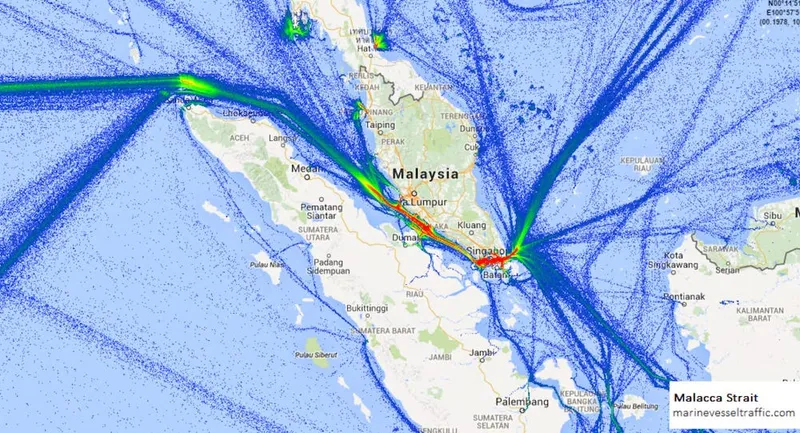
Take first the Strait of Malacca, one of the busiest shipping lanes on the planet. The 900-kilometre-long strait, which is less than 3km wide at its narrowest point, connects the Indian Ocean and the South China Sea.
About 40 percent of global trade passes through this narrow waterway, including about 23 million barrels of oil a day. The oil that is refined in Singapore and South Korea for shipping to New Zealand passes through this strait.
But Indonesia’s finance minister last week publicly wondered about imposing tolls on ships passing through the Malacca Strait as a way to earn revenue. It caused a stir and he had backtracked by Friday, according to Reuters.
But this exacerbated fears across the region, where policymakers are urgently questioning whether they need to game out disruptions to other maritime chokepoints.
Then there’s the Taiwan Strait, the much wider band of water between China and Taiwan.
Tension in the Taiwan Strait
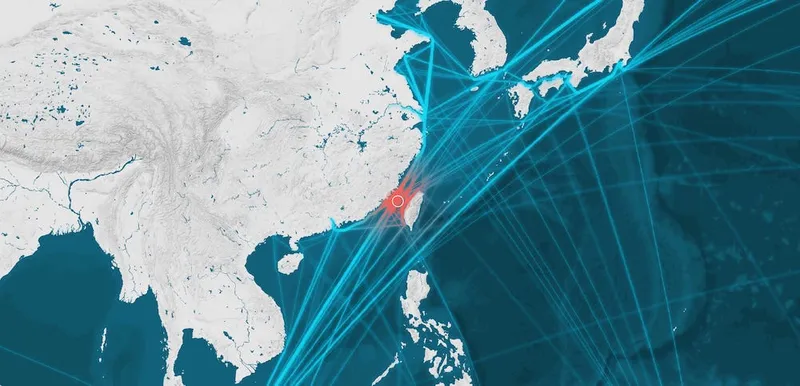
The United Nations Convention on the Law of the Sea lays out rules for international navigation and right of transit passage, but Beijing says the Taiwan Strait is too narrow to be considered part of the high seas – even though it’s 130km across at its narrowest.
It claims jurisdiction over the waterway, insisting foreign navies inform it of intended passage. That’s why the Chinese Communist Party reacts angrily when American, Australian and occasionally New Zealand vessels conduct “freedom of navigation” operations through the strait.
But generally, shipping lanes linked to ports on China’s eastern seaboard, as do those servicing ports in Taiwan.
China could, however, make the political decision to try to change the status of Taiwan or the Taiwan Strait if it senses an opportunity.
This is not a hypothetical or merely academic point.
China’s enormous People’s Liberation Army has been intensifying its activity around Taiwan. In recent drills, it has practised seizing and blockading key parts of the main island.
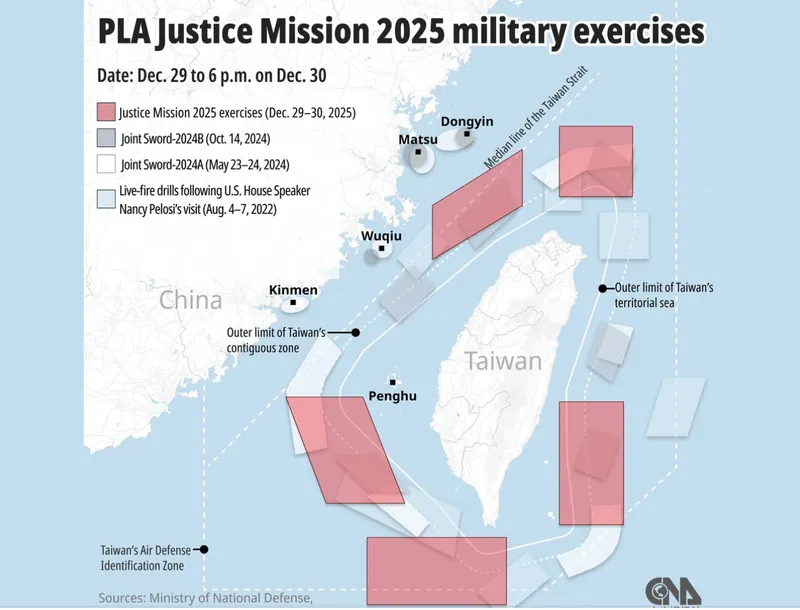
In this case, China would not need to shoot at ships or mine the strait, as Iran has done.
Beijing could simply declare it had the right to control traffic to and from the island, backed up by the threat of the PLA’s military might, Eyck Freymann, a Hoover fellow at Stanford University, wrote recently.
“If it has proved hard to persuade shipping companies to risk sailing amid a few unguided Iranian drones, imagine asking them to take on the People’s Liberation Army,” he wrote.
While ships could re-route and avoid channels near Taiwan, this would add time and cost to the sea journeys, leading to delays and higher prices.
In this way, China could use a more sophisticated version of Iran’s economic blackmail to control the global supply of most high-tech computer chips.
Almost all – about 92 percent – of the world’s most advanced semiconductors find their way into the world through this waterway, thanks to Taiwanese behemoth TSMC. If this flow was cut off, a huge number of global industries – including cars and electronics, AI and military technology – would grind to a halt.
That would cause an economic and financial shock much worse than the one caused by the oil crisis in the Strait of Hormuz.
“Given the role that Taiwan’s semiconductors play in driving the global economy, significant disruptions to this trade could have catastrophic, cascading impacts on the global economy,” Ben Bland of Chatham House, a British think-tank, wrote in a recent note.
“Semiconductors are very different from hydrocarbons such as oil and gas. They are not commodities that can be easily stockpiled or substituted,” Bland wrote.
A Chinese blockade of Taiwan would cause a 5 per cent drop in global gross domestic product – a jolt akin to the 2008-09 global financial crisis and the Covid-19 pandemic, according to a forecast by Bloomberg.
On the other hand
A counterpoint to these projections: Oriana Skylar Mastro, a Chinese military and Asia-Pacific security expert at Stanford University, doubts that Beijing has learned any new information from the Iran situation that it could apply to Taiwan.
“The Chinese have already been planning and exercising their own blockade over Taiwan for quite some time,” she told me. “I don’t see any huge ‘aha’ moments for the Chinese from Iran.”
Bonny Lin, director of the China Power Project at Center for Strategic and International Studies in Washington, agreed that Xi is in no hurry. “I don’t think what’s happening in Iran necessarily accelerates or changes his plans,” she said.
A decisive factor would be Taiwan’s presidential elections in 2028, when the progressive incumbent will likely face off against Taiwan’s most pro-Beijing leader in decades.
“That would result in a very strong response from the Chinese and including potentially some use of military force,” Lin said, including a potential blockade.
Even if Beijing decided to impose a blockade, Mastro doubted it would completely cut off the world’s access to semiconductors.
On the contrary, she thinks China would use these as a carrot if it decided to make a play for Taiwan.
“Their plan is to dangle the semiconductors in the face of foreign powers and show the repercussions if they use force,” she said. “Our choice will be to use force over Taiwan, or get access to those semiconductors that are still being built in Taiwan.”
That would be a difficult political decision for many countries – especially for a trading nation at the bottom of the world that’s dependent on shipping – and one that might be only a couple of years away.

Anna Fifield
Anna Fifield is the former Asia-Pacific editor and Beijing bureau chief of the Washington Post. She is bow the editor of The Spinoff’s World Bulletin newsletter and writes on New Zealand’s place in the world on her Substack, Between Giants.


