What’s in ‘tough love’ Budget 2026 – and what’s missing

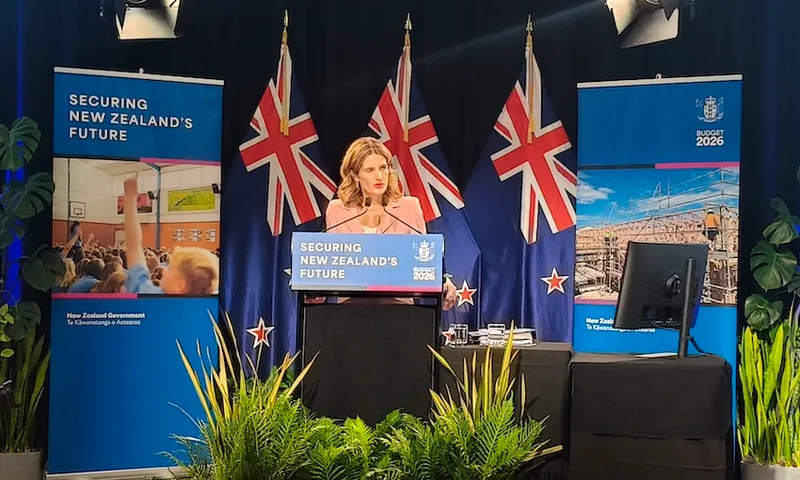
Nicola Willis with the budget (Image: The Spinoff)
Nicola Willis has unveiled her third no-thrills budget, with big boosts to health and big questions over sustainability for superannuation.
- A $7bn boost in capital investment will provide up to 2,250 new social homes, an extended expressway in Waikato, and upgrades to the rail network, among other projects.
- Nearly $1.964bn will be saved from cuts to the public service, while the cancellation of the Fees Free university scheme has freed up over $1bn.
- New Zealand is expected to reach surplus of $2.6bn in 2028/29, a year earlier than expected.
- Government contributions to the Superannuation Fund will be $3.1bn over four years, $2.2bn more than previously signalled.
- $294m will be spent over four years to roll out the new Resource Management Act.
- $450m has been set aside in case it’s needed to provide further cost-of-living relief in the fuel crisis.
In the words of finance minister Nicola Willis, “it’s not glamorous work”. There’s no tax relief on the cards, and the excitement of an earlier-than-expected surplus is overshadowed by an eye-watering price tag for superannuation. There’s a fair share of tough love between the pages, with “responsible spending” bordering on rigidity.
Here is what the documents contained:
The big-ticket sectors
The biggest spend in Budget 2026 is in health, with an investment of $5.83bn over four years. This comes alongside a yearly boost of $1.37bn to tackle cost pressures on the frontline and demand in the health system. There’s also a $682m spend on health infrastructure, which is wrapped into a boost of $7bn to wider infrastructure. This funding is expected to bring a 158-bed ward to Whangārei Hospital and facilitate the buying up of land south of Auckland for a new hospital.
That $5.83bn spend on health will bring overall health spending to $34.2bn in the 2026/27 financial year. Health initiatives laid out in the budget include allowing mothers to stay in a maternity unit for up to three days after birth (costed at $34m) and increasing medicines access through Pharmac (costed at $54m).
Education gets the second-highest boost, receiving more than $2.1bn across four years. One of the most costly projects is the rollout of the new curriculum, costing $61m, while $20m has been put aside to train 32,000 secondary school teachers to deliver the curriculum. There is $559m to grow and maintain school property, with $21m of this funding reserved to grow the number of children in kura kaupapa.
The tertiary education sector will swallow up most of the $1bn saved from the cancellation of the Fees Free scheme for university students. The budget adds $69m in funding to double the number of students in trades academies from 10,000 to 20,000 by 2030. In early childcare education (ECE), most services will receive a 1.5% rise in their subsidy rates. This is expected to bring an additional $40m to the ECE sector. Changes made by the Ministry of Regulation will see licensing criteria for ECE centres dropped by 20%.
Law and order gets a $1.3bn boost, with $391m going to frontline police, $512m for corrections and $224m for the justice ministry. Another $215m is going into justice infrastructure, with the previously announced promise of replacing Rotorua’s notoriously shabby courthouses with new ones. Meanwhile, $1.2bn will be spent on our defence and intelligence capabilities, with a bonus $2.3bn to spend on defence resources.
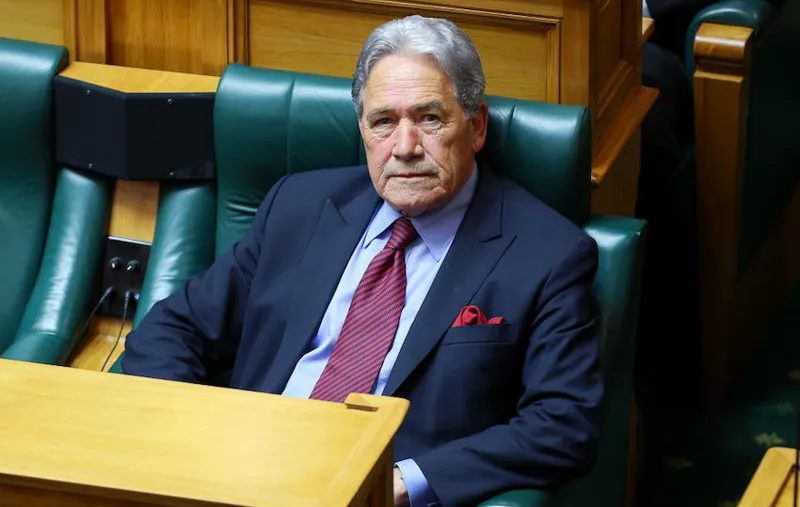
The foreign affairs ministry didn’t deliver any savings in Budget 2026, showing the strong hand of its minister Winston Peters. But Willis promises savings will be delivered in the coming years.
Meanwhile, the government has set aside $450m in a “rainy day” fund in case more fuel-related support is required beyond the support package announced in March, which has a ceiling of $373m. “It is prudent to be ready for a scenario in which fuel prices could spike or stay higher for longer,” said Willis in her budget speech. This is a reserve, much like some households have an emergency savings account. You hope you don’t have to dip into it, but if you do, it’s there.”
Who felt the tough love?
Wealthy charity executives who receive a tax break after donating to their own organisations will see reform to the tax system. Donations have now been capped at $33,000, and Willis said the change is meant to ensure that donations are made “not for a tax break, but for a charitable cause”. New legislation reforming the system is expected to arrive next year or in 2028.
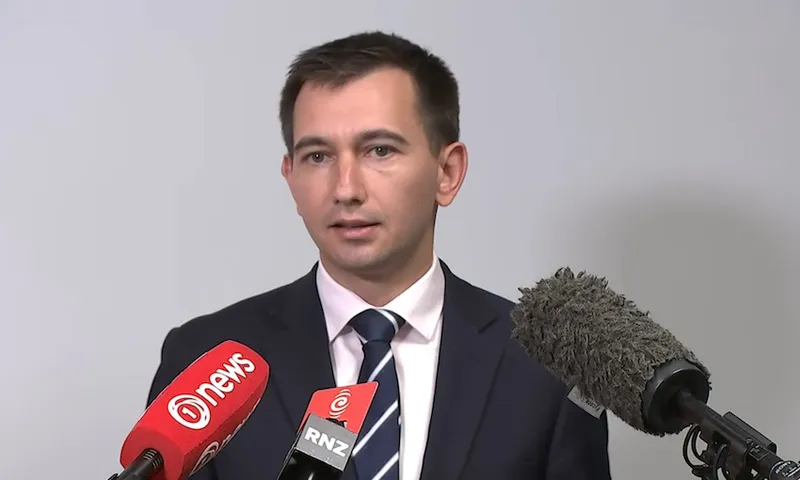
In a statement, revenue minister Simon Watts said the changes were inspired by an Inland Revenue report on how the not-for-profit sector is taxed. The report inspired “huge public interest” with concerns around the lack of clarity and the possibility of undermining credibility. Changes will ensure the sector is “strong, fair and has integrity”, said Watts.
In terms of cuts to government departments, the Ministry of Arts, Culture and Heritage takes a big hit with $27m cut from its funding. This will affect a multitude of entities including Radio New Zealand, Creative New Zealand, New Zealand Film Commission, Heritage New Zealand and the New Zealand Symphony Orchestra.

Over four years, the Ministry of Social Development will save $410.23m. Spending cuts include the scaling-down of support services for emergency housing and solo parents seeking employment, and the previously announced dropping of the maximum rate for temporary additional support from 30% to 25%. The ministry’s spending boost is a few hundred million dollars higher at $454.21m, with the highest costing initiatives being an upgrade of the SuperGold card.
There’s more in the budget for boomers than there is for youth. We’re spending $2.2bn more than we expected on the Superannuation Fund. Seniors will also benefit from that SuperGold card upgrade, with a reserved $36.4m (plus $65.m in capital spending) to make the card an official form of identification. Although the tertiary education sector gets a $405m spending boost, the cut to the Fees Free scheme means that university students have paid for a large chunk of the savings in the budget.
Banks, deposit-takers, insurers and other financial institutions will soon foot a levy to fund the Reserve Bank’s “prudential regulation and supervision”. Just how much the industry will be paying will be confirmed after consultation with the industry, but estimates are a recovered revenue of over $208m after four years.
Māori development only receives truly targeted boost, with $48m set aside over four years to fund Māori broadcasting. Initiatives include supporting Māori media to transition to a digital environment, and to commission new te reo Māori content and develop talent.
The government hasn’t been able to lower the number of children living in poverty. That rate is now at 14.3%, up by 0.8%.
Other departmental spending cuts include:
- $4.41m from the Public Service Commission, through staffing cuts.
- $1.6m from the Ministry for Regulation, largely through savings on consultancy costs.
- $1.46m from the Ministry of Disabled People, which will come from “optimising aspects of the operating model” and “realising benefits from the investment in artificial intelligence”.
- $23.6m from Te Puni Kokiri, achieved through reductions in staffing and contractor/consultant costs.
- $2.8m from the Ministry for Pacific Peoples, through changes to the workforce and operations.
The food
Reading through pages and pages of figures and economic speak requires good brain food. Here’s The Spinoff’s review of literally everything on offer at the buffet during the budget lock-up:
Egg sandwich: Creamy, with a nice ratio of egg to salad (meaning: very little salad). A fiscally sustainable meal (especially if you took the butter out of the equation).
Mini potato-top pie: Don’t let the attractive outside fool you; there’s very little meat in this thing. Much like the budget itself.
Avocado and carrot sushi: Something for the vegans in the crowd. Unfortunately it was underwhelming, like most of the environment-related spending. Also, it’s pretty fiscally conservative to not provide any soy sauce or wasabi.
Quiche: Satisfyingly savoury. Heartwarming. The mother of all budget buffet foods.
Chicken, brie and cranberry sandwich: The coalition government as a sandwich; all of these ingredients taste OK on their own, but are made worse by being combined.
Vege skewer: A medley of zucchini, mushrooms, capsicum and onions provided a complimentary flavour profile. A great example of effective departmental merging.

Lyric Waiwiri-Smith
Lyric is an award-nominated politics reporter at The Spinoff. She covers parliament from the press gallery, pens the weekly column One MP, One Pint and is endlessly curious about what makes our decision-makers tick. Off the clock, Lyric loves a live gig, a cold brew, and being a Wellingtonian (on a good day).


