The real heroes of the City Rail Link

(From left) John Key, Simon Bridges, Len Brown, James Bews-Hair and Penny Hulse might not be cutting the ribbon, but they deserve the credit. (Image: Tina Tiller)
Plenty of politicians will line up to cut a ribbon and take credit. Here’s who really deserves the plaudits.
When the CRL officially opens on September 13, Len Brown might allow himself a wry smile at the politicians he sees lining up to take credit. The former Auckland mayor remembers a time when many of them might have fought tooth and nail to delay or put a stop to the city-shaping project. Some snarkily dismissed the 3.4km rail tunnels as “Len’s loop”. National transport ministers took issue with the “suggestion that the City Rail Link is useful or popular” and described the project as “pouring money down a hole”. Now their successors will be opening it.
Despite that, Brown will resist saying “I told you so”. He’s philosophical about the nature of long-term infrastructure. “The thing you have to accept when you become the mayor of the city is that most of the stuff you plan and strategise for you’re not going to open when it’s finally delivered,” he says. “I’m very happy to just stand in the back row and be pleased at what’s happened.”
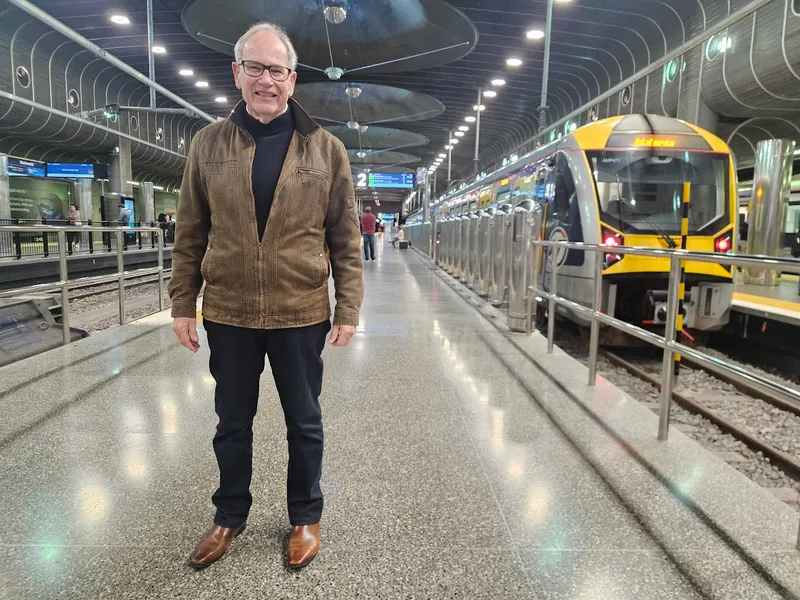
Brown may be above bitterness and recrimination, but The Spinoff sure isn’t. Though it may get lost in the chorus of backslapping over New Zealand’s largest ever transport project, it’s still worth noting who really got this thing across the line. It wasn’t the billboard that got to reveal the CRL’s opening date. Nor was it transport minister Chris Bishop or Auckland mayor Wayne Brown, who stood at Karanga-a-hape station to echo the billboard’s announcement hours later.
The CRL is actually more than 100 years in the making. A version of it was first proposed in 1923. But the tracks to its opening day really started being laid in 2009, when Brown began running against John Banks in his first bid for Auckland mayor. He had three central campaign planks: stopping asset sales, creating a compact, liveable city and building the CRL.
At first, the rail link plan was met with derision. But Brown sold it so well that by the end of the campaign in 2010, even Banks was on board. Building it became the defining policy goal of Brown’s mayoralty. He spent just about every moment he could promoting the project in media interviews and championed it every time he was booked to make a transport-related public announcement.
Behind the scenes, a team of allies were bolstering his public PR campaign with backroom wrangling and political lobbying. Though Banks had been won over, the National government still wasn’t onside. Steven Joyce, the transport minister in 2010, felt the project was too expensive, especially given he’d just agreed to pay $1 billion to electrify Auckland’s rail lines.
Brown’s policy adviser James Bews-Hair remembers coming up with a five-year plan to wear down the government’s resistance. He marked out key dates like central and local elections, council votes and budget decisions and mapped those to potential points where he could put pressure on transport officials and politicians. “Quite unusually for strategies full stop, but particularly for political strategies, it pretty much played out exactly as we charted it,” he says.
Counterintuitively, Bews-Hair’s plan involved getting the government to say no a lot. He believed, rightly, as it turned out, that each successive rejection was getting more difficult and politically costly. “Every no, people would say to us, ‘oh, you’ve lost’, whereas to my mind, getting those nos is what winning had to involve, and it’s what winning looked like,” he says.
As he and others in Brown’s office dealt with the government, Penny Hulse was handling most of the in-house political wrangling. Her job as Brown’s deputy involved cajoling councillors into backing the CRL both politically and financially. Her biggest achievement was convincing a majority of them to commit to funding 50% of the project in the council’s long-term plan. “That was a huge undertaking,” she says. “That’s been borne by the people of Auckland. Whereas if we look at some of the other large national infrastructure investments, the people of New Zealand have paid. That was a momentous decision that the council made, and good on them.”
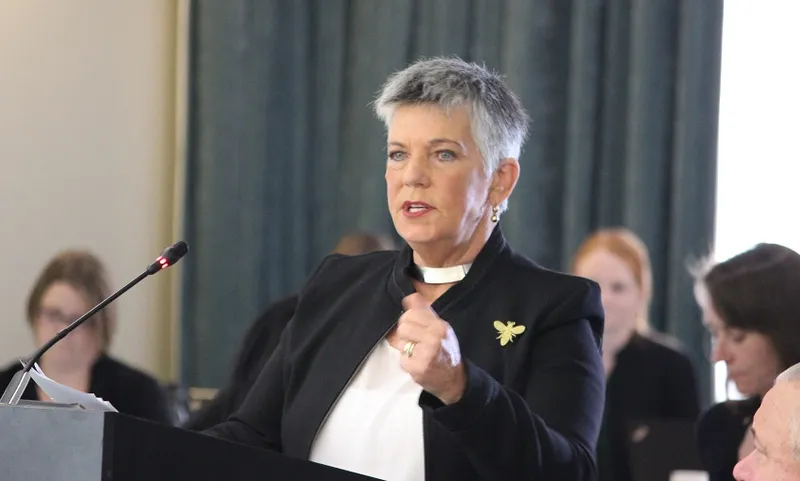
It proved pivotal. Freed from the prospect of funding the entire project itself, the government became much more amenable to the CRL, says Brown. “[John] Key was saying, ‘look, put your money where your mouth is’,” he remembers. “I didn’t want to sit back there and just wait for the government to make its mind up. My view was – and by and large, everyone supported it – that we need to actually put some money up to get the project going, get shovels in the ground, and start digging.”
The next turning point came in the form of a cabinet reshuffle. In 2014, Key removed Gerry Brownlee – who had succeeded Joyce as transport minister in 2011 – from the portfolio and installed the up-and-coming caucus bolter Simon Bridges in his place. The Tauranga-based MP was far more open to the case for the CRL than his predecessors. Brown sees his appointment as one of the biggest game-changers in finally getting it across the line. “Simon was a minister of transport, not a minister of roads,” he says.
Bridges is a little more diplomatic about his ministerial predecessors. But he admits to making a tactical decision not to involve those sceptical senior colleagues in the discussions on the CRL after his appointment. Instead he went straight to the top, where he found a much more sympathetic ear. “I went round them and talked to prime minister Key, who I knew was up for a big, very audacious thing from time to time if it stacked up and was in line with the zeitgeist.”
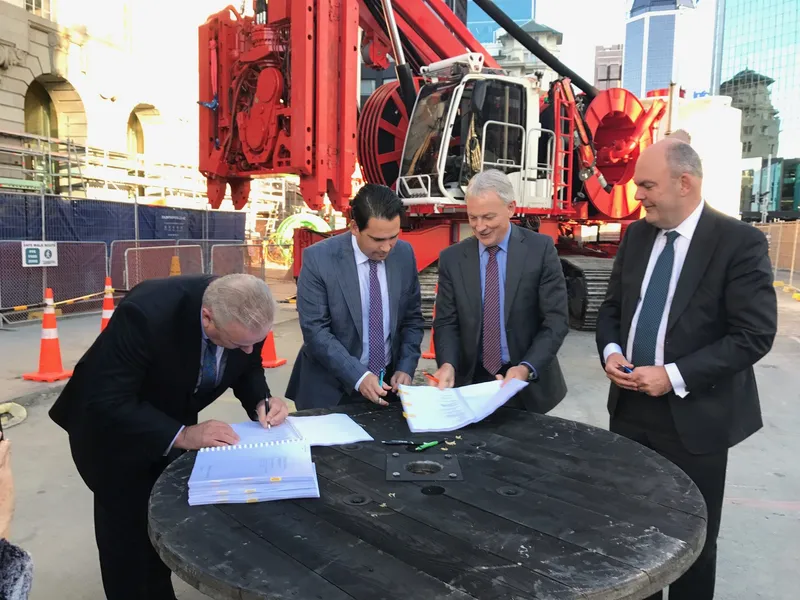
Key was now being coaxed into the CRL from all directions. Brown was still indefatigable in promoting the project and Key’s own transport minister was backing the mayor up. It helped that his party’s business base was also starting to clamour for certainty. The Auckland development company Precinct Properties was planning to demolish the old Downtown Shopping Centre and build the Commercial Bay precinct in its place. Its chief executive Scott Pritchard says he didn’t lobby the government on the CRL. But he did make it clear the project was a key factor in its plans. “We were keen to get some clarity around whether the project was going to go ahead.”
Key was won over. When he announced a commitment to funding the main works of the CRL in 2016, the need to provide that certainty to business was cited as a major factor. In a speech to an Auckland business audience last year, he was more frank about the decision, saying he had to sideline senior Cabinet members like Joyce and Brownlee and make a captain’s call to support the project.
But his decision was the culmination of years of groundwork. Bridges, Hulse, Bews-Hair, the former AT chief executive David Warburton and dozens of council and government workers all supported the project and deserve a share of the credit. But the biggest portion should go to Brown. “It wouldn’t be unfair to call this Len’s project,” says Bridges. Hulse agrees. “Len, 100%,” she says, when asked who she would name as the chief hero of the CRL. “Len and Penny. She was the best deputy I’ve ever seen,” says Bews-Hair when the same question is put to him.
When many people think of Brown now, they may recall the scandal that effectively ended his career. The lurid WhaleOil blogs. The subsequent admission to an affair and an apology to his family on Campbell Live. Bridges hopes the CRL opening on September 13 will give people cause to reflect on the real achievements from Brown’s mayoralty, which also included the passing of the Unitary Plan in late 2016. “If you just think about this in sort of tribal politics, Len and I are from different sides of that,” he says. “But if you look at it objectively since the super city began, he’s one of the strongest mayors in terms of legacy and outcomes.”
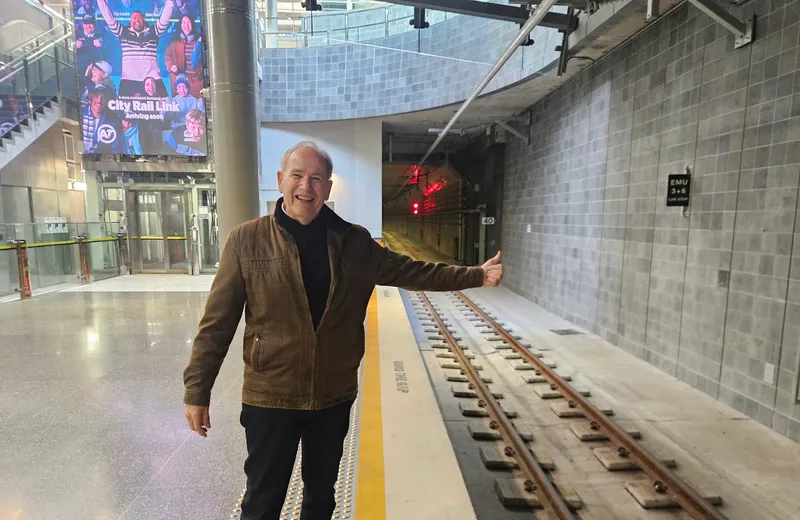
Brown doesn’t want to talk about that story or his personal legacy. He says he doesn’t really care about that stuff. He’s already made it clear he won’t get bitter or fight over credit. But he will concede there will be some pride when the ribbon gets cut on the project he started promoting 16 years ago. “If that’s how people remember the service I gave…” he says, before trailing off.
Our interview is being carried out inside Waitematā Station, which will serve as a central hub in the CRL. Brown can look out at the tunnels stretching west and east that were previously dead ends. His answers are intermittently interrupted by screeching sounds from the final stages of CRL testing. “I loved the job. I absolutely loved it. And one of the things that makes projects like this happen is when people are intensely committed and passionate about it,” he says. “On days like this, it was all worth it. On days like this, to be able to deliver on the promise a community had been waiting 100 years for – that’s a good day. It’s a good day for the city.”

Hayden Donnell
Hayden Donnell is a senior writer for The Spinoff. He previously worked at RNZ, TVNZ and the New Zealand Herald, alongside other media companies that have since closed down or been renamed. His primary passions are local politics and the Big Fresh animatronic fruit and veggies.


