Hay fever is bad right now, but is it worse than usual?

It's that time of year again, but will this one be worse?
If you’re suffering through seasonal allergic rhinitis, you’re not alone.
With the botanical abundance of spring comes abundance of another kind: snot, sneezing and complaining. Hay fever sufferers will unhappily tell you all about their plight, sharing an extensive list of grievances: runny nose, watery eyes, scratchy throat, postnasal drip, headaches, sinus pain, fatigue and undereye bruising. They’re all symptoms of allergic rhinitis, an immune system response that can be triggered by a range of environmental factors. The big one right now is pollen.
Like flowers?
Not necessarily. Whether a plant is wind-polinated – the pollen drifts from the male plants to the females, rather than being carried by insects – is the crucial factor. Airborne pollen is easily spread; exposure can trigger the body’s immune system to produce histamines, which cause the symptoms we associate with seasonal allergic rhinitis, aka hay fever.
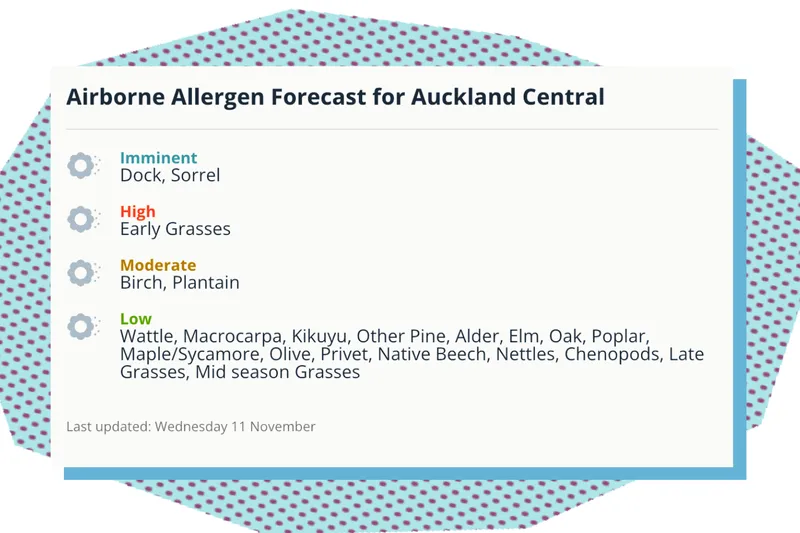
Grass pollen is the main cause of hay fever in New Zealand, but there are a number of culprits. The annual pollen calendar produced by Allergy NZ highlights 39 plant species, including macrocarpa, gorse, privet and plane. Of those 39, a whopping 27 pollinate during November. Grass pollen, the main cause of hay fever in New Zealand, is around from August until as late as March.
Plane trees are a high-profile, divisive offender. Though their pollen season has finished, they also release a high volume of physical irritants – the seed pod fibres and fluffy trichomes that have been linked to rhinitis, conjunctivitis and respiratory irritation. The tree is “highly contentious” in Melbourne, the allergy capital of the world.
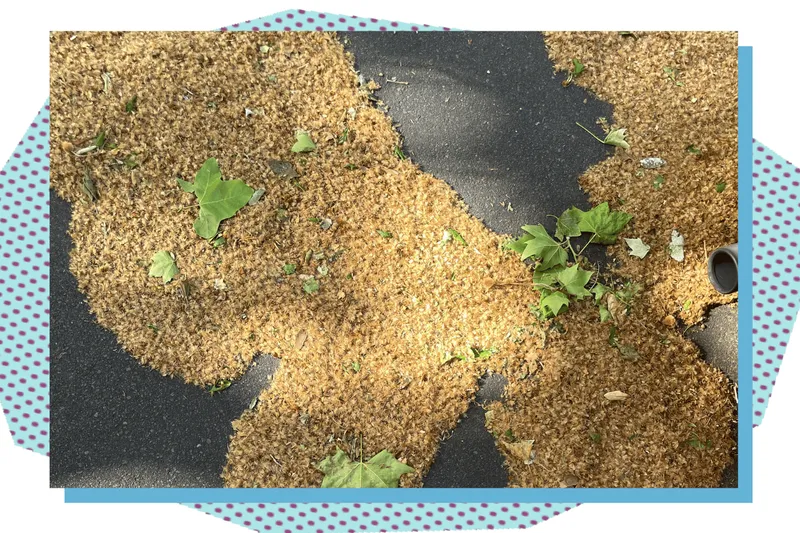
Exotics are thought to exacerbate hay fever more than native species. Although data isn’t comprehensive, Massey University palynologist (pollen expert) Katherine Holt says there “doesn't seem to be a strong correlation between hay fever symptoms and proximity to native forests”.
So it’s trees and grasses making my life miserable.
And you’re not alone. Approximately one in five New Zealanders has hay fever/allergic rhinitis. If we include other allergies – things like mould spores, dust mites and pet dander – the figure could be more like 30-40% of the population.
But it’s hard to know exactly. “We don’t have good ways of tracking and monitoring the number of people with hay fever cases,” says Asthma NZ clinical director Amy Chan. Guesstimations can be made from medication records and GP presentations, but conditions managed by over-the-counter medications, pharmacies or left untreated aren’t easily captured.
Hundreds of thousands of antihistamines are dispensed each month, according to data from the National Pharmaceutical Collection, shared by Health New Zealand. (Dispensings refer to each time a pharmacy gives a pharmaceutical to a patient.) More are being dispensed than last year; the number of antihistamines dispensed in New Zealand increased year-on-year for each month of 2026 to July, the most recent data available.
Pollen tracking in New Zealand is currently carried out only in Auckland, and although there’s currently no data to say that Tāmaki Makaurau has higher hay fever rates than elsewhere, the region “can be particularly challenging because of its mild climate, vegetation and relatively long pollen season”, says Chan. It also appears to be experiencing some changes; there is recent evidence of grass seasons beginning earlier in the year, with increased high-pollen days. “But we don’t know how this compares to other parts of New Zealand.”
Exposure and timing vary around the country, and hay fever can be more severe depending on where you live. People in dry rural areas with agriculture and lots of grass around tend to experience more symptoms.
But this year feels worse.
It does. “Anecdotally, a lot of people do seem to be reporting worse symptoms. Not just hay fever but also itchy eyes and asthma-like symptoms,” says Chan. “There is good reason to think this could be a difficult season for hay fever sufferers.” That’s largely down to El Niño, which is predicted to be one of the strongest in years.
Based on research by Holt and her team, a stronger pollen season can be expected when there are El Niño conditions. Plants release their pollen when conditions are dry and relatively warm, explains Holt, which is more likely during an El Niño than La Niña. Studies have also shown that grass pollen season lasts considerably longer during an El Niño summer.
Under these conditions, it would definitely make sense for people to be experiencing worse allergies, says Holt. “Especially this part of the year, when the grass season is starting to ramp up.” It should peak during November and December, which is when hay fever should likely peak too. “It'll definitely be worse than last year.”
El Niño also means there’s a likelihood of strong wind, which can make hay fever worse. Wind circulates all that pollen and dust around, increasing the chances of exposure.
So storms are bad for hay fever too?
Under extreme circumstances, yes. In Australia, Victoria has a significant history of catastrophic thunderstorm asthma epidemics and the state has warned people to brace for more this season. During these weather events, moistures rupture ryegrass pollen grains and strong winds distribute a high volume of allergens, affecting people with asthma and hay fever.
New Zealand hasn’t yet recorded instances of thunderstorm asthma, Holt says. “But I don't think there's a good reason why we wouldn't be at risk of it.”
What about climate change?
Good question. Scientists believe global warming contributes to hay fever. In 2019 researchers correlated rising temperatures with an increase in seasonal pollen load and duration across multiple continents in the northern hemisphere, where 71% of locations experienced a rise. Holt really wants to know whether a longer allergenic pollen season is happening here too.
But acquiring pollen data is challenging for researchers. Unlike Australia’s nationwide network of pollen-monitoring stations and other countries’ routine, standardised reporting and forecasting, “New Zealand has never had ongoing pollen monitoring,” says Holt. In fact, there hasn't been any kind of national survey since the 1980s.
So it’s hard to know what’s happening with pollen and how it’s affecting people.
Changing environmental conditions can increase how much pollen people are exposed to and how long they are exposed, Chan says. “So people who already have allergic rhinitis may experience more frequent or severe symptoms.” However, she highlights the distinction between reports of hay fever symptoms and an increase in allergic rhinitis. “We don't have sufficiently robust national monitoring methods to say that more New Zealanders are developing allergic rhinitis this year.”
So, what can I do about my hay fever?
Allergy New Zealand advises seeking over-the-counter treatments including antihistamines, eye drops and sinus rinses. You can also talk to your doctor about prescription medication like corticosteroid and decongestant nasal sprays. Immunotherapy treatment is also an option in some cases.
Lifestyle changes can minimise your exposure to pollen, which peaks at midday. Wash your hands regularly and try not to touch your face; wear a hat and glasses when you’re outside; hell, you could even shirk lawnmowing duty, as Health New Zealand suggests. Minimising the allergens inside your home. Keep the windows closed when you can, dry laundry inside, change your clothes when you get home and wash your hair before bed to remove pollen.
Hmm, I could just never leave my hermetically sealed house?
Sure, stay in there with your dust mites.

Emma Gleason
Emma Gleason is a staff writer at The Spinoff and an award-winning fashion journalist. But it’s not just clothes that interest her, you’ll find her exploring tasty cheese, influenza outbreaks and more important things right here. She has experience with some of the country’s leading media outlets as well as the toaster in our kitchen.
Sign up to The Bulletin, delivered straight to your inbox.


