What we know and don't know as we wait for the final election results

All of New Zealand right now
Put your thinking cap on: Andrew Geddis is here to explain the numbers.
Back in 2002 when the USA was getting set to embark on one of its forever wars in the Middle East, the then secretary of defence Donald Rumsfeld gave a press conference where he dropped these pearls of wisdom:
“There are known knowns. These are things we know that we know. There are known unknowns. That is to say, there are things that we know we don't know. But there are also unknown unknowns. There are things we don't know we don't know.”
How we all laughed and mocked him at that time for his pretentiousness. But you know what? He was actually presciently describing the post-election situation here in little old Aotearoa New Zealand on Sunday, November 8, 2026.
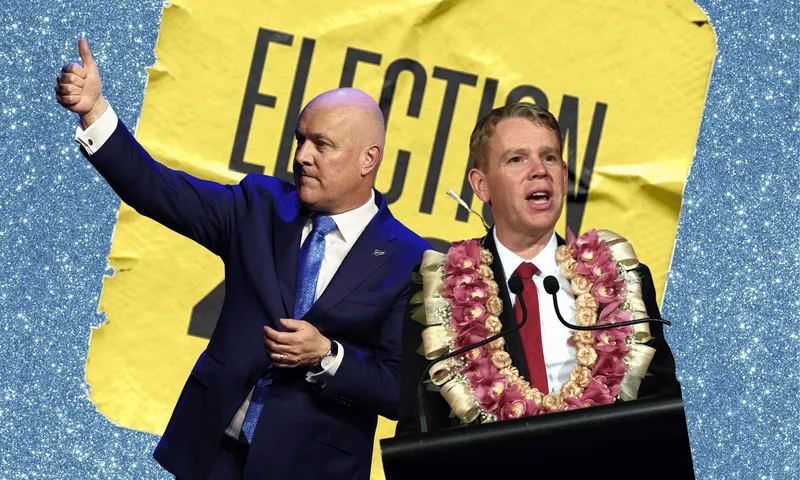
Because, here’s what we know. At the moment, the existing government coalition parties have a 67-64 lead in the race for governing power (remembering that the iron rule to govern is that you must have an outright majority of parliamentary seats). That lead is based purely on the existing government coalition parties having a seven-seat “overhang” due to National winning 42 electorates, compared to the opposing parties having a four-seat “overhang” due to Te Pāti Māori winning five electorates.
(For clarity, I’m using “existing government coalition parties” as shorthand for National, Act and NZ First, while “the opposing parties” refers to Labour, the Greens, Te Pāti Māori and The Opportunity Party – recognising that this last party actually claims that it could support either bloc of parties in government.)
If this outcome is to change and open up even the possibility of a change in government, the special votes will have to flip two or three seats between these blocs of parties (depending on what kind of seats they are, of which more later).
And we also know from the Electoral Commission that there are approximately 399,365 special votes still to be counted, including 96,947 overseas and dictation votes. That sounds like a lot, but it’s actually only 16% of the votes that have already been counted and two-thirds down on the number cast back in 2023.
This reduced number of special votes will be due to the change in enrolment rules, whereby anyone not enrolled by the time advance voting started couldn’t vote at all. That change will have led a lot of people who previously cast special votes to enrol earlier and cast ordinary votes instead. But it also means some people who could have voted in previous elections simply weren’t able to do so this time.
Which then brings us our first known unknown. The fact there are some 200,000 fewer special votes, with fewer late enrolling voters contained in them (but about 20,000 more overseas votes) than in 2023, means that we can’t be certain whether they will break the same this time as they did last election. There are not as many votes to change the present outcome, and the makeup of the voters who cast special votes has altered.
Because, back to what we know. How might changes after counting the special vote shift the overall share of seats in the House?
Electorates
National’s overperformance in electorates compared to its party vote currently is generating a seven-seat overhang. This was something that was, if not firmly predicted, certainly identified as a possibility pre-election. And of course, it was a tactic directly advocated by Don Brash, Harry Mowbray and other voices from our distant past.
Meanwhile, Te Pāti Māori explicitly campaigned on an “electorate vote only” platform. Its supporters obviously listened, as it leads in five of the Māori electorates with only 0.57% of the party vote. That makes for a four-seat overhang.
The existence of both of these sets of overhang seats then horribly complicates making “what might happen” predictions for the special votes. In general, if National loses any of the electorates it currently is leading in, that removes one seat from the existing government coalition bloc without adding a seat to the opposing party bloc. Conversely, if National were to win any more electorates, that adds one seat to the existing government coalition bloc without removing one from the opposing party bloc.
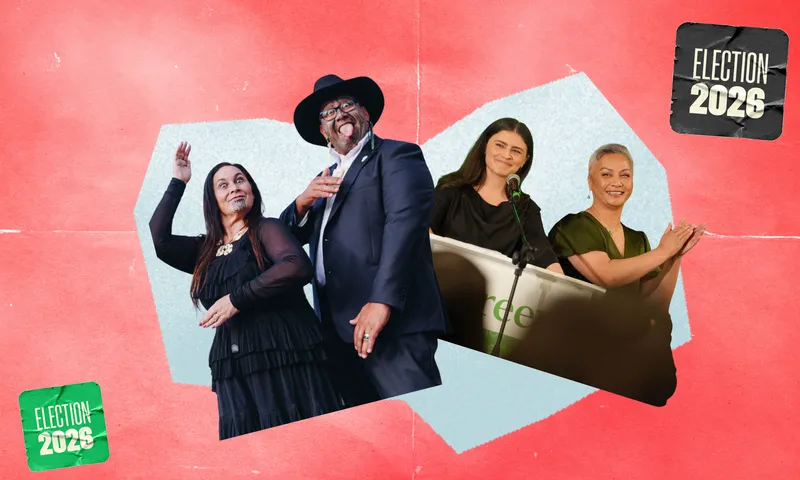
Meanwhile, were the Green Party to overtake Te Pāti Māori in Te Tai Tokerau, this would remove one seat from the opposing party bloc without adding one to the existing government coalition bloc.
Got that? It’s what we know would happen, it’s just that we don’t know what actually will happen.
Party vote
We know that because National and Te Pāti Māori are firmly in overhang territory, neither party can lose any seats no matter how far their party votes fall. All that will happen is that their electorate seats become yet more overhang seats, and parliament gets even bigger. As such, we only need to look at what special (party) vote changes might deliver for the other four parties.
A quite rough and ready play with the Electoral Commission’s MMP seat calculator tells us the following. Note that it is based on the present “wasted vote” of 0.9% staying where it is; whether or not this actually happens is another of our known unknowns.
The Greens need to get to 13.64% to get another list MP into the House. That requires them to increase their party vote share by 0.34% through the special votes, and in 2023 this increased by 0.82%. Similarly The Opportunity Party needs to get to 6.21% for another list MP. That requires an increase in its party vote share by 0.26% – and because it’s a different beast this time around, what happened in 2023 isn’t really a useful guide at all.
By comparison, Labour needs to get to 30.16% for another list MP. That’s a comparatively big increase in its party vote share by 0.8%, and in 2023 this only increased by .06% after specials.
On the other side, the existing government coalition parties traditionally do worse from special votes (but remember the known unknown nature of these in 2026 described above). What that means is that NZ First needs to drop to 9.5% to lose a list seat. That would require it to decrease its party vote by 0.28%, and in 2023 this dropped by 0.38%. Act, by comparison, needs to drop to 10.3% to lose a list seat. That’s a relatively big decrease in its party vote by 0.62%, and in 2023 this only fell by 0.36%.
So … what do we know (and know we don’t know)
Realistically, there’s only four electorates “in play” on the special votes. Wairarapa requires Labour’s Kieran McAnulty to overcome a 139-vote deficit to beat National’s Mike Butterick, while in Hamilton East, Labour’s Georgie Dansey has a harder task to overturn a 456-vote deficit to National’s Ryan Hamilton.
A Labour victory in either or both of these changes the balance in the House to 66-64 or 65-64.
Conversely, if National’s Carlos Cheung overturns the 262-vote lead held by Labour’s Michael Wood in Mt Roskill, that adds another overhang seat to National’s (and the governing coalition bloc’s) total. And, as mentioned, a Green victory in Te Tai Tokerau (where there’s a 436-vote gap) takes away a seat from the opposition bloc total.
Either or both of these results would mean a range of outcomes from a House with a 68-63 split to 66-63 (or 66-64 … or 67-63 … or a status quo 67-64 … we know that we don’t know).
Then, NZ First losing a seat in the party vote and both the Greens and The Opportunity Party picking one up would take a seat from the existing government coalition bloc and add two to the opposing one. Exactly what that would mean depends on the above electorate seat results. But it raises a real possibility of a House with a 66-66 split. And a perhaps less likely possibility of a House with a 66-65 (or 66-64) majority to the opposing bloc (which would require both some electoral races falling the opposing bloc’s way and for the specials to deliver the necessary party vote swing).
All of which is to say – we know that we don’t really know what is going to happen. Were I a betting man I’d probably back either a narrow existing government coalition bloc majority based on a disproportionate overhang, or a 66-66 split that can only be resolved by The Opportunity Party making some deal to allow the existing government coalition bloc to govern. But it’s by no means a certain enough outcome for me to want to put any of my hard earned money on it.
And what don’t we know we don’t know?
I don’t know.

Andrew Geddis
Andrew Geddis is a Professor in the Faculty of Law at the University of Otago.


