Chris crossed: Everyone feels sorry for Penk

Chris Penk’s political career is over. Was dumping him the right move? (Photo: Getty Images. Composite image: The Spinoff)
The prime minister has dumped one of his rising stars in a move intended to convince voters that National is back on track. It seems he’s already lost grip on that narrative.
It was the outcome no one was expecting. Chris Penk, having only just been elevated to cabinet earlier in the year, is destined to spend the rest of this parliamentary term on the backbenches before he throws in the towel on his political career at the election. The National Party’s rising star is the only MP to go down over yesterday’s attempt to roll Christopher Luxon – while more senior colleagues widely suspected of being involved remain.
According to the prime minister’s office, this makes sense because it was Penk who led the leadership challenge. That narrative is backed up by senior ministers Chris Bishop, Nicola Willis and Mark Mitchell, who have told media Penk was acting in his own interests.
But can they convince the public that Luxon cut the right minister loose?
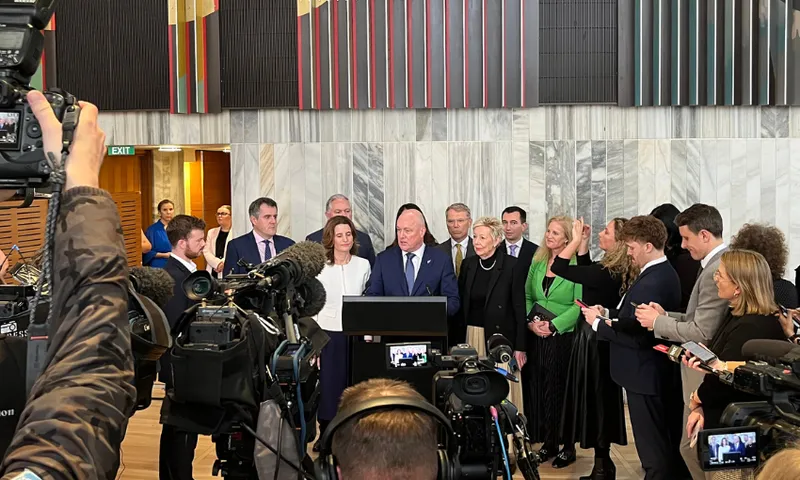
Not if they’re listening to the multiple political pundits who believe Penk didn’t launch a leadership challenge because he wanted the top job, but was trying to clear the way for the likes of Erica Stanford or Chris Bishop.
The Post editor Matthew Hooton, a former National Party staffer, has pointed to a “villainous five” who botched the challenge. The V5, according to Hooton, comprises Bishop, Nicola Willis, Mark Mitchell, Simeon Brown and Erica Stanford, with the latter considered particularly keen to oust Luxon.
The NZ Herald’s political editor Thomas Coughlan, who first reported rumblings of a coup, also rubbished the idea that Penk was going for the leadership. “Penk would wield the knife, [and] one of them [Bishop or Stanford] would wear the crown,” Coughlan wrote last night.
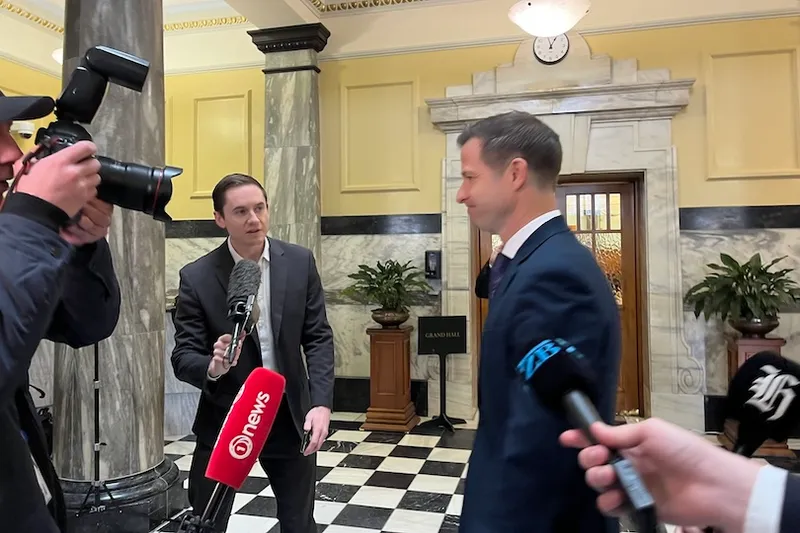
Same thing on RNZ this morning, when two commentators with close ties to the National Party unpacked the failed coup. Liam Hehir alleged that Penk was a “scapegoat”, while former National Party press secretary (and Gone By Lunchtime regular) Ben Thomas labelled it the wrong call to sack him from cabinet. “To be honest, nobody believes that Penk was a lone gunman, a sort of Oswald figure… who decided to launch an assassination attempt by himself,” he said.
Former defence minister Wayne Mapp, also on RNZ, told the same story. “You have to have at least someone be the fall guy, and you can’t punish everyone who might have a different view,” Mapp said. “[Penk is] at the second level of the cabinet and doesn’t have huge name recognition, and so he was chosen.”
Of course, Bishop – who has repeatedly told media throughout the week that he backs his boss – denies Penk was working on his behalf. Stanford was silent when asked if she had confidence in Luxon ahead of yesterday’s meeting, but finally today said Luxon had her full support. Even Penk himself, ahead of yesterday’s meeting, was denying he was doing the numbers for Stanford and said he thought Luxon would win a confidence vote.
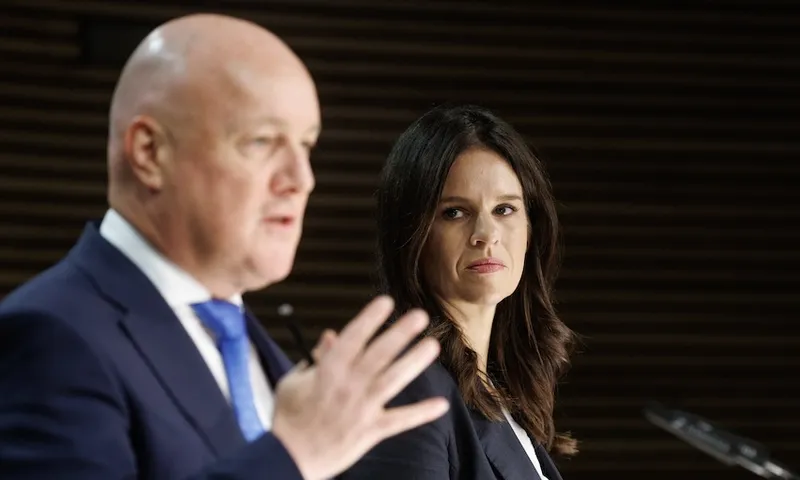
None of those denials help Luxon when commentary around the failed coup is so aligned. It doesn’t help that Penk is a well-liked MP across the House and has been known to work effectively across his portfolios. Auckland councillor Richard Hills wrote on X that his sacking seemed like a sacrificial move: “He’s been a really good minister to work with.”
It’s also difficult that Penk, like Luxon, is a conservative and has been a vocal Luxon loyalist. Only last week, he was in the House defending Luxon over the prime minister’s controversial use of air force planes.
But someone had to go down – Luxon couldn’t do nothing after an attempt on his leadership – and if not Penk, then who? The obvious answer is Stanford. She’s a minister in Luxon’s kitchen cabinet, yet refused to stump up any support for the prime minister ahead of the urgent caucus meeting. She’s scattered about various seeds of discontent in recent months, admitting the party needed to “do better” off the back of a horror Taxpayers’ Union poll in April. After Luxon offended Rotorua business people at a conference last month, Stanford spoke of the “hurt and upset” her leader had caused.

But Stanford remains safe – for now – because there was more risk for Luxon in removing the senior Stanford than the more junior Penk. So, what now? “It’s a little bit like a rugby team, the All Blacks who have lost a big game and they have to pull themselves together for the next game,” Mapp said.
That next game is the election. But after that all bets are off. Bishop, Stanford or another MP could bide their time now and take a sword to Luxon’s leadership in the next parliamentary term.

Lyric Waiwiri-Smith
Lyric is an award-nominated politics reporter at The Spinoff. She covers parliament from the press gallery, pens the weekly column One MP, One Pint and is endlessly curious about what makes our decision-makers tick. Off the clock, Lyric loves a live gig, a cold brew, and being a Wellingtonian (on a good day).


