When gangs are in the picture, all you get are pot shots

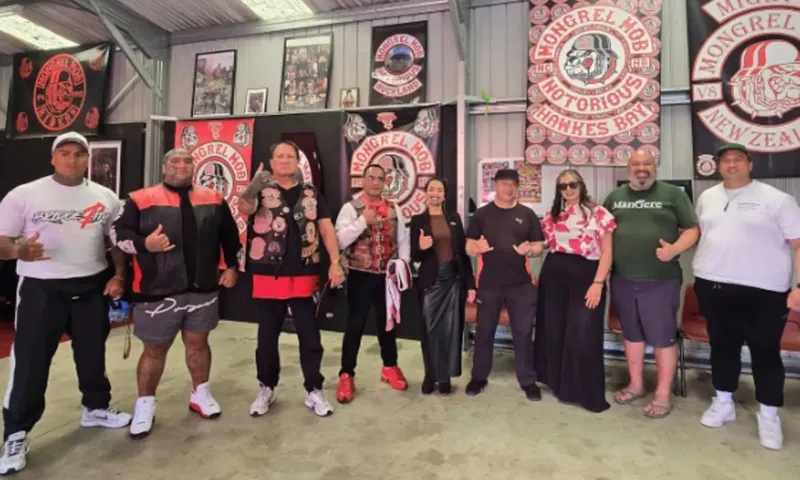
Mongrel Mob member Harry Tam and Te Pāti Māori MP Oriini Kaipara.
Analysis: A photoshoot with patched gang members is a spectacularly risky political move. It’s also an important reminder that not all constituents look the same.
Those images were always destined to promote a reaction. Among a group of patched gang members in their local pad, MPs from the Greens and Te Pāti Māori flashed bright smiles and upped thumbs for social media. If those pictures came with sound, you would have the rubbing together of Simeon Brown’s hands.
The shots would have resonated with some core Te Pāti Māori and Greens voters, while alienating others. And yet, engaging with constituents is exactly what politicians should be doing on the campaign trail – and yes, gang members are constituents too. That’s not to say they are beyond scrutiny, or any victims should be overlooked, but ignoring them or painting every gang-affiliated person as an irremediable criminal might cut us off from understanding why people join gangs in the first place.
They don’t form in a vacuum. The Royal Commission of Inquiry into Abuse in State Care showed us that former state wards, who suffered awful institutional violence and neglect, gravitated towards gangs to find affinity. Reporting from journalist Aaron Smale has also extensively covered this pipeline.
And so MPs – Māori in particular, as tangata whenua make up around 77% of gang members – are in the tricky position of trying to curb a cycle of abuse in which victims create more victims.
But it’s a difficult line to walk. Don’t engage and how will you achieve change? Engage too much and you’re soft on crime, or, worse – an apologist for criminals. Labour knows that only too well. Like the co-governance conversation, gangs are political poison now, because of what happened when the Ardern-led Labour government came under immense scrutiny for providing $2.75m (from the proceeds of crime fund) to a Mongrel Mob-affiliated rehabilitation programme. The programme, Hard 2 Reach, saw a “significant” number of participants stay clean after the programme’s completion. That didn’t wash away the criticism.
The Greens, though, are doubling down on the gang photos, saying yesterday that they’d consider supporting a similar initiative to that Ardern-era one if “evidence” proved it could work.
Funding for that programme was halted by National police minister Mark Mitchell in 2024, in line with the coalition’s ‘tough on crime” approach. They’ve wanted to look even tougher on gangs, banning insignia in public.
Justice minister Paul Goldsmith has often rubbished the idea that the government should treat gangs as a social issue, but that hasn’t always been the National Party approach. Former prime minister Rob Muldoon had an famously close relationship with gang members, favouring a ‘carrot-and-stick’ approach to tackle gangs as a social issue, favouring subsidised work schemes and recreational activities over a tough-on-crime approach. However, abuse of the scheme through the misuse of funds ultimately led to its cancellation in 1987.
But a measured approach or nuance during an election campaign? Not when the polls have National and Labour neck-and-neck. Not when National is running a campaign trying to tie Labour to its potential coalition partners' most radical policies. In a campaign like this, any bad optics become immediate weapons.
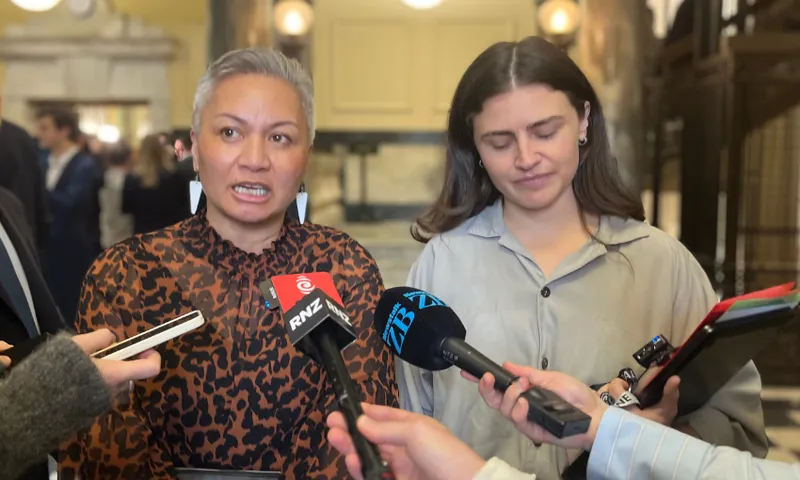
The gang photos are ultimately not as much of a problem for the Greens or Te Pāti Māori as they are for Labour. On Wednesday night the party’s leader, Chris Hipkins stood under the bright lights at the NZ Herald’s leaders’ debate and faced the inevitable gang attack line from National leader Christopher Luxon. There’s simply no reality in which the next Labour-led government would allow any Greens or Te Pāti Māori MPs to hold police or justice portfolios, he said. Going to the gang pad and taking photos was “really, really ill considered”.
He shut the conversation down, even though engagement is not endorsement. To be fair to Hipkins, it was the safest call to make this close to election day.
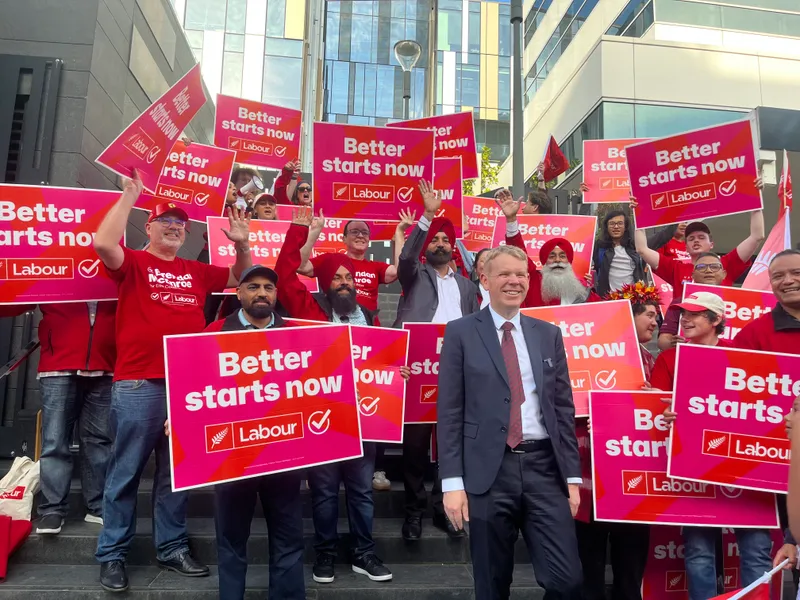
But even if he's managed to squash this attack line, he won't be thanking the Greens or Te Pāti Māori for giving the right a weapon to bash them with, especially when National is frothing at the mouth over any misstep. Senior Labour MP Willie Jackson summed it up well on RNZ when he said: “You do not hand the government something, who are absolutely desperate at the moment.”

Lyric Waiwiri-Smith
Lyric is an award-nominated politics reporter at The Spinoff. She covers parliament from the press gallery, pens the weekly column One MP, One Pint and is endlessly curious about what makes our decision-makers tick. Off the clock, Lyric loves a live gig, a cold brew, and being a Wellingtonian (on a good day).
Sign up to Two Ticks, delivered straight to your inbox.


