As Labour eyes the Māori seats, te tiriti fades from the vision

Chris Hipkins with candidates Mananui Ramsden (left), Willow-Jean Prime and Cushla Tangaere-Manuel. (Photo: Lyric Waiwiri-Smith)
Labour’s pitch to reclaim all seven Māori seats came with a tiriti-sized hole.
It took a while to say the quiet part out loud. When an “unapologetic” Labour Party launched its Māori seat campaign at Wainuiomata Marae over the weekend, the party wasn’t shy in reminding supporters of its “track record” of delivering the “dream of mana motuhake”. They’ve even “got the receipts” to prove it, but those have already been cashed in. The Māori Health Authority may have been a “milestone kaupapa”, but Labour is hoping three free doctor visits will suffice for Māori voters this time around.
Inside the wharekai, Māori campaign chair Willie Jackson summed up the mood towards the coalition well. “What a rotten government this lot is,” he proclaimed, before predicting a telling off from leader Chris Hipkins later. The nearly 100-strong crowd – mostly made up of campaign volunteers, some supportive stragglers and “honorary Māori” Trevor Mallard – were a lively lot, absorbing the party’s raucous calls to action with a lot of pakipaki. In the words of the local MP for Ikaroa-Rāwhiti, Cushla Tangaere-Manuel, it was like the crowd had just arrived from a Tony Robbins motivational talk.
To pull off a “two ticks in 2026” campaign and bring about the MMP era’s first one-term government, Jackson told the crowd the party had moved on to new “priorities”. In case you missed the memo, that’s jobs, health and homes. It also means that Māori voters too need to “get real” about what they really need, Jackson implored. Āe, “the treaty is incredibly important” and the party will “continue to support” related kaupapa, but the vibe has changed. “Too many Māori can’t get accommodation. Too many Māori are homeless,” Jackson said. “Too many Māori are struggling in the health area. Too many Māori are not getting jobs.”
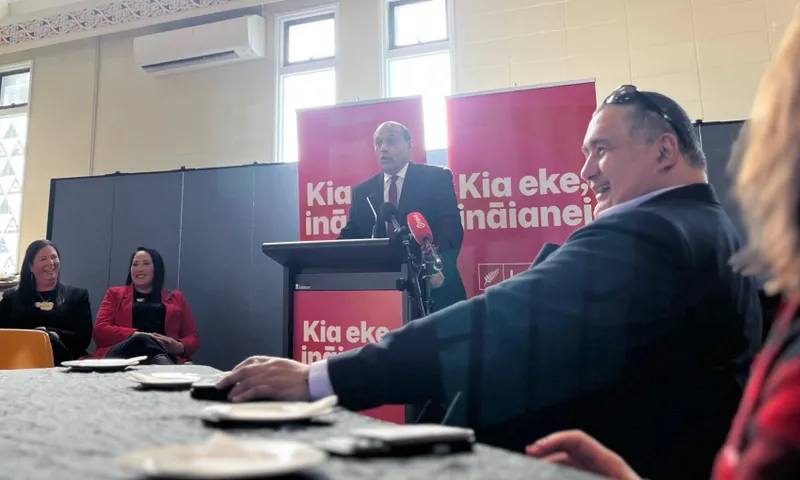
Which is why, Jackson said, the party is “not apologising for an economic strategy” taking priority ahead of campaigning on “resurrecting the Treaty”. As Jackson pointed out, it was an economic strategy in 2017 that saw Labour win all the Māori seats. And now it’s the strategy the party is banking on to reclaim these electorates, taking a shift away from the co-governance approach of previous elections.
But trying to make the state work better is also a markedly different pitch from the one being made by its main competitor Te Pāti Māori. The party that won six of the Māori electorates in 2023 argues this can only be done with the entrenchment of te tiriti and more decision-making powers for Māori. On the other side of the left-bloc, the Greens also have plans to make te tiriti more authoritative and have some reforms in treaty settlements.
Fair enough that Labour should be the outlier in the centre: constitutional reform and co-governance debates haven’t always been the party’s strong suits. Take, for example, Three Waters, which was a major headache for the party in the lead up to the 2023 election when co-governance became the party’s political liability. In the wharekai, kaupapa spoken included the disappointment in the rollback of the Māori Health Authority (Te Aka Whai Ora) established by Labour in 2022. The agency was established to create better health outcomes for Māori, but only lasted two years before being repealed by the current government.
Speaking to media after the launch, Hipkins stopped short of promising to reestablish Te Aka Whai Ora. “We’re absolutely committed to a by Māori, for Māori approach when it comes to delivering healthcare,” Hipkins told reporters. But, “that will probably look a little different to the way it did previously”. It had been “traumatic” for those involved in the establishment and disestablishment process, and the party was “absolutely committed to finding a sustainable way” of providing Māori healthcare.
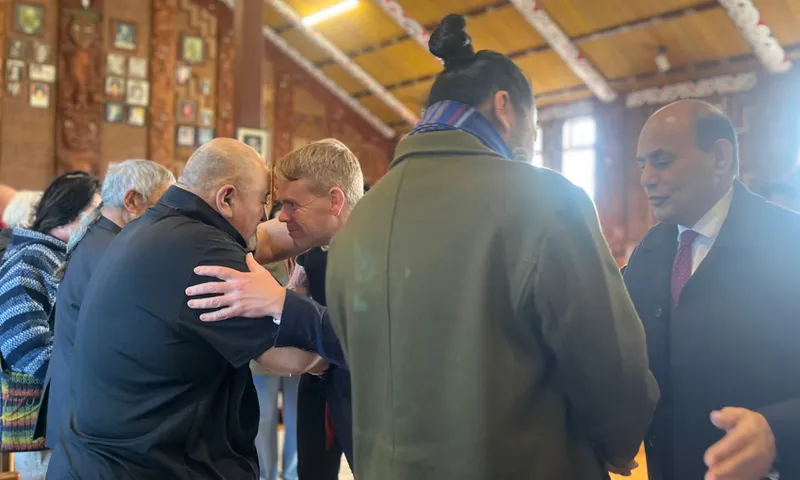
Two things can be true: Labour’s record on implementing co-governance has been messy, and whānau need practical material outcomes. It also leaves Māori voters with an interesting conundrum – two years on from the failed Treaty Principles Bill, is it time to move the political centre of gravity away from debating the treaty?
Labour certainly thinks so, Jackson’s delivery certainly convinced most in the wharekai. The policy the party launched alongside Māori seats campaign is focussed on targeting the 10.8% of Māori who are currently unemployed, by dedicating $21m yearly to a Māori trades training scheme. It’s a revival of a contestable grant cut by the current government which will be available for marae, iwi trusts and Māori providers to train Māori into skilled trades, from plumbing to hairdressing. The previous programme saw 81% of trainees move into employment, and a statement from the party focused on the goal of giving Māori security and opportunity.
That’s the policy, but there’s also the people. So far, the party only holds one Māori electorate: Ikaroa-Rāwhiti, represented by Cushla Tangaere-Manuel. But its slate of candidates are an impressive cohort: Willow-Jean Prime (Te Tai Tokerau), Te Pūoho Kātene (Te Tai Hauāuru), Kingi Kiriona (Hauraki-Waikato), Mananui Ramsden (Te Tai Tonga), Kerrin Leoni (Tāmaki Makaurau) and Toni Boynton (Waiariki). Asked what plan he had to overshadow the “shine” that is incumbent local MP Hana-Rawhiti Maipi-Clarke, Kiriona was absolute: “myself”.
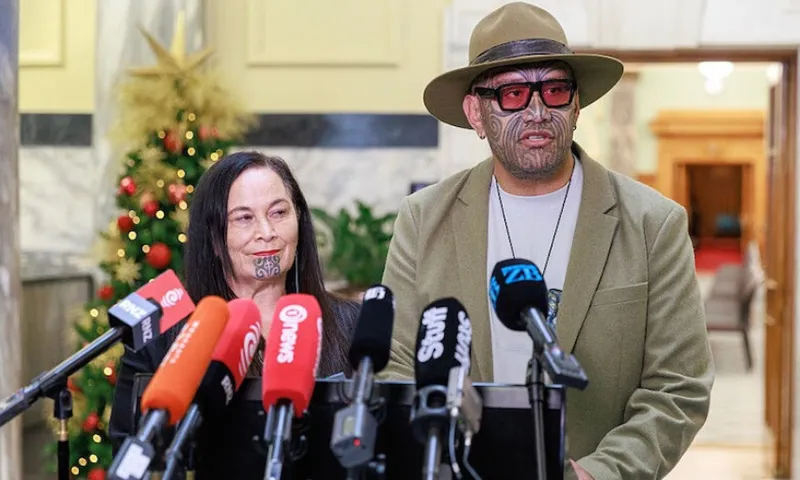
There are “unique” challenges to running in a Māori seat, Tangaere-Manuel pointed out. Debating is “not easy to do with someone you’re going to be at a wedding with next week”. There’s also the compelling argument being made by Te Pāti Māori that, because some of these Labour candidates have relatively high list rankings, Māori voters will have more representation in parliament by voting for a Te Pāti Māori candidate. That argument is only strengthened by the overhang hanging over the party’s electorate-only campaign.
Kiriona, ranked at 22 on the Labour list, told reporters he took “umbrage” at this kind of commentary. “I’m not a wasted vote,” Kiriona said, “and neither are the people standing here”. Meanwhile, Ramsden noted the gap between representation and outcomes. Even with Te Pāti Māori representation (though incumbent MP Tākuta Ferris is now an independent), voters in Te Tai Tonga had felt “voiceless”, “absent” and “overlooked” by parliament this term, he told supporters in the wharekai. Slightly awkward, as Ramsden and Ferris are whanaunga.
Though some online commentary may say the odds are stacked against Labour, Ramsden told The Spinoff “there’s a momentum I feel in the wind” and “heaps of tohu” lighting the Māori candidates’ path to parliament. The supporters in the crowd wearing “Push for Cush” tees and Tangaere-Manuel herself, gushing over “taking six mates with me back to parliament”, would agree. There’s an undeniable desire, amongst these Māori voters at least, to just get on with changing the government. “I felt like I was at one of those American church rallies,” Tangaere-Manuel said of the launch. “Our whānau was like, ‘Yes! Hallelujah!’”

Lyric Waiwiri-Smith
Lyric is an award-nominated politics reporter at The Spinoff. She covers parliament from the press gallery, pens the weekly column One MP, One Pint and is endlessly curious about what makes our decision-makers tick. Off the clock, Lyric loves a live gig, a cold brew, and being a Wellingtonian (on a good day).


