New Zealand’s proposed social media ban for under-16s, explained

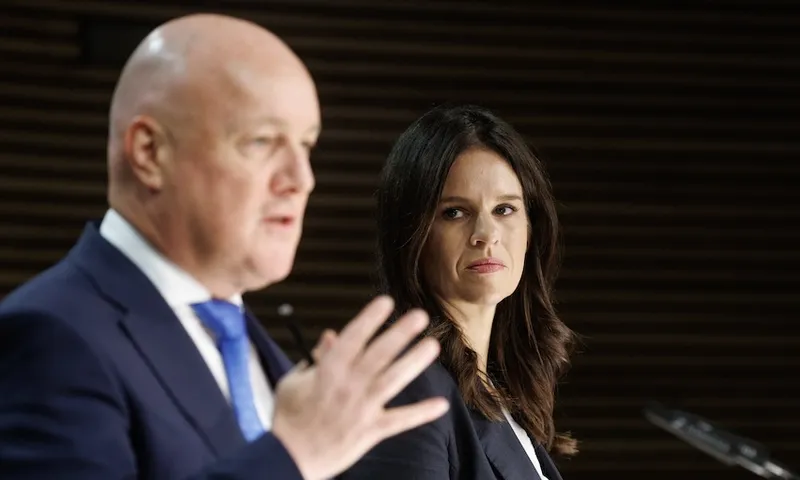
Image: The Spinoff
The government is introducing a bill to ban under-16s from social media platforms, but with two out of three coalition partners against it, Labour’s support is needed for the ban to go ahead. Here’s what you need to know.
Wait, I thought we’d already talked about this?
We have, at length. But it’s finally happening… maybe, anyway. Today, the government announced it was introducing the Online Safety (Minimum Age and Child Safety Risk Assessment) Bill to parliament. If it passes, it will require “high-risk social media platforms like Instagram, TikTok, Snapchat and Facebook” to take “reasonable steps to check users are over the age of 16”.
Reasonable steps, you say? Like what?
According to the government press release announcing the bill, stuff like “using existing account information, facial age estimation, digital ID services and formal ID”.
Won’t kids just get around that sort of thing?
The fact sheet that came with the press release goes through various scenarios. In one, “Jonah”, a 14-year-old who is often mistaken for older, tries to create a social media account. When an age verification prompt pops up, he selects “face scan”, and is estimated to be old enough to sign up. But wait – the platform identifies signs that Jonah might be younger than 16 from his account and device activity. He must choose another age check method. He picks mobile and enters his phone number. It’s checked against his mobile provider records and his age is estimated as under 16. His account is deactivated.
Yeah but… won’t kids just get around that sort of thing?
Probably, yeah, and the fact sheet concedes as much: “Ultimately, no system is perfect, and some children will try to get around the rules. But that is not a reason to do nothing. This is about changing expectations and social norms around children’s access to social media.”
Surely an age limit alone won’t change social norms?
No, and the government is keen to emphasise that the bill does more than that. It will also “require platforms used by children to regularly assess the risks they pose and report on how those risks are being identified and reduced”, as well as “introduce significant penalties for companies that fail to meet their obligations – up to 10% of a platform’s global revenue”. “It’s all about creating an “enduring framework that can evolve alongside technology,” said education minister Erica Stanford, who’s been a longtime proponent of a ban.
Who’s going to police this then, eh?
An online safety regulator will be set up within the Department of Internal Affairs to independently monitor compliance, investigate platforms and enforce the law”, according to the government. Age-restricted platforms will be expected to “complete child safety risk assessments for all NZ users under 18 against a list of risk factors”, and “update these assessments at least annually and provide them to the regulator”.
What about enforcing this in the homes of the nation? Have you ever tried to get a teenager to stop scrolling? Not easy.
“The government will work to strengthen education and public awareness, so parents, schools and communities have the information and tools they need to help children navigate the online world safely,” according to the press release.
Will parents be fined? Will naughty teens be sent straight to jail?
Nope. “Obviously, parents have a role to play in monitoring what social media platform their children are on, but so do social media companies,” said prime minister Christopher Luxon.
What platforms are covered by this proposed ban? Do I need to kick young Olivia off the family group chat?
She might welcome that, but no. According to the bill, an internet service is not an age-restricted platform if it is primarily used for messaging, email, voice or video-calling.
What about the cursed ChatGPT?
Sorry – “AI chatbots used primarily for responding to information queries and/or supporting productivity” are all good. Spotify, Roblox and (checks notes) LinkedIn are still allowed too.
YouTube?
That’s banned, sorry.
So when does this ban kick in?
Whoa there, the bill has to pass first, and that’s unlikely before the election. Stanford told reporters it would be going through a full select committee process. She hoped a regulator would be up and running by the end of next year.
Wait a minute – it’s a government bill, so surely it’ll pass?
No sir! The two smaller coalition parties, Act and New Zealand First, have invoked the “agree to disagree” clause, and won’t vote for the bill in parliament. That means National needs Labour’s backing, and while it has conditionally supported a ban, on Friday its tech spokesperson Reuben Davidson wrote a letter to education minister Erica Stanford, who has been working on the bill, raising a number of issues it wants addressed. These include how a social media operator could show it has complied, whether the government would publish a full privacy impact assessment, and how the penalties would be enforced.
And why don’t NZ First and Act support it?
While supporting the intent of the law, NZ First is concerned about “some sort of Soviet-era outcome that would be guaranteed to take New Zealanders’ freedoms and privacy away”. Specifically, according to a press release from party leader Winston Peters, it’s worried about VPNs being banned (it’s worth noting the fact sheet accompanying the government’s press release said “the bill does not regulate VPNs at all”) and digital IDs being required.
Act, meanwhile, thinks the proposed ban would infringe too much on the rights of everyone else due to “age checks, identification requirements, and more New Zealanders proving who they are simply to use ordinary parts of the internet”, and wouldn’t actually keep kids off social media. It also reckons teens might be pushed away from mainstream platforms and towards darker corners of the internet, and it could make them “less willing to talk to parents or teachers about what they see online because they know they weren’t supposed to be there in the first place”.
The Greens aren’t fans either, with a press release quoting media and communications spokesperson Hūhana Lyndon saying, “National’s bill to require age assurance for all social media users is unworkable and threatens online data privacy for every social media user, while also leaving big tech off the hook for the widespread harm their platforms cause.”
How’s the ban going in Australia?
Things were looking a little shaky in early July, The Spinoff reported. Today, Luxon said, “Early evidence from Australia shows minimum age requirements are already changing behaviour.” Act leader David Seymour, on the other hand, said the Australian ban had made little difference, “with nearly all children still on social media as if there is no ban”, and Lyndon of the Greens said, “Australia’s recent attempt at this shows an under-16 ban is not effective when it comes to truly addressing the impact of online harm.” Others say the full impact won’t be known for years.

Alice Neville
Alice Neville is The Spinoff's deputy editor. Her interests include politics, food and data-driven deep dives of all kinds.


