Echo Chamber: As English is made official, a ‘certain politician’ tests its limits

Lawrence Xu-Nan and Winston Peters.
This week in parliament: the PM drew a line in the sand over a promising up-and-comer, and things only got worse for a ‘certain politician’. Plus, for the first time ever, you can now legally read this column in English.
The hubbub the prime minister created in the Beehive theatrette on Monday afternoon caught him by surprise. The formula for Christopher Luxon’s post-cabinet press conferences is usually as follows: spend five minutes announcing a policy/project, let a senior minister filibuster for 10, and take questions until he feels he can’t be any clearer, guys. Why would he need to take the Opportunity to team up with another unpredictable coalition partner when he already has Winston Peters?
With that out of the way, the coalition could focus on using the week to build their vision of a happy family. A three-way marriage, however, often means compromising your values. While a not-so-rare misstep from former NZ First candidate Stuart Nash helped launch National’s brief feminist era over the weekend, Tuesday’s question time saw that narrative looking a little shaky when faced with questioning from Green Party co-leader Marama Davidson.
Why, Davidson asked the prime minister, has only one out of every three senior public service roles been given to women this term? Luxon couldn’t be any clearer, guys: “We make sure we promote the best people.”
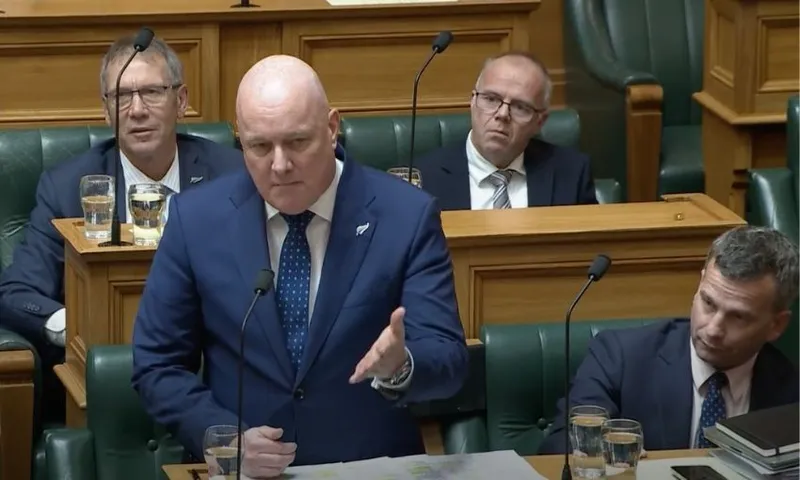
As is his wont, NZ First leader Winston Peters rose to give his two cents. “Is it wise that, before he makes appointments with respect to women,” Peters began, “you know what a woman is?” He kept that energy as he left the House that afternoon, to tell waiting reporters the Greens’ proposal to halt the construction of AI data centres was “appallingly retarded”. The minister used that word twice more as his chief press secretary stood by his side, with new wrinkles forming on his face.
It was only going to get worse for everyone by Wednesday. During question time, RMA reform minister Chris Bishop took supplementaries from Labour MP Willie Jackson over the scrapping of Mana Whakahono ā Rohe agreements. Jackson asked whether Bishop agreed with the grumblings of a former Treaty negotiations minister that previous work made by former National governments to improve Māori-Crown relations was coming “undone”. But the name “Chris Finlayson” had barely left Jackson’s mouth when he got a resounding “NO!” from the government benches.
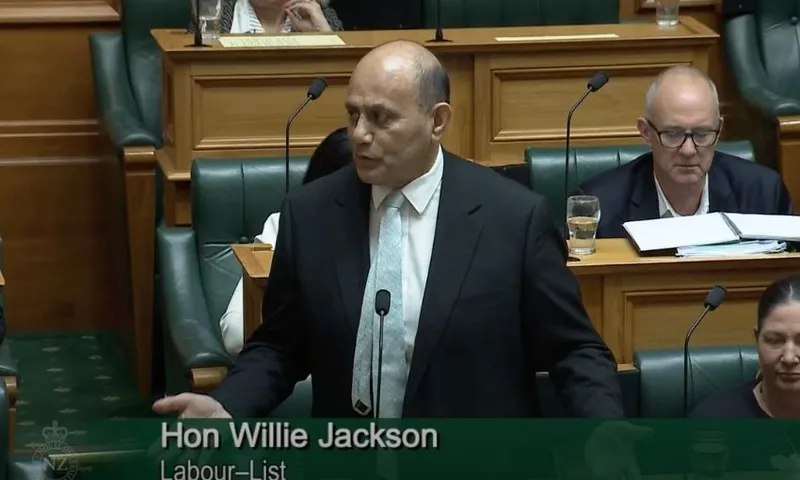
“Did he text that to you?” quipped minister Simeon Brown.
Peters, perhaps feeling it had been too long since the House had heard from him, inserted himself into the conversation again. “Does the minister agree,” Peters asked, “that the priority for infrastructure should be more do-ey and less hui?”
“Oh, go jump in a lake, Minister,” Jackson sighed. He tried another gotcha on Bishop, asking whether he agreed with former prime minister John Key that “Māori are Treaty partners, so you have to treat them with respect… Or is it just a load of nonsense, like what the minister said about Stan Walker’s Māori performance at the New Zealand Music Awards?”
“To the first part of the question, yes,” Bishop replied.
General debates followed, with Act Party leader David Seymour receiving a faint “woo” at the promise of “Henrymania” (Paul, that is) coming to parliament. Soon, Peters got to his feet to speak on the findings of the government’s just-released official response to the Covid inquiry. But as Peters lambasted the Labour MPs walking out of the House, he was caught off guard by some heckling on the sidelines. As Peters turned his tirade on Green MP Lawrence Xu-Nan, silence fell and jaws dropped.
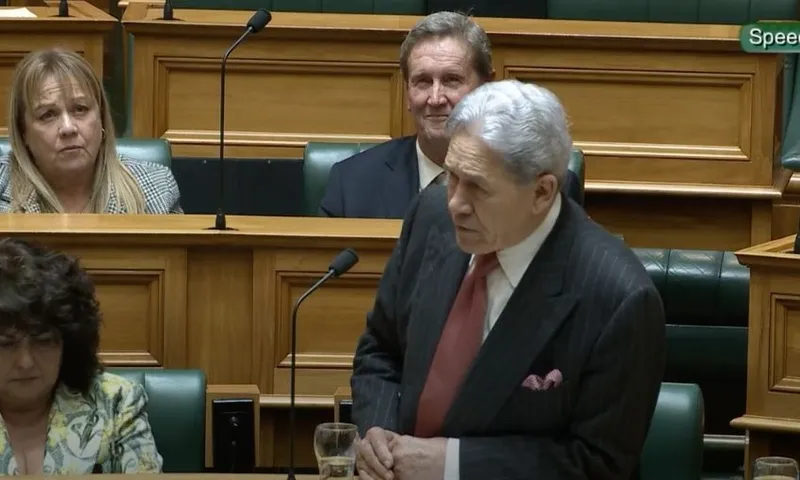
“I noticed you came here five minutes ago,” Peters growled. “Go back to your own country – that’s where they lie like a flatfish, but they don’t lie like that here, all right? This is called a democracy… Unlike what you’re used to. Go back to where you’ve come from, you loudmouth, and maybe you’ll learn something about the political system of New Zealand in time before you go streaming out of here in three months’ time.”
Those comments followed NZ First into Thursday, with the Chinese embassy in New Zealand lodging “solemn representations” to the Ministry of Foreign Affairs and Trade over “negative China-related remarks made by a certain politician in the New Zealand parliament”. Unfortunately for the embassy, the minister responsible for that department stood by Peters’ words – which were his own, after all.
There was one positive development for Peters: the NZ First-National coalition agreement was honoured with English receiving official language status on Thursday evening. The third reading of the English Language Bill saw Te Pāti Māori MP Oriini Kaipara suggest to the House that, if the government wanted to hold English to the same standard it holds te reo Māori, maybe it should go full send.
“The English language has not followed the same path,” Kaipara reminded the House, in te reo Māori. “It hasn’t been beaten down, it hasn’t been oppressed, it hasn’t been challenged in the same way… [Should] the two languages have equal status, if we abolished the teaching of Māori in schools, then we should abolish the teaching of English.”
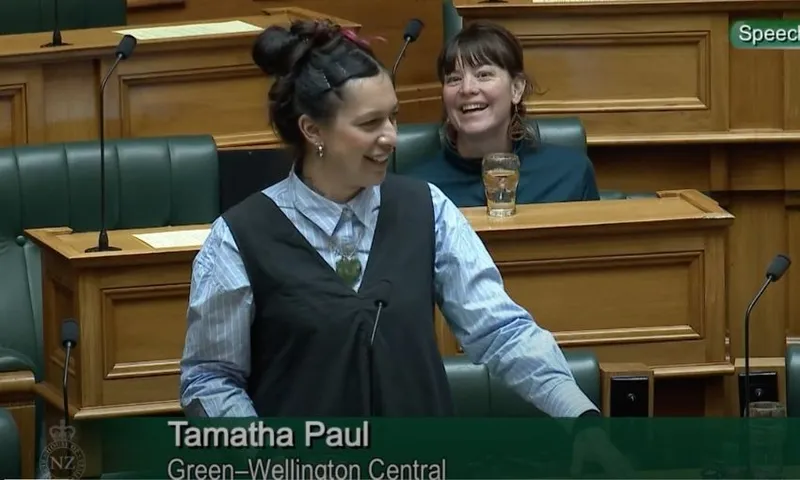
Up next was Green MP Tamatha Paul, who criticised the government benches for not bothering to listen to the translation of Kaipara’s speech. Paul also didn’t mince her words as she labelled English a “bastard language”, and teased the “bunch of snowflakes” across the aisle from her who “cry themselves to sleep” over the word Aotearoa. “That’s how weak they are,” Paul said. “They see te reo Māori and they shiver in their boots.”
And so, after a certain politician spent the week testing its limits, English emerged with a new constitutional status. Its dignity, however, did not fare so well.

Lyric Waiwiri-Smith
Lyric is an award-nominated politics reporter at The Spinoff. She covers parliament from the press gallery, pens the weekly column One MP, One Pint and is endlessly curious about what makes our decision-makers tick. Off the clock, Lyric loves a live gig, a cold brew, and being a Wellingtonian (on a good day).


