How being an only child shaped my life

David Hill (Photo: Supplied. Design: The Spinoff)
As birth rates decline in New Zealand and around the world, David Hill remembers having no siblings back when that was the exception.
”You’re an only child? You must be so spoilt!” It was a litany all through my first 15 years.
I never knew why I was my parents’ sole product. They’d both come from big, Edwardian-sized families: six in my mother’s case; seven in his. They were 31 and 43 respectively when I was born: not so unusual these days, but definitely atypical in the early 1940s. They’d already been married for seven years.
Was there a conception problem? A fertility issue? I never thought of such explanations till much later. At the time, I wouldn’t have had the language, the daring, or even the awareness to ask.
The only other sole child in my immediate orbit was Chris from school, but he lacked siblings because his father had been interned in a German POW camp for nearly five years. (So he claimed, and I never thought about the shaky logic till later.) I tried to persuade myself that my dad’s being in the Napier Home Guard must have had the same effect, but that narrative didn’t convince even me.
Most of my childhood friends and classmates had brothers and/or sisters, whom they spoke of largely in terms of indifference or irritation. But in our house, it was just the three of us, and since it was my family, that seemed perfectly normal.
So was I spoilt? My parents certainly focused on me. They gave me a lot: their attention, encouragement, birthday and Christmas gifts. I never knew hand-me-downs; felt bizarrely envious when I saw my cousins Ewen or Johnny wearing shirts or shorts with histories.
I was the focus of my parents’ expectations, also. There was no escape, nobody else to be the target of their disappointment or reprimands. Sole children have more privacy in some ways, a lot less in others.
Siblings are still half-comprehended territory for me. I know friendship; know how it needs degrees of care and maintenance. But siblings seem to be something you can leave at the edge of your life for long periods, then pick up and relate to as if no time has passed. You can find communality with them even when there are degrees of diversity and disagreement you’d be unlikely to accept from friends. My wife Beth has two brothers. I watch her when she’s in the company of these congenial men whom I’ve known for well over half a century, and still sometimes feel as if I’m watching the proceedings of a small secret society.
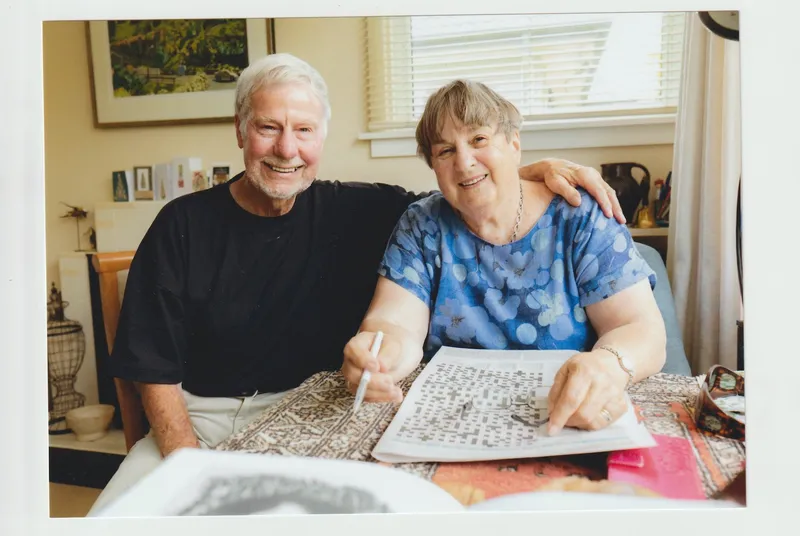
Siblings are roots, Beth reckons. Children are your future, whereas brothers/sisters are your past, your shared histories. I see it when she and her bros are together: the shorthand of their narratives, the quick recognition of one another’s references. I watch them re-bonding so swiftly and I envy them.
Are solo children becoming more common in the 2020s? The latest figures I can find from StatsNZ say 45% of our families are one-child units. Startled? Me, too: I’d thought it might be half that number.
We’ll all have heard how a number of parents are choosing to have fewer kids – or none – for economic, environmental, lifestyle reasons. Aotearoa’s current fertility rate is just over 1.5. If that continues, each generation from now on will have 25% fewer people than the previous one, which means single-child families will become a whole lot more common. On the other hand, we’re also seeing more blended families, where a previously single kid suddenly becomes one of several. That can only be an…. interesting situation.
I’ve never known sibling rivalry or discord. I’m distantly aware how savage it can be. One good friend’s brothers and sisters seem to be in an ongoing tumult of internecine war. Yet I occasionally, perversely feel a little envious of such disharmony. Am I better or worse off in not having even an estranged sibling?
My only child’s advantages? I believe my degrees of solitariness took me into reading, faster than might have happened otherwise. Reading of course brought words, scenarios, fictional friends (who I guess sometimes functioned as surrogate siblings). Much later, I understood what a kick-start all that undisturbed immersion in books had given to what I sometimes pretentiously call my career.
Did being the sole kid teach me to stand on my own feet earlier? I sometimes feel it’s helped prepare me for the essential apartness that squats inside every human being.
But back then, being Number One of One kept me closer to my parents, more dependent on them. I wonder if it made me more needy; I know I felt a duty to please my parents, an anxiety to be sure I was doing so. Anyway, from what I’ve seen, growing up among the strategies and manoeuvres of sibling relationships is a more effective way of developing independence.
One indirect benefit, as I see it. Sole children are often presented as more private, more introverted than those from multi-kid families. I reckon it’s worked the opposite way for me. I formed and still maintain close contact with selected cousins (none of them an only child, but happy to tolerate a must–be-so-spoilt one). I’m aware that I’m happy to confide, to share feelings with friends. Nothing special there, but I do have a lingering sensation that I’m making up for lost time, for the chances I never had to share issues with brothers/sisters in my childhood.
Disadvantages of being the only child? Where to start, apart from the ones listed above….
On the most mundane of levels, it meant an extra shock when I first went flatting, and met the logistics, the politics of domestic sharing. Half a dozen years earlier, as I began to realise that girls weren’t just blokes who giggled a lot, it meant a lack of knowledge on how to communicate with these suddenly fascinating assemblages of XX chromosomes. I lagged and floundered for a while. Make that a long while.
And a full dozen years later, when our own son and daughter arrived, it meant I started from behind when trying to understand and manage relationships between the two of them.
The Harvard Study of Adult Development, which has been running since 1937, strongly suggests that positive relationships with siblings when you’re young contribute to success in later life. Oh well, that gives me an excuse. Rather more alarmingly, the same study points to sole children being more likely to develop depression as they grow older
Harvard also indicates that brothers and sisters can provide a ”buffering” effect within a family, can deflect and reduce pressure and trauma. And – another excuse – I’m inclined to think that I did brood more over perceived expressions of disapproval or disappointment from teachers, coaches, even Scout leaders, than my peers from multi-child families seemed to.
I’ll end by betraying our own two kids. Fret not: when I announced I planned to mention them in print, there was the usual tolerant shrug they extend to the old guy’s strange habits.
From chance rather than intent, there’s a gap of over five years between Pete and Helen. At first, after she landed on Earth, he treated her with the tolerance of an established family dog meeting a new puppy. As they grew to develop diametrically different personalities, and especially as he entered the High-Stress Zone of adolescence, he became impatient and distant with her; she was puzzled and sometimes hurt by him.
Decades on, still with their diverse lives and personalities, they respect and help each other, share recollections with each other. Like Beth and her siblings, they’re more than the sum of their parts. I watch them, and understand better some of what I missed. We’re hugely glad we had the two of them, for their sakes and for ours.

David Hill
David Hill is one of New Zealand’s most distinguished writers of novels for teenagers and younger kids. He has been published in 10 languages and 15 countries. He is a former high school teacher, and was born in Napier in 1942.


