My friends are all leaving NZ. Should I stay or should I go?

Diana Simumpande
When your friends are all moving overseas and the cost of living is almost as high as the cost of housing, it can feel hard to stay in Aotearoa, writes Diana Simumpande.
It’s 9pm, and I’m fighting off the Sunday scaries by scrolling through Instagram stories, which honestly have now just become a FOMO-inducing showreel of relocated Kiwis. Someone got into Berghain last night. Someone’s DJ-ing in London. Another is opening a solo exhibition in Edinburgh. And then there’s me: sinking into the sofa, bathed in the orange glow of my Ikea doughnut lamp, wondering: is this it?
I used to tell people that New Zealand was the perfect place to die. I meant it as a compliment. Sort of. It kinda feels like a really nice retirement home. It’s truly beautiful here. Sweeping, verdant landscapes just like the brochure said. Great coffee. Feijoa lollies. We even have Ikea now. And as someone who moved here from post-industrial Newcastle upon Tyne, it felt like paradise. I quite like the idea of spending my last days here.
But even if it’s a great place to die, is it still a good place to live? And I mean truly live.
I own this couch I’m sitting on and the house around it. At 29, I’ve been to uni and girlbossed my way into a new-build with a dog, a long-term relationship, and a stable 9-5. This is usually the part where I pop out a kid and live happily ever after. By New Zealand’s measure, I made it. So why doesn’t it feel that way?
Part of it is the widening gap between the rich and poor, low wage growth, high living costs, shuttered venues, and quiet Fridays, Saturdays… pretty much every day of the week, really. And at the helm, a government that seems to be managing the decline instead of imagining anything better.
The other part is that the people who made this place a home have gone. My best friends, my brothers, my parents, and even colleagues. I’ve been to so many leaving dos that a goodbye feels like a handshake. I am, quite literally, running out of friends.
Of course, the state of the country right now and the string of departures are linked, and I find myself fighting in my own head over whether I should stay or be leaving too. So I’ve been asking everyone who is going, gone or still deciding: why? Which one of us is making the mistake?
***

So why is everyone leaving? The top answer is money. But we all knew that. A friend in tech could earn nearly double her salary in Sydney. A nurse says staffing is terrible in New Zealand, and Australia pays more for the same work with more hands. But what’s interesting is that looking at the money difference cracks something bigger open. One friend said, “You start to tell yourself all the other things that Auckland’s not giving. And then all of a sudden you realise this probably isn’t the place for me.”
Another friend says that in Sydney there’s more disposable income and “so many cool places to spend it and express your interests”, while a friend in Auckland, says she spends her days off trying to escape the city rather than live in it. Turns out life is more than a nice view.
“Isn’t Britain grey, bleak, and crumbling?” I asked a Kiwi in London. “All of those things,” he said, “but I’d rather live in a mouldy flat in a place that feels alive”.
Alive. Something that keeps coming up in these conversations, on top of the growing consensus that New Zealand is dead. Or dying. Depends on who you ask.
***
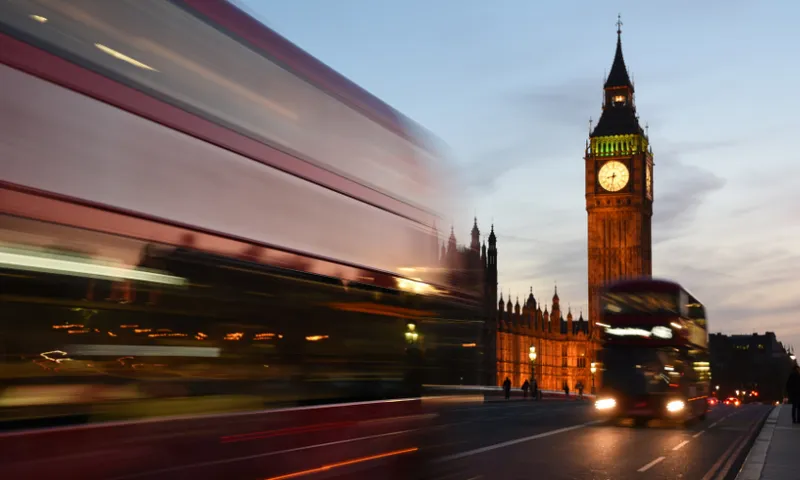
Every culture has a coming-of-age tradition. Ours is an exit. We’ve collectively decided that becoming a person happens offshore. Be loud in London, weird in Berlin, ambitious in New York. Burn off the yearning, then come home, buy the house, and don’t bang on about it.
For generations, we were okay with the great Kiwi OE because it came with the promise that people would come back. But there’s a finality to these recent departures that wasn’t there before. No one really talks about coming back anymore. The valve has become a drain. A brain drain.
NZ’s arts sector is buckling under venue closures and dwindling arts funding, pushing away the very people that make this place feel alive. Jacob Park, who makes music as Leaping Tiger, won Best Electronic Artist at the 2022 Aotearoa Music Awards. Then he left for London because he felt there wasn’t enough room for someone like him to grow here: “I do feel like New Zealand has failed its younger population, no question. That’s why everyone who has the means to get out is leaving, either for financial or cultural reasons. Nobody here ever considers what New Zealand could be, they just try to keep it the same as it used to be. The life path I want just isn’t possible there.”
Zambian and Pākehā, born and raised here, he’d released three albums independently, the last a heartfelt farewell to the local music scene, stacked with Kiwi collaborators. In London, he found what the OE was always supposed to provide: “diversity and space to be who I am.” He’d won the country’s top prize before he turned 30, and after that there was nowhere else for his career to go. No bigger venues, no way to make it a decent living. And beneath it all, the struggle of feeling like he could never truly belong here without “the need to pretend or code switch to fit in”. When he came back home for a few months, it only made it clearer that New Zealand could not offer him the life he found so easily in London.
The OE was designed to send us away and pull us home, and it’s doing the first half perfectly. But people leave, see what else exists and arrive where Jacob did – at the realisation that the life they want just isn’t on offer here.
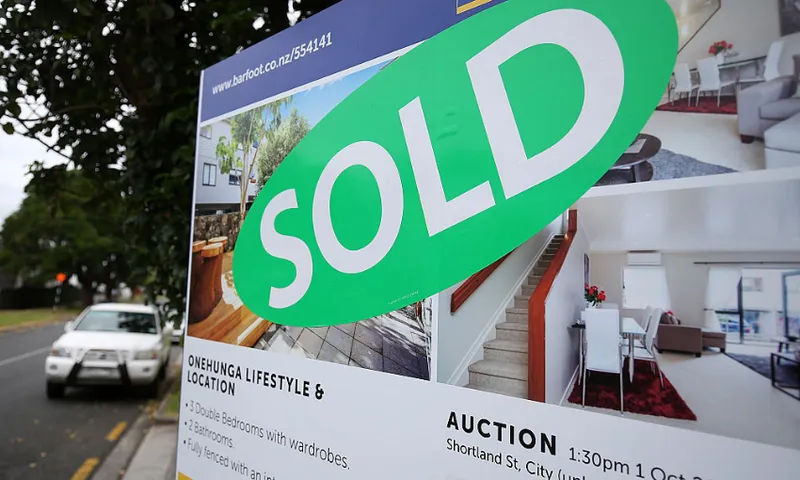
Jacob hit a ceiling, I climbed the ladder. Home ownership: the central promise of New Zealand middle-class life for generations. We’re obsessed with property, despite our wildly unaffordable prices. Go outside, and you’ll see realtors’ faces on billboards emblazoned with “Big Deck Energy” luring you in. The deal was always that if you put your head down and bought in, you’d get a life on the other side of it.
Buying your first home is a huge source of pressure for young people. The big milestone on everyone’s list. And if you can’t get there, you feel like a failure, whether you even wanted it or not. We call it settling down, but maybe it’s just settling.
I bought the homeownership dream, literally. Now here I am at 29, shouldering a crippling mortgage, rates, bills, watching my disposable income disappear and resenting the fact that I can’t do anything fun without figuring out how much will be left over first. Meanwhile, my friends are necking Aperol spritzes on the Amalfi Coast, on incomes that aren’t eaten alive by a bank. Most of the time, it feels like a very expensive hell. It’s no wonder my generation is opting out of this dream. The house was meant to be the reward for staying. Now it’s just three decades of interest-heavy payments for the privilege of being the last one left.
***
Call it a young person’s restlessness, but it’s not only us. My parents moved my brothers and me here from the grey, harsh north east of England to give us a better life: the picture-perfect 2000s suburban dream, trampoline in the backyard and all. They worked the whole immigrant arc: hustle and grind until you don’t have to anymore. But when it came time to retire, they decided on Zambia, the very place they thought they were trying to escape. I remember my mum’s words as a senior charge nurse, “I don’t want to wake up at 5am every day to come home and feel like I have nothing left for myself.” If she stayed here, she’d have to keep working to be able to afford any sort of life.
The people who chose this country as their dream didn’t choose it for the ending. Now, my friends are at the beginning of a movie my parents just finished.
Except New Zealand kinda was my OE. I moved here 15 years ago. By the age of 14, I’d lived in three different countries. I’ve moved around enough to know that moving overseas doesn’t magically solve all your problems. Every place has new ones.
So why not stay in New Zealand? I can’t shake the hope that you can actually build a real life here because, despite everything, I really do love this place. I love that no matter where you go, you’re never far from something beautiful. The way the afternoon sun slips through the pōhutukawa trees, casting light that flows from the leaves like a halo. I love that my beaten-up 96 Honda Civic could die in the middle of the road during peak rush hour, and help would arrive before I’d even had to ask. I love racing to catch the exact moment the strawberry sky spills into the sea on my evening walks. I love the ephemeral euphoria of a Kiwi summer and the way the volcanoes that both frighten and awe me surround us like sleeping giants we’ve built our lives around anyway. And most of all, I love that it’s boring here, because really, boring is just a lazier way of describing peaceful.
But there’s also the other side. How do you build a life when every month another piece of the foundation gets on a plane? How do you open a new venue when the people who would have filled it are gone? Leaving doesn’t leave things as they were, it hollows them out. While they’re off leaving and reinventing themselves, so am I, adapting to a life without my family close enough to actually see, without an old friend to vent to about turning 30, even without my favourite cafe, which just closed down.
Next month there’s another leaving do. I’ll go, I’ll hug someone at the gate, and then I’ll drive home to the house I climbed the ladder for, still wondering which one of us is making the mistake.

Diana Simumpande
Diana Simumpande is Zambian-born, raised between England and New Zealand. By day, she's a copywriter who has spent over a decade working with some of New Zealand's biggest brands. When she's not doing that, she makes video essays on her YouTube channel, Afrodizjha, picking apart pop culture to get at something true about race, feminism, and the world we're all pretending is fine.


