New Zealand’s hospital headaches, by the numbers

Let’s take a pulse check. (Image: Tina Tiller/The Spinoff)
What symptoms of illness is our health system showing?
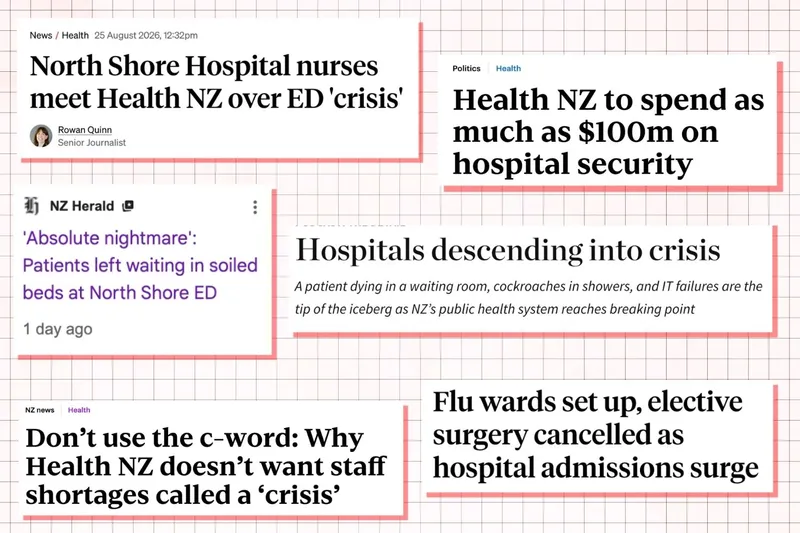
The winter flu and respiratory illnesses are hitting late this winter and emergency departments are under pressure, nurses are at the end of their tether and some patients are being treated in corridors.
It’s not just the winter viruses causing issues, but the viruses on top of long-standing problems, say healthcare workers. What symptoms of illness is our healthcare system showing right now? Let’s take its pulse.
120
The number of nurses who signed a letter sent to the chief executive of Health New Zealand Te Whatu Ora last week about worrying conditions at Auckland’s North Shore Hospital. Frontline staff described working at the hospital as an “absolute nightmare” due to the combined pressures of patient volume and constrained staffing. Treatments were compromised and, in some cases, patients were left in soiled beds, the letter said.
14,000
How many patients North Shore Hospital treated during July. Sometimes the emergency department was as much as 300% over capacity, according to the nurses’ letter.
Nine
Additional nurses who will be recruited for North Shore’s ED. They’re among the 50 new nursing roles Health NZ says will be hired for the North Shore and Waitākere hospitals.
Six months
The duration of short-term contracts for staff hired by Christchurch Hospital for its temporary ward and discharge lounge, established to cope with winter (it’s been “slammed by high demand” according to the New Zealand Nurses Organisation). Was it enough? One hospital doctor, talking to RNZ at the end of July, said they were being forced to treat patients in corridors. “It’s distressing and upsetting to them and to the staff.” Should the situation deteriorate, the hospital may be forced to “put patients in tents” outside.
One
The recommended number of support people patients should bring to Hawke’s Bay Hospital, in order to reduce crowding. The hospital has put out this advice as seasonal illness increases patient numbers.
177
The number of people affected by severe acute respiratory illnesses (SARI) who were admitted to Auckland hospitals during the week ending August 16.
15.391 per 100,000
The rate of hospitalisations for SARI that same week – the highest in 10 years. Influenza-positive hospitalisations reached the “very high activity” band for the first time this year.
Nine hours
How long a man at Waikato Hospital waited in its crowded ED before dying in the bathroom. Health NZ said he died from an “acute unexpected incident”.
One every 20 seconds
The frequency of emergency calls to Hato Hono St John ambulance service made in early August.
Three
The number of times St John experienced record-breaking days (by 111 calls) in a single week in August.
103
How many beds were added to hospitals across the motu for winter.
163
The number of movable, temporary “flex beds” available.

$1.4bn
How much extra a year it’s been estimated is needed to keep running our healthcare system.
$600m
The funding shortfall according to unions and some researchers. (The Ministry of Health disagrees with the figure).
$95m
Money diverted from hospital and specialist services to primary and community care in the 2026/27 Budget. The aim was to bolster GP clinics, in the hope that early intervention reduces hospital attendances. A health economist for the advocacy group Kaitiaki Hauora, Bill Rosenberg, called it “robbing Peter to pay Paul”.
1300
The number of vacant nursing jobs in the public system, reported by The Post in July 2026.
29,458
Total number of full-time equivalent nurses in the public health system as of March 2026.
54
The increase in the number of nurses (full-time equivalent) nationwide between March 2024 and March 2026 by Health New Zealand – a figure confirmed by Simeon Brown, minister of health, last week.
100+
How many jobs one nursing student recently said she had applied for, unsuccessfully.
2,378
Full-time-equivalent nursing roles being recruited for by Health New Zealand right now, 475 of which had been filled but the successful applicants had yet to join the workforce (as of August 14)
1,800
Graduate nursing positions promised by Health New Zealand during the next year.
1,810
The shortfall of all doctors, according to Health New Zealand’s health workforce plan, updated in July. It outlines an “expected rise in demand over the next 10 years as our population and workforce age”. The doctor shortage is predicted to go from 8.5% to 14.5% by 2033.
30%
The proportion of medical graduates who leave New Zealand within 10 years of graduating, according to the Medical Council.
614
The current cap on trainee doctors in New Zealand.
40 + 40
The shortfall of emergency medicine and intensive care doctors.
28.7%
The internationally trained doctors who remain in New Zealand after five years. This churn places pressure on teams and undermines workforce resilience, according to The Medical Council of Aotearoa.
Six
The number of full-time gastroenterology specialists that Palmerston North Hospital is funded for. The only one they actually had left in June, blaming the workload: he was managing 1,200 complex and “chronic” patients.
One
The only publicly-funded specialist paediatric palliative care physician in the country works at Starship Hospital in Auckland.
24/7
The operating hours of many urgent care clinics. The number of clinics offering these hours is increasing nationwide to take pressure off hospitals. Whangārei, Counties Manukau, Tauranga, Palmerston North and Dunedin were all earmarked in the Budget to get new all-hours clinics, while other smaller centres would get longer opening hours. Sometimes that’s easier said than done; Wellington After Hours Medical Centre doesn’t currently have enough staff to extend its hours.
$165
What you’ll pay for after-hours medical consultation at Auckland clinic White Cross St Lukes (if you’re not enrolled as a patient of the clinic and don’t have a community services or high users card). Unlike public hospitals, urgent care clinics generally charge a fee for treatment, which varies depending on factors including age.
$298.4 million
How much Health New Zealand will shell out to three private hospitals to perform surgeries in order to relieve a backlog in the public system. These six-year contracts are part of the government’s directive to outsource some procedures to the private sector. The aim is to improve “cost effectiveness”, meet targets and, health minister Simeon Brown says, “provide clear investment signals”.
2027
When Manukau Health Park is expected to be finished. The outpatient and elective surgery centre will cater to south Auckland’s growing population (and reduce pressure on Middlemore Hospital). The project is costing the government and Counties Manukau Health $316 million, 38% more than first anticipated due to increasing construction costs.
$680 million
The cost of upgrading hospitals in Tauranga, Palmerston North and Hawke’s Bay.
$2.05 billion
The approved budget for Ōtepoti’s long-awaited (though scaled-back, much to the frustration of locals) new hospital, which the government is “committed to delivering” by 2031. It’s a huge project and, all going to plan, will give Dunedin a “modern, world class” hospital.

1/6
The proportion of Kiwis over the age of 65 (in the 1960s it was 1/12). New Zealand’s population is aging – rapidly. By 2048 it’s predicted 22% of people will be over 65. This will affect the health system due to older people requiring more care.
265
The average number of ED presentations per 1,000 people each year. It’s one of the lowest in the developed world, according to Health New Zealand. (Australia’s is 350/1000.)

Emma Gleason
Emma Gleason is a staff writer at The Spinoff and an award-winning fashion journalist. But it’s not just clothes that interest her, you’ll find her exploring tasty cheese, influenza outbreaks and more important things right here. She has experience with some of the country’s leading media outlets as well as the toaster in our kitchen.


