Help Me Hera: How do I know if I'm in love?

Is there something missing from our relationship, or have I just been sold a myth by songs and movies?
Want Hera’s help? Email your problem to helpme@thespinoff.co.nz or fill out this form.
Dear Hera,
I have met someone lovely and fantastic, and have been dating for almost a year. We share the same values, the same interests, and similar goals. We are both creative types who want busy and interesting lives and love supporting each other in this.
When we first started to date we couldn’t get enough of each other. I wasn’t sure if I would feel that way at first, but the more we got to know one another the more I felt… we matched.
I feel loved, I feel relaxed, I feel deep trust, he makes me laugh. The only catch is that I can’t tell if I am in love.
I don’t know if it’s just the natural course of relationships, or if it’s because I’ve been told a myth about what falling in love is, by songs and stories and media. I thought that love would be so overpowering it couldn’t be questioned; I’d be bowled over, head over heels, heart aflutter at the mention of his name or the sight of him.
The truth is, I didn’t think I’d ever been in love, despite being in a few relationships and saying “I love you”. But being in this new relationship, now I am questioning what falling in love is. Is it just deep trust and care? Or, to quote you, Hera, is it someone “who gives you heart palpitations and treats you well” – because I fear I don’t have the former, and I’m not sure I ever did. I have the latter, and most of the time that’s enough. But occasionally – and maybe it’s just when I haven’t eaten or I’m on my period, I’m not sure – a little voice in the back of my head wonders.
Or maybe I’m bullshitting myself because I remember before we got together I wouldn’t stop talking to people about him. So I don’t know.
Lucky in Love

Dear Lucky in Love,
What is love? (Baby don’t hurt me.)
The trouble with questions like this is we all live in a prison of our own experience, and trying to come up with a universally cohesive definition of one of life’s most profound and untranslatable feelings is inevitably going to leave a sizeable chunk of the population feeling like there’s something wrong with their brain chemistry, because the moon isn’t hitting their eye like a big pizza pie.
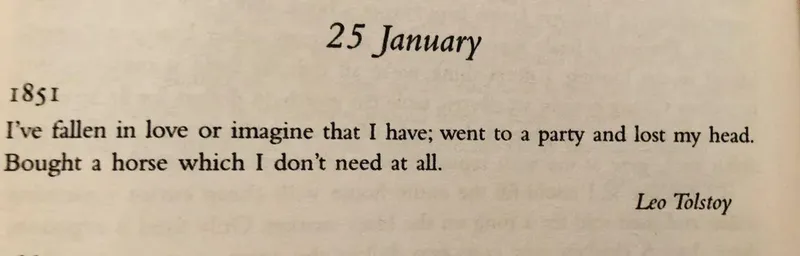
I think you’re talking about the distinction between the chemical experience of “falling in love” and love, proper. Falling in love is when you go to a party, lose your head and buy a horse you don’t need at all. Real love is a different thing altogether.
“An honourable human relationship – that is, one in which two people have the right to use the word “love” – is a process, delicate, violent, often terrifying to both persons involved, a process of refining the truths they can tell each other. It is important to do this because it breaks down human self-delusion and isolation. It is important to do this because in doing so we do justice to our own complexity. It is important to do this because we can count on so few people to go that hard way with us.” – Adrienne Rich
Depictions of falling in love in songs and movies aren’t a myth or exaggeration. For some people, falling in love truly feels like being hit by a sledgehammer of dopamine that completely melts your baseline executive function, leaving you unable to eat or sleep, and makes you walk around the city like someone with a temporal lobe impairment, crying because “the buses are too beautiful”. The intensity can be overwhelming and is either unfathomably based or completely debilitating, depending on whether the feeling is reciprocated.
The important thing to remember is that intensity of feeling doesn’t necessarily bear a meaningful relationship to real love. Romantic infatuation can be shallow and fleeting, or based on a kind of fantasy of someone, rather than a genuine apprehension of who they are. You can be obsessively in love with a figment of your imagination. You can chase that feeling from partner to partner, and never discover what it’s like to deeply love another person, because you're more comfortable with the dream than the reality.
If you’re lucky, you get a little bit of both in this life. But the feeling of “falling in love” definitely isn’t a prerequisite for loving someone. Even if you get the full pharmacological cornucopia, the intensity doesn’t last forever, which is just as well; otherwise we’d all be borderline non-functional. The feelings which hit the hardest aren’t always the ones that endure the longest, and sometimes the most powerful kind of love is the slow burn, which can creep over you by accident, like a lichen slowly engulfing an ancient and venerable rock.
It’s a mistake to evaluate the intensity and depth of love by strength of feeling alone, because love is not a static thing. Over time, it’s less of a physiological state, and becomes more of a verb. I know this sounds like the depressing kind of platitude old married couples espouse, to console themselves about their waning romance. But allowing yourself to truly know someone, and to be known in return, is a terrifying and mysterious process. It’s much more romantic to know and love someone for who they really are, than for the intensity of feeling they first evoke in you.
I don’t know why you haven’t experienced “the fall”. Perhaps it happened so slowly, you didn’t recognise it creeping over you. Maybe you’re running low on a specific neurochemical that other people have in abundance. Maybe you skipped over the preliminaries and went straight to the real thing. Our brains are all so different. But it says nothing about your capacity to love, or the authenticity of your feelings for your partner.
I wonder whether this is analogous to having a child. Some parents describe the feeling of looking into their baby’s face, just after giving birth, and feeling an instantaneous flood of love so intense they could punch a hole through the sun. Others who don’t experience this are understandably panicked, and worry there’s something wrong with them. But love for their child grows as they spend time together, and is ultimately no less strong or meaningful just because it didn’t wallop them over the head in the delivery room.
Every person must decide for themselves what love means to them. I think the love we feel for other people is never static or one-size-fits-all, and that the taxonomic differences between different “varieties” of love aren’t as clearly delineated as we think. For what it’s worth, it definitely sounds like you have a deep and meaningful emotional connection to your partner, and find peace and joy in each other’s company, which is worth any amount of proverbial butterflies.
I would call that love. What you call it is completely up to you.

Hera Lindsay Bird
Hera Lindsay Bird is an award-winning poet and The Spinoff's advice columnist.


