I’m a 24-year-old NZ graduate. Here’s why I’m moving to Australia

‘At 24, degree in hand, I’m leaving, as are tens of thousands of other New Zealanders.’ Author Nina Brown is ready to hop the ditch
I believed in the social contract: study, work hard, get ahead, build a life. Now I realise that deal no longer applies – at least not here.
I did what Aotearoa told me to. I went to university, took on student debt, worked hard, and built the kind of CV we’re told leads to a stable future. At 24, degree in hand, I’m leaving, as are tens of thousands of other New Zealanders every year, for Australia anyway. We’re not going because we yearn to wear cork sunhats, but because the promise that underpinned our study and work no longer holds.
For decades, there has been an implicit social contract in this country: if you work hard, you’ll get a good, well-paying job and live a happy life. You can buy a house, raise a family, and be a productive, tax-paying member of society. Then, when you reach the ripe age of 65, you can put up your tired feet and enjoy the support of the government – a pat on the back for your years of service to the country. From what I’ve seen, however, that contract is breaking down, and young people are bearing the brunt.
Over the past few years, unemployment levels have skyrocketed as jobs have become more scarce than DOC’s Great Walk hut bookings. Unemployment reached 5.3% in November, the highest in nine years, with 160,000 people without jobs. Graduate roles have been quietly disappearing, hiring freezes have become normal, and new graduates are competing with trained professionals, who have years of experience, for entry-level jobs. The message to students finishing their degrees – no small feat as fees increase during a cost of living crisis – are contradictory and demoralising: get qualified, but don’t expect there to be a job for you. As for affording a house? Mate, you’re dreaming.
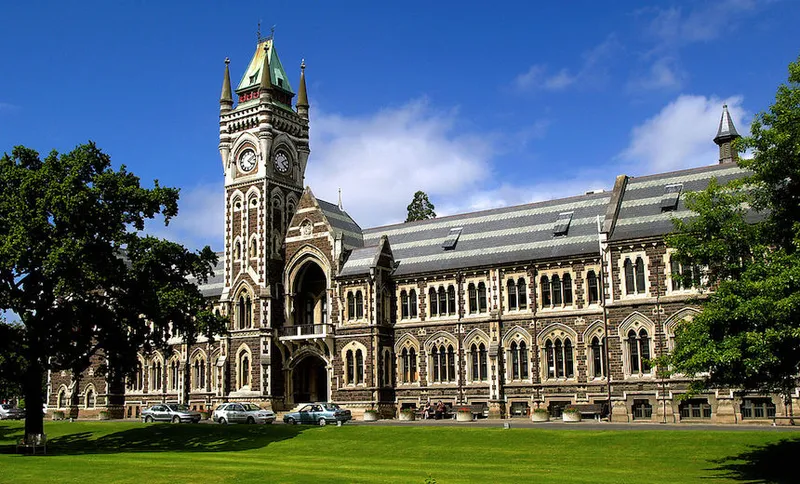
For me, the first cracks appeared three years ago when I was told that my university department would cease to exist. Otago University’s Department of Science Communication was once home to my generation’s future David Attenboroughs and Suzy Catos. In 2023, however, the university made national headlines when it announced a $60 million deficit. Ripples of shock rolled across campus as the big wigs of the university slowly revealed who and what would be on the chopping block: lecturers we’d looked up to and courses some had travelled across the world for. When the letter spelling the fate of our department landed in our inboxes, my peers and I dropped everything for a sombre lunchtime beer.
Many of my classmates saw out the end of their two-year master’s degrees and other uni mates flew the nest. I left with a postgraduate diploma in science communication and side-stepped into student media. During my studies I’d been working part-time at student mag Critic Te Ārohi, and I took the reins as its full-time editor in 2024 and again in 2025, after heeding the advice of my former editor, who told me, “Hold onto your job”.
But student media is, by definition, temporary. As I swapped Scrumpy cider for red wine (in a glass!) and found myself asking younger staff members what certain slang in their articles meant, I knew I was edging closer to the end of my tenure.
The dread that had been planted with those first rounds of course cuts rooted further with each new story of disillusionment I heard from friends working outside the university’s walls, and each article I wrote on the mood of students who were watching their future professions thin out. Jokes about becoming overqualified baristas were commonplace.
“It’s cooked,” one of my friends, who we’ll call Sophie, says to me over a video call, as she applies her mascara while getting ready for work – it’s the only time she’ll get today to talk. Like many of my mates who were first employed in the tail-end of the post-Covid boom, she’s working for an understaffed company which can’t afford to employ more people, and she’s shouldering multiple roles’ worth of work.
Sophie snagged a job in a big company in 2024, one of the 100 or so graduates the business hired that year. Then it started to struggle. The company slashed half its staff in Sophie’s first year, creating a “horrible” work environment. Grads were worried they’d be next, but rather than cutting their jobs, the company instead withdrew everything that “made the job good”. Pay rises, benefits, social events – all gone.
Fewer and fewer graduates have been brought through the door. The 30 who were originally promised a job for 2024 were told a couple of months before starting that they no longer had positions in the company. Only those who’d previously been interns were hired. It’s this type of hiring process that’s behind what jobseekers have dubbed “ghost jobs”. A job is advertised on websites like Seek but they’re quickly filled internally or through referral.
Sophie’s been hit up by around five uni students on LinkedIn who have clocked the change and want to personally connect for a leg-up. “Respect, to be honest, no shade to them cos it’s super rough,” she says. More than ever, it seems, it really is who you know.
My friend Madeline graduated with a masters in science communication and reckoned a job would fall right into her lap. The job market’s cold reception was a shock: rejection, ghosting and tumbleweeds on Seek. A few months into unemployment, she sunk into a depression that made her “swallow her pride” and apply for an entry-level job that paid less than the living wage. She reckons the best use of her masters so far was that it set her apart from the many other applicants for the basic role.
Madeline was grateful to be employed, but she suffered a crisis of identity in a job that didn’t fit the imagined idea of her future. For years, her sense of self had been wrapped in the pursuit of that coveted degree. When inevitably asked what she was studying during flat-party small talk, she was used to proudly replying “master’s in science communication”. In her new job, she found herself repeatedly referring to her former degree and aspirations for her career after her current role. “You feel embarrassed about not having a job, or the job you have doesn’t meet the expectation of what you thought you would be doing,” she says.
The only thing stopping Madeline from moving to Australia is the money – she can’t afford a plane ticket and a month’s worth of rent in advance.

Two of my other friends joined the Aussie bandwagon last year though – Charlotte and ‘Chaddy’. Chaddy says he was expecting entering the job market would be tough, but he was still taken aback by just how hard it was. He had to extend his job search beyond his hometown of Tauranga to Auckland. Even then, any job remotely in the realm of his skillset required three-to-five years of experience. “As a young professional in your early to mid-20s, it’s so fucking hard to get a job that doesn’t require previous experience. It was also disheartening, I found, to apply for something, scroll down and you’d see like 300-plus other applicants. Like, fucking hell, there’s no way I’m going to get this.”
He cycled between the welfare system, freelancing stints and short-term contracts for two years, before “landing in a load of luck” with a job in Aussie.
Word from across the ditch? It’s all it’s cracked up to be. “Thoroughly recommend,” says Charlotte, a former classmate. “I don’t even think I considered staying in New Zealand after finishing my masters [in science communication] because I knew I wasn’t going to be able to get anything.”
She hasn’t found a career job in Melbourne (she jokes that the influx of New Zealanders has made it competitive), but marvels that she’s paid NZ$38 an hour at her 20-hour-a-week barista job. That’s an entire block of Kiwi butter an hour more than most NZ baristas and it allows her to live comfortably. She still has spare time to put into applying for jobs that will make the most of her qualifications.
“The work life balance – just because of how much you get paid here – it’s possible to search for a job that you want to do as a career whilst doing hospo or retail and still have a good time doing it and not be stressed about money. And I don’t think that’s the case in New Zealand,” she says.
The government has told my generation we can afford a house if we live off tuna and stir fried veg and stop gaming and get off the couch. It’s told us there are economic green shoots. We’ve lived a different reality and we’re not buying the promises. We’re a generation who have been taught to set boundaries, and we’re doing just that – with the Tasman Sea.

Nina Brown
Nina Brown was the editor of Critic Te Ārohi, Otago's student magazine, in 2024 and 2025.


