Fifty years ago, a petition was taken to parliament asking that the Māori language be taught in schools. It takes a generation to lose a language and three to restore it, so where are we, 50 years on writes Anna Rawhiti-Connell in The Bulletin.
Former race relations conciliator on “taking political correctness to new extremes”
Not quite 20 years ago, then race relations conciliator, Joris de Bres unwittingly kicked off a media storm by suggesting it would be good for business, good for the language and good for the image of the country if more companies used te reo Māori. This morning on The Spinoff he reflects on that time, recalling the Dominion Post running a cartoon of a McDonald’s sign changed to “McMāori” with a customer being asked “Do you want fries with your hāngi?” de Bres still stands by his point of view but notes that it should now reflect a genuine commitment to reo and tikanga and avoid tokenism and cultural expropriation. If you look at some of the responses to the release of Whittaker’s miraka kīrimi last month where one commenter likened it to “forced mandated injections”, you might wonder how far we’ve come.
“Don’t turn around with your bum”
Today marks the 50th anniversary of a petition being presented to parliament to ask that Māori be taught in schools. In 1970, only 5% of Māori children could speak te reo Māori. Today, 30% of New Zealanders can speak some reo Māori, with a quarter of Māori now able to speak it as a first language. Māori language adviser, translator and author Hēmi Kelly thinks we’re halfway to becoming a bilingual country. Rawiri Paratene was a member of the group Ngā Tamatoa, who worked to collect signatures for the petition. Paratene was there when the petition was presented. This morning he reflects on that moment, his aunty’s advice for it (“don’t turn around with your bum”) and on living in a suburb where Robert Muldoon was once MP and where people greet him each morning in reo Māori.
We the undersigned…
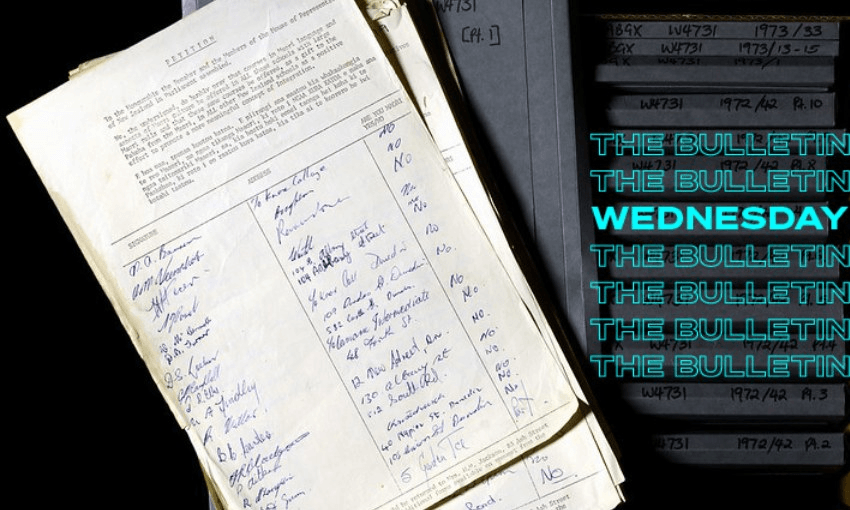
The 1972 petition read: “We the undersigned, do humbly pray that courses in Māori language and aspects of Māori culture be offered in all those schools with large Māori rolls and that these same courses be offered, as a gift to the Pākeha from the Māori, in all other New Zealand schools as a positive effort to promote a more meaningful concept of integration.” Integration and assimilation were terms used in the Hunn Report of 1960 where assimilation meant that Māori would “become absorbed, blended, amalgamated, with complete loss of Māori culture”. The petition, signed by 30,000 people, was one of the steps taken to stop that from happening at a crucial juncture. RNZ’s Jamie Tahana has an excellent read on the people behind the petition.
Beyond the humble prayer
I know we see things most days that suggest there is still a basic fight going on for reo Māori to just exist in everyday settings. But it sits alongside plenty of rigorous discussion led by Māori. Should Lorde should be using it? Should Pākeha learn it at the expense of Māori? How should non-Māori do pepeha? I’d like to think we have advanced well past that humble prayer, while acknowledging that was the start of work which Māori language commissioner Rawinia Higgins says is not yet finished. Where we can people can talk about the loss of their language and their reclamation of it, as Siena Yates has done in a series of columns for E-Tangata, and be OK about it.
A national commemorative event will be held at parliament today to mark the 50th anniversary of the petition from 11:30am – 1pm and will be live-streamed on Whaakata Māori. Details of the commemoration are here.