
Two reports released find that major failures led to an autistic 11-year-old being mistreated at Waikato Hospital, writes Henry Oliver in today’s excerpt from The Bulletin.
To receive The Bulletin in full each weekday, sign up here.
In March last year, an 11-year-old non-verbal girl with autism was taken to Waikato Hospital by police, after being seen in distress looking over the rails of a bridge. According to initial reporting by Benjamin Plummer at the NZ Herald, she was misidentified by police as a 20-year-old missing patient and then, once at the hospital, admitted according to the mistaken identity. She was then restrained and injected with adult doses of antipsychotic medication without consent. About 12 hours later, the police called the hospital to advise of the mistake and the girl was released to her family.
Today, two reports into the incident – by the health ministry and the Health and Disability Commissioner (HDC) – have been released, and the girl’s whānau have spoken publicly for the first time.
The ministry report
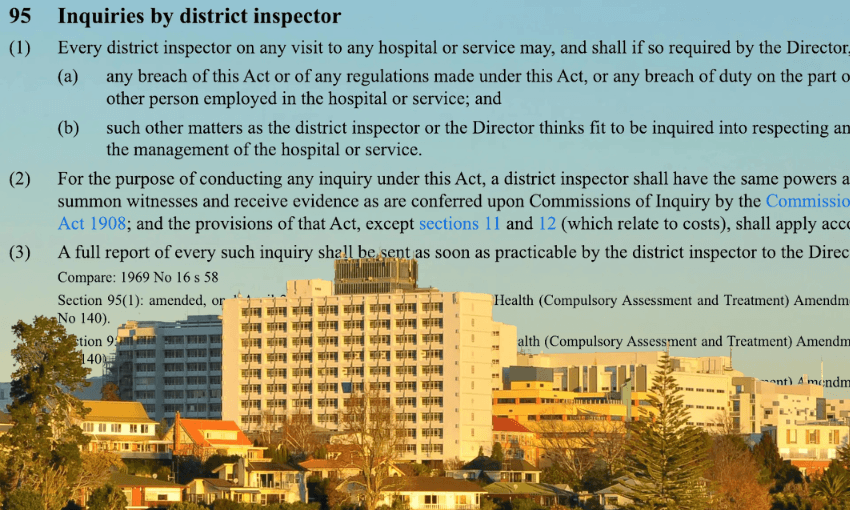
According to a report by Anya Fielding on RNZ, the ministry investigation, led by director of mental health Dr John Crawshaw, found the key failing was hospital staff not following the formal process for confirming the identity of patients who are unable to identify themselves. Alarmingly, not all staff were aware the policy existed. Crawshaw told RNZ the situation was “deeply concerning” and “not consistent with what the practices should have been, and in fact not authorised under the Mental Health Act”.
The report also found there was no lawful basis to restrain and medicate the patient – even if she had been the 20-year-old patient police and staff believed her to be – as the threshold for urgent treatment under the Mental Health Act had not been met. To help prevent this happening again, the inquiry recommends clearer processes for confirming who patients are, better training for frontline staff, stronger communication and record‑keeping, more support for patients and whānau, and improved monitoring and follow‑up across services.
The HDC report
The HDC’s report, authored by deputy commissioner Rose Wall, separately found that Health New Zealand – Te Whatu Ora had breached the Code of Health and Disability Services Consumers’ Rights. It found the use of medication and restraint was “unreasonable and premature” as the girl had displayed no signs of being a danger to herself or others, and that her right to dignity had not been upheld.
The report stated it was “reasonable to assume that this would not have happened had she not had a disability and been non-verbal in this circumstance.”
Mental health minister Matt Doocey said in a statement that “Health New Zealand failed this young person and her family. The safeguards that exist under the Mental Health Act were not followed, resulting in a serious breach of the protections that exist for some of our most vulnerable people.”
Health New Zealand has been referred to the director of proceedings to consider possible legal or disciplinary action.
The family’s response
The girl’s older sister spoke to Te Aniwa Hurihanganui at 1News, describing her reaction on learning the details of what had happened. “I remember being so disgusted and I felt sick to my stomach getting more information about what happened, and then I remember being angry, like, really angry.”
She said it was hard to reconcile how many opportunities had been missed to correctly identify her sister. “It sounds like there was a lot of opportunity to properly identify her and a lot of people actually state that they think that she is autistic and not a mental health patient. I think knowing that it was really close to being handled properly, and then it ending the way it did, is really hard for me to come to terms with.”
She told 1News her sister has a lot of trouble feeling safe going outside, and that recovery had been difficult. Their mother had been particularly badly affected, becoming withdrawn and blaming herself in the aftermath. The family received apologies from the hospital and police, but the sister described them as contradictory: “A lot of it was them saying they were sorry and then saying they did nothing wrong.”