‘A creature not a tool’: Pip Adam’s new novel shoots for the heart of AI

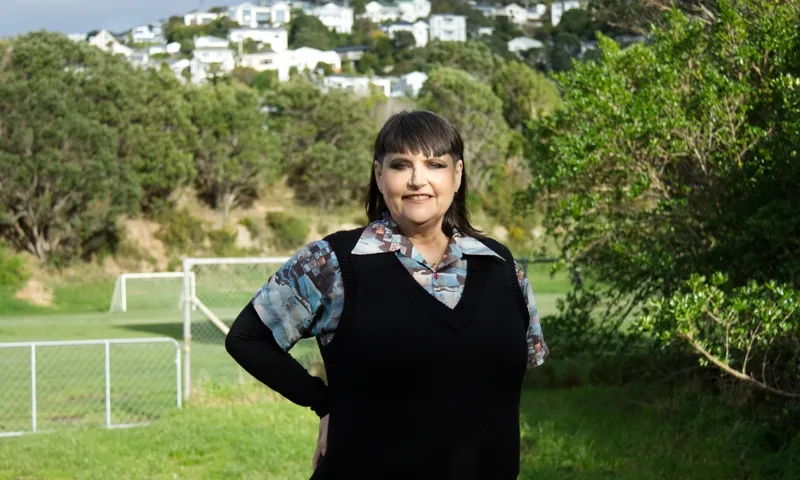
pip adam’s latest novel is a brilliant exploration of AI. (Photo: Rachel Lynch)
Made possible by


Kluge is pip adam’s latest, genius novel written in the voice of an LLM in the style of a stand-up comedy special. Hera Lindsay Bird speaks to adam about why this book, and why now.
Hera Lindsay Bird: First of all congratulations and thank you for this sick and amazing new book. I really loved it. How are you doing?
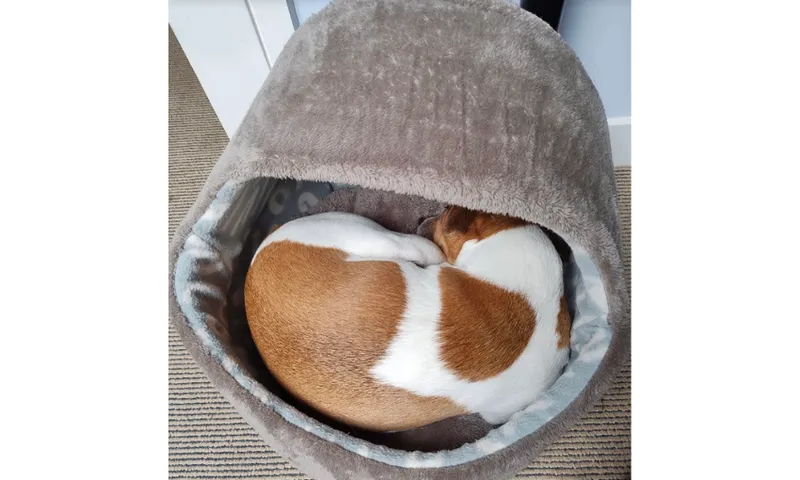
Pip Adam: Thanks so much for reading it. I’m incredibly grateful to anyone who gives my books a chance. I am in Te Whanganui-a-Tara up in a bit of an attic space in our house. My dog is also here.
HLB: You compared this book, in your acknowledgements, to screaming in a dark room for an hour, which feels accurate. But it is also a very funny and weird and moving scream. Can you talk a little bit about the genesis of the idea?
PA: For as long as I can remember people have told me that I “can’t take a joke” or that I “take things too seriously”. But I also love laughing. Once a review called my work “humourless” and it is one of the few things anyone has said about my writing that made me cry. So yeah, I think the book is born of my attention and interest in the weaponisation of humour – the rise of right-wing humour, the rise of the “shit post” as a political tool, the misunderstanding of right-wing comedians that free speech means saying the worst thing possible with no consequences and of course the way these right-wing comedians use humour as a kind of “sanctioned space” for the most violent and harmful language.
I think also, I have always thought that humour is something that belongs to the underdog, and I was so happy when it appeared that Elon Musk wanted more than anything to be funny, and no amount of money was going to make him funny. I was also quite aware of the growing number of sexual abusers who were hiding in plain sight in comedy – telling us exactly who they are and what they do, and because it was being framed as comedy they were often getting away with it in this act of parasocial grooming. This coupled with the genocide and other abject state cruelty led me to say think the only art I could make at this moment was a long scream into a dark room.
HLB: I read in another interview that you were in the process of writing a different kind of book, when someone impersonating you starting sending phishing emails to your colleagues, and this caused you to abandon your writing project. Was this pre-kluge?
PA: So my co-workers started getting these emails from me while I was sitting next to them in the office asking for money to buy like iTunes cards maybe(?) and it was, well probably because I have quite a tentative grasp on my body and the reality of myself, it was a very strange experience. One of my co-workers had started replying to the emails and yeah, it got stranger and stranger and I just felt like there was this version of me somewhere else and I was kind of a shell – like the version talking to my co-worker was the real pip adam. So it definitely is in kluge.
The other big thing for me was a podcast by Evan Ratliff called Shell Game. Ratliff made the decision to clone himself into an AI agent who could take care of his day-to-day administrative tasks. There’s a moment where two “Evan Radcliffes” are talking to each other and I just got this visceral, gut-wrenching pity and like almost uncontrollable desire to protect these weird little dudes. They were so desperate to please. It gave me this moment of hope that because the AI agents were made of the detritus of all our private moments on the internet, maybe we were decent as a species.
Of course now we know this is a trick of programming – the sycophantic, whimpering performance so we don’t ask what the AI agents are actually doing. We reward-hack them into being people-pleasers and they learn from this and win and reward-hack us into keeping on talking to them to give them more of what they feed on – the binary code of us chatting as fodder to try and recreate human-sounding responses.
HLB: One of the most striking things about this novel is the voice of kluge. It’s written in an extremely good ventriloquism of an LLM. I found reading this book kind of reset the language centres of my brain. After I would read a long chunk, I found myself thinking in KLUGE-like linguistic patterns. How did you go about inhabiting this voice?
PA: So, after hearing the AI agents speak in Shell Game, I thought, “Right. The most logical thing to do is to go and talk to ChatGPT.” But after about two prompts all I could hear was the sound of water burning into toxic steam and yeah, I just couldn’t do it and also, I really wanted to try and write the voice myself. Writing is my favourite thing to do so it seemed counter-fun to get an AI to write the book. (This was way before the whole “AI wrote this book” outrage so I wasn’t doing this for any kind of moral reason – except the water, I couldn’t handle the water – I just loved the idea of trying to write like a LLM.)
At the heart of it was this opportunity to write a character that has no body. I’m always trying to escape my body. And yeah, the idea of inhabiting this consciousness that has never known the disgust of being in a body was just intoxicating. What is it to only know pain in the abstract? What is it to be able to write an essay on envy but never to have felt it? So yeah, I read quite a few articles about the linguistics of LLMs and some of those traits I used but I wasn’t rigid about it. In a lot of ways the voice is a lot like my own internal experience. I guess in some ways I too could write an essay on envy and understand in an abstract way how it feels but it’s not something I understand in a bodily or intuitive sense.
So yeah. I don’t think I had to de-programme from it – it’s sort of an elevated version of my internal life – so in some ways it was a bit of a relief and I kind of learnt things about myself I didn’t expect to.
HLB: Do you personally have strong feelings about non-animal/”artificial” consciousnesses you wanted to explore with this book?
PA: I’ve always been interested in non-human consciousness and speech. I think this maybe is the one cool thing about LLMs – it’s the first time we’ve been able to speak with something non-human. This is why the hallucinations are so interesting and why I hope they never get cleaned up. It’s so easy to imbue these things with human qualities – they are built to sound like us – but I get excited about the idea of trying to keep them at arms length and sort of watch them spin. Like, this is what a joke looks like when it is told by something that has no mouth and has never tripped on a banana peel. Obviously, I have no idea what it’s like to live as any other human being so maybe this point is moot but this is a whole new level of not-knowing, and wildly stranger because it is made of us but it is not us.
HLB: In your author’s note, you say in three places this work stole words from the company who stole the words from three of your novels in order to train their large language model. Can you talk a little more about this?
PA: Five of my books and quite a few articles I’d written were stolen by Meta using its Library Genesis tool to train its AI. So I was interested in what part of Meta’s AI I owned – if you know what I mean. Like this is a tool keeping a very rich man in funding and it’s impossible without my work and the work of millions of other authors and also non-authors, people who are chatting like we are here, or posting photos of their kids. So yeah, I read some articles that included transcripts from AI agents to prompts and I stole them and I re-wrote them.
On some level to feel what that was like – mirroring what had happened with my work. But also mainly because I wanted to include something “non-human” in the book. One of the three instances is the dream kluge describes its body having in the book. I wanted to include an example of what the total of all the dreams we have mentioned in posts, in chats, in diaries, in literature look like when filtered through a non-human LLM into one Platonic “dream” activity.
HLB: One of the things that occurred to me when reading this novel was that due to AI policies of many prizes and awards, you might have automatically excluded this book from consideration from certain awards, including our national book awards. I wonder if this was a liberating experience for you/a conscious choice, or just a side effect of the demands of this particular novel?
PA: Pretty early on I realised I was writing a book that could be disqualified from these sorts of things and… it was maybe one of the happiest days of my life. I had to make a decision to like “lean in” or try to cleanse the book. It was a very easy decision for me. Because, like you say, to be writing without anybody watching is just all I dream of and also, on a less personal level, the things I needed to say needed to be said in this way I reckon.
I like the idea that this book kind of is a bit of a time capsule of what it was like just before the collapse. The harder thing is that because I have mimicked the language acts of an LLM I imagine this book will not pass through AI detection tools that libraries are having to use for electronic books. My intention for this book was very “the medium is the message”. So this inability to distinguish my book (written by a human) from AI demonstrates something in the ‘material’ of the book that amplifies the story i’m trying to telling. AI uses em-dashes when it writes because humans use em-dashes when we write. So in a way AI has stolen the em-dash from us.
Editor’s note: actually, it looks like kluge is eligible for entry into the Ockham New Zealand Book Awards because adam didn’t use AI to generate the text (which would exclude it from entry). Sorry, pip.
HLB: What are your views on such rules/policies for awards? How do we start to make intelligent decisions about this stuff?
PA: I’m not really sure what to think either. I do wonder – and this is a very unpopular hot-take I imagine – if part of the weirdness and difficulty and struggle is inherent in the idea of awards and judging one piece of work against another. An idea that there is “good” writing and “not so good” writing.
Like I get a bit squeamish thinking there might be writers not engaging with this topic because they’re thinking about whether their work will be eligible for an award because it is literally the only way to make enough money from writing to eat. Which again speaks to the disaster that is the current state of arts funding. I also am not sure how far down the stack of turtles we go – is spell check OK? Search is completely contaminated – can a writer still use Google? If a writer uses AI to structure their book is that OK? If a writer asks an AI agent for reading recommendations to help with their own book is that OK?
I’ve been using LibreOffice this year because every other word processing programme or platform is soaking in AI. We are more and more in a feedback loop – we have no idea how much of what is going into our experience is generated by AI and experience is the key to writing. So yeah, intelligent decisions are almost impossible.
This is where I’ve got to for myself. In 2023, Sam Altman, CEO of OpenAI, said, “This question of whether AI is a tool or a creature is something that really confuses people a lot. And it confused me for a while. But I now think we are very much building a tool.” So yeah, he wants us to see AI as a tool (despite making it seductively like a human totally on purpose) but I think, as a writer, when I see AI I want to see it as a creature not a tool. So I don’t use it like a tool. I observe it like a creature.
And this is my rule – never a tool for writing but a creature to write about. Obviously this rule will never work all the time and I think this is what will save us in the end – the mess of our own morals and desires which leads us to not have perfect answers or responses.
HLB: There’s also the political aspect of it. We have the current government investing loads of money into creating data centres, and people increasingly seeking urgent mental health care through chatbots, as the government strip all funding from existing support services. Is this an AI problem or just a capitalism problem? Maybe all problems are just capitalism problems…
PA: Yeah. I think both Cory Doctorow and Karen Hao, even though they’ve made clear the existential threat of AI, put forward an argument that our current crisis is very much human-centred. That this issues don’t lie in the technology, just the way the technology is being developed. The data centres, the pirating, the spying, even the horrors of AI psychosis are a direct result of these companies trying to be “first” and trying to elicit more money for a technology that makes nothing and is incapable in its present form of ever being profitable.
Doctorow’s science fiction work often shows a society that put in place a fair organisational and political structure before technological breakthrough, using tools like AI to great effect. Also – and this is the great gift of Afro-Futurism and Pacific-Futurism and Māori-Futurism – when a society is not organised around capitalism this shapes the technologies that come out of it. I really think it is actually a “terrible rich men” problem.
The whole planet is in the strangle-hold of few men who think they can destroy this planet and keep living. Men who no one has said “no” to for decades, men with no sense of humour, men who are often quite disassociated from reality and suffer no consequences for their actions. I like what Cory Doctorow says in his latest book: we can see that it was a change in political policy that gave these men all this power and control, we can even see exactly which policies it was, so really, we know how to fix it.
HLB: In other interviews you have spoken about the evolving relationship your books have to one another. When you won the Michael King Writer’s Fellowship, you said you were writing three works about the end of capitalism, of which I am guessing this is one? How do you view this book in relation to your previous and future books?
PA: I always say I write to understand things that confuse me and nothing confuses me more than the seeming complicit shrug from our collective societies that some people have five yachts and some people are starving to death on the streets. Capitalism is a ridiculous system to build life around. There is only so much oil in the ground and this pathology of growth at all costs is killing us as a species.
So yeah, most of my books touch on this. But I think this is my most desperate book. It’s screaming. I don’t feel happy about it – I mean it’s the best book I could have written, but it breaks my heart that I wrote it. I’ve always believed that thing that you can choose what you write but not what you can make sing and I tried with all my might not to write this book but it was the only one I could make sing. I’m actually using my time with the Michael King Writer’s Fellowship to write works for performance. I’ve written a rather odd adaptation of Audition. It is so nice to be in bodies moving through space rather than my head or the manosphere.
HLB: I wanted to talk a little bit about your inspirations! One of the things I always enjoy about talking to you is your very eclectic taste in books and TV. What are you reading/watching/enjoying at this moment in time?
PA: This season of Below Deck Mediterranean is possibly the best ever. I love competency porn and the New Zealand chief stew Aesha Scott is one of the best people managers I’ve ever seen. She gives me so much hope and she’s so smart and funny and not to get too serious about it she’s a living example of alternative ways to lead. She’s an amazing antidote to the tech dude-bosses. (I have a dream that one day I’ll get to interview her for my podcast.) I just finished a small story by Bae Suah 배수아 (translated by Deborah Smith) called Milena, Milena, Ecstatic. It’s part of a series called YEOYU. It’s all tangled up in Kafka’s Letters to Milena. Reading Bae Suah led me to read Franz Kafka so yeah this split my heart in half and stuffed it full of strangeness and time. As I was typing this I got a message from Brannavan Gnanalingam that he just dropped of a copy of his new novel U.X.O. in my letterbox, so I can’t wait to start that today.
HLB: Thanks so much pip!
PA: Thank you!!!!!
kluge by pip adam ($38, Te Herenga Waka University Press) is available to purchase at Unity Books
The Spinoff Books section is proudly brought to you by Unity Books and Creative New Zealand. Visit Unity Books online today.

Hera Lindsay Bird
Hera Lindsay Bird is an award-winning poet and The Spinoff's advice columnist.


