I had to move to Rūātoki to learn te reo Māori. Our tamariki shouldn’t have to

Māori language commissioner Rawinia Higgins (left) and governor general Cindy Kiro. (Photo: Wikipedia)
Growing up unable to understand her own whānau, Rawinia Higgins went home to Rūātoki and discovered a place where te reo Māori wasn’t simply taught – it was the language of everyday life.
Thinking about te reo towns, the theme for Te Wiki o te Reo Māori 2026, my mind goes to Rūātoki – a small town just south of Whakatāne where I learnt to speak Māori.
I grew up in an English-speaking home in Wellington. When my native reo Māori-speaking mother and family would get together, they would all be speaking Māori, laughing and sharing stories. I would feel left out because I couldn’t understand and take part in what was being said.
When I was around 11 years old, I asked my parents if I could move to Rūātoki – where my mum was from – and attend Rūātoki School. The school was the first officially recognised bilingual school, back in 1978, and was well established by the time I got there in 1985. It was the result of a community where te reo Māori was the norm, staffed by Tūhoe relatives of mine including Koro Whitu McGarvey – who was my teacher – and Tāwhiri and Kaa Williams, among others. It was in this small-town community I learnt te reo Māori – where I was finally able to access the richness of the world that I had been missing.
A baptism of fire
I won’t romanticise it – learning the language was a baptism by fire. I started out, much to the teasing of my cousins, in the remedial class. I had known of remedial classes at my school in Wellington, but that was for English. At Rūātoki though, the remedial class was for te reo Māori. I still chuckle thinking about it today – it was like living in a parallel universe.
What was special about Rūātoki was that it was not only a place where te reo Māori was taught, but also lived in the hearts and homes of the locals every day.
That’s the idea behind the te reo towns theme for te wiki this year: to pay homage to those communities who helped create the conditions where te reo Māori could continue to be spoken, learned and lived. They built kōhanga and kura, strengthened whānau and community use of the language, and helped ensure future generations would have access to te reo Māori as a normal part of everyday life.
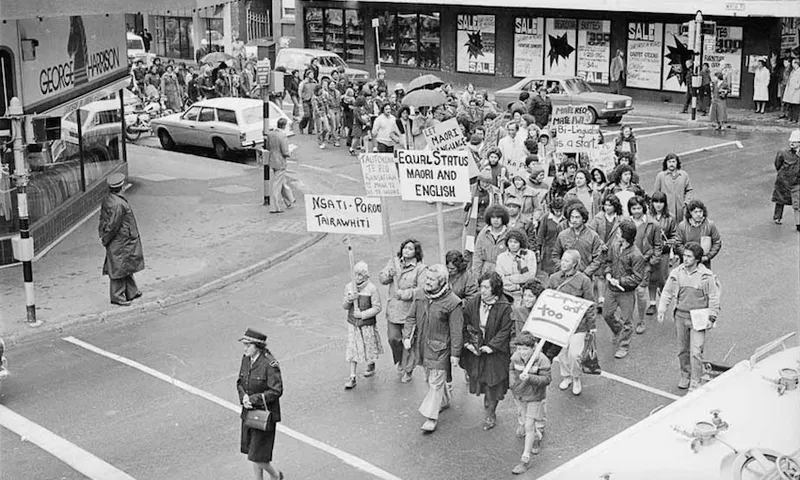
It wasn’t consciously political for them and yet it was one of the most politically active decisions they could make. It was about ensuring their children would never have to feel the detachment from culture and community the adults had seen among Māori living in cities. It was about making te reo Māori a normal and natural part of life for younger generations.
More than a matter of ‘choice’
It’s important not to simplify this story too much. Rūātoki and other similar communities showed remarkable commitment to te reo Māori, but they were also shaped by circumstance. Around the world, indigenous languages have often remained strongest in communities where people had greater opportunity to live, work and socialise in their own language. Larger towns and cities brought different pressures, with English becoming the dominant language of education, employment, media and public life. This was not a matter of some communities valuing their language more than others or willingly giving it up. Given the choice, most indigenous communities would have wanted to see their language flourish from one generation to the next.
The differing fortunes of te reo Māori reflects the uneven impacts of colonisation, urbanisation and social change on people’s ability to use and pass on the language. The lesson is not to romanticise isolation, but to understand the conditions that allow a language to thrive and to recreate those conditions wherever Māori live today.
Te reo Māori has come a long way since I went to kura in Rūātoki. It’s now on bilingual signage, in official place names, on our screens, in cafés and restaurants, sports commentary, workplaces and across the public life of this country. Statistics support this, with the 2023 Census recording 213,849 people who could hold an everyday conversation in te reo Māori, up from 185,955 in 2018. That is an increase of 27,894 speakers in five years, and something every New Zealander can take heart in.
This growth in visibility is worth celebrating. But visibility is not the same as vitality. A language doesn’t just thrive because it appears on signs, screens or posters. It thrives when people have places to use it, people to use it with, and the words they need for everyday life. Rūātoki, Ōtaki, Matawaia and other te reo towns have always understood this. Te reo Māori grows through whanaungatanga, shared purpose, and communities that make the language normal in the ordinary places where life happens.
The gift that Rūātoki gave me
Rūātoki didn’t give me just lessons, but a living network of language. The kura mattered deeply, but it was part of something bigger: whānau who spoke, kaumātua who carried the dialect, teachers who believed in the kaupapa, homes where Māori was ordinary, and a community that had decided its children would inherit more than a memory of te reo Māori.
There are many te reo towns across the motu, each with their own story, dialect, champions and sacrifices. Rūātoki is just one of them.
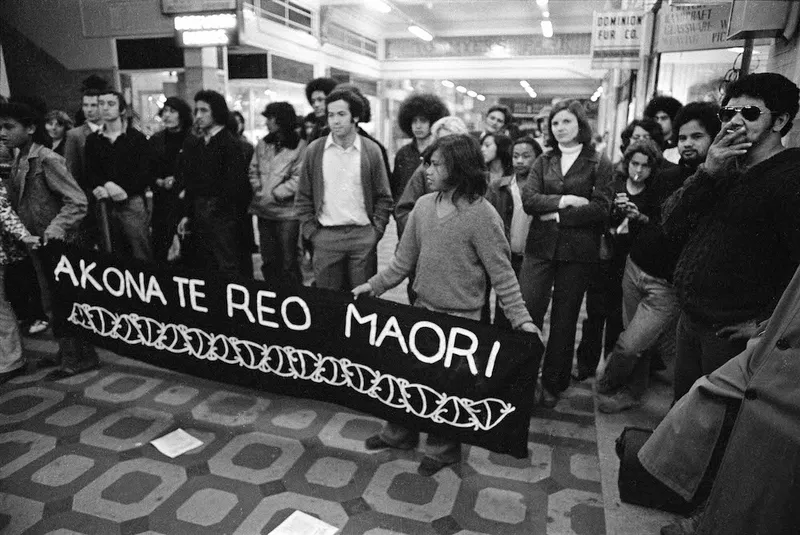
Te reo towns are not an invention; they are a recognition of communities that have already shown the way. They represent the courage, discipline and love of communities that chose, and had the circumstances, geographical or otherwise, to keep te reo Māori alive in homes, schools, marae and public life.
Before there were national strategies and policies, there were communities already doing the quiet, determined work of language revitalisation. They built kōhanga and kura, held hui, corrected and encouraged each other, laughed with each other and kept speaking. They made decisions in kitchens, staffrooms, vans, sports clubs and on marae that would later become a part of a national movement.
The challenge now is to keep building the conditions where te reo Māori can live beyond the classroom, ceremony and te wiki. If a language is to thrive, it must have places where it is not only heard but used; not only respected, but shared; not only learned, but lived.
I had to go home to find my te reo town. The challenge now is to ensure our tamariki and mokopuna do not have to go searching for theirs. If we keep building the conditions for te reo Māori to thrive, then every town, suburb and community can become a place where the language is not only visible, but ordinary.

Rawinia Higgins
Professor Rawinia Higgins (Ngāi Tūhoe) is the Māori language commissioner at Te Taura Whiri i Te Reo Māori and deputy vice-chancellor (Māori) of Victoria University of Wellington. She was named Wellingtonian of the Year for education in 2018 and is a member of the New Zealand Order of Merit for her services to Māori language, education, and governance. In 2024, Rawinia was also recognised with the Women in Governance Award in the Māori governance category.


