Shane Jones is coming for an iwi near you

What ya gonna do when the matua comes for you? (Design: The Spinoff)
The New Zealand First deputy leader has recently come under fire for taking aim at iwi around the country, but it’s hardly new territory for the outspoken politician.
“Kia ora folks,” is how New Zealand First deputy leader Shane Jones typically starts his addresses on social media. It’s usually followed by him introducing himself as “the matua” or simply by name. Then there comes some sort of tirade, with Jones lambasting a group of people with whom he disagrees.
In recent years his targets have included Indian migrants creating “a butter chicken tsunami”, friends of Freddie the frog, and a perennial favourite, Te Pāti Māori. But in the last few months, various iwi have also come into the minister’s sights – many of them opposed to fast-track applications being made by companies looking to carry out activities within their tribal boundaries.
Just last week Jones reignited his long-standing feud with Tauranga hapū Ngāti Kuku over its alleged “weaponised cultural extortion” of the Port of Tauranga. “A very gluttonous hapū,” is how Jones referred to them in his latest rant shared on social media. The video includes zingers Jones has become infamous for, like calling Ngāti Kuku “self-entitled cultural vultures” and referencing speeches where he has mocked the name of the hapū.
“Putting New Zealand first, before any hapū,” is how Jones signs off. I wonder if that includes his own hapū or Te Aupōuri iwi too?
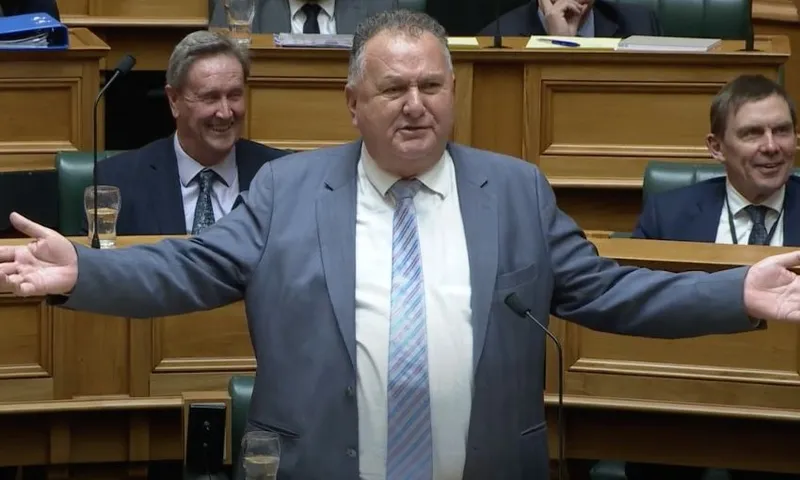
Jones’s hastiness to openly critique not just Māori leaders, but their entire tribes, pushes New Zealand First even further away from Māori and more towards our societal fringes.
It isn’t just Ngāti Kuku who have copped flak from Jones recently. Ngāti Ruanui demanded an apology from the minister earlier this month after he questioned the intelligence of members of the iwi, following their successful opposition to the granting of a fast-track application for seabed mining off the coast of Taranaki. Jones previously clashed with Ngāti Ruanui over the issue in late 2023 and late 2024, describing them in parliament as “pixie-like”.
“When a minister of the Crown uses the debating chamber to insult a treaty partner, and does so while hiding behind legal immunity, the relationship risks being fundamentally fractured,” Haimona Maruera Jr, the tumu whakarae of Te Rūnanga o Ngāti Ruanui Trust, told RNZ earlier this month.
In 2020, it was Ngāti Kuri from the far north that was denounced by Jones for restricting access to Cape Reinga following Covid lockdowns.
“It’s a place of national significance that’s being tainted by people that don’t know what they’re talking about and who have no mandate,“ Jones said to 1News at the time.
Even Ngāi Tahu – one of the country’s wealthiest iwi – is not exempt from Jones’s condemnation. The minister of resources came out swinging against the iwi in November last year, after they spoke out against the expansion of a mining operation in the Otago region. In the video, Jones pontificates on whether Ngāi Tahu leaders Charlie Croft, Rakihia Tau or Tipene O’Regan “would do anything to frustrate the expansion of economic activity”.
Then, earlier this month, Jones made a round of media appearances again criticising Ngāi Tahu for speaking out against the Santana Minerals mining application made under the fast-track legislation.
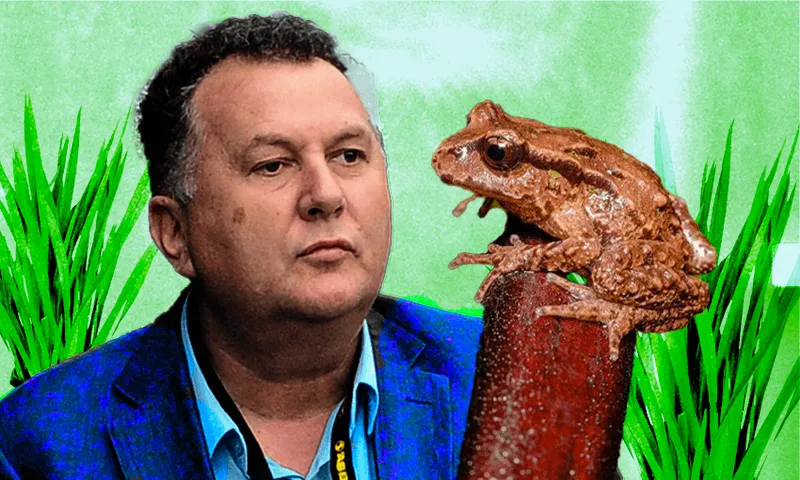
“This is why our country’s settled in debt. We need to be liberated from all of this woke-identity-riddled rubbish that passes for environmental law,” Jones said on Duncan Garner’s Editor In Chief podcast.
It seems the two parties now may have made amends, after Jones appeared on the parliamentary tiles earlier this week with a large crayfish gifted to him by Ngāi Tahu. “I’m not sure if it needs to be declared in my pecuniary interests,” the minister told reporters.
Jones makes no apologies for his public criticisms of Māori groups that oppose applications being made under his beloved Fast-Track Approvals Act. His party has been heavily backed by mining companies or companies with links to the industry. By attacking these Māori groups, Jones is simply showing his financial backers that he is in their corner. It’s what any good politician would do.
The cost of this, however, is that Jones risks alienating himself from a large sector of Māoridom. Perhaps he doesn’t care about the repercussions of these criticisms, or the opinions of those he damns. Jones hasn’t made a career out of politics by having thin skin.
With New Zealand First appearing to gain popularity in recent polls, it appears that the party’s tactics – including the public condemnation of iwi and hapū – seems to be working for them. Beware – yours could be next.

Liam Rātana
Liam Rātana (Ngāti Wairupe/Ngāti Kurī) is editor of The Spinoff's Ātea section. He is passionate about indigenous and minority issues. Liam enjoys cooking, poetry, photography, and exploring the outdoors.


