What is ‘weird girl lit’ – and why is it trending right now?

Image: Tina Tiller
Made possible by
Lost appetites, human to animal transformations, human to wallpaper transformations … there’s a lot going on in the so-called ‘weird girl lit’ genre. So what’s it all about?
What is ‘weird girl lit’?
A sub-genre of literary fiction that, on the surface, features women engaged in perplexing, subversive or odd activities and behaviours. Some sources say that the term #weirdgirllit started trending way back in 2020 on #booktok, but it was only in 2025 that endless articles spruiking “weird girl fiction” started popping up. One reason that the label is cropping up at the moment could be that the world is feeling increasingly oppressive and when that happens, women fight back with stories that employ metaphor, surrealism, allegory and “weirdness” to talk about it.
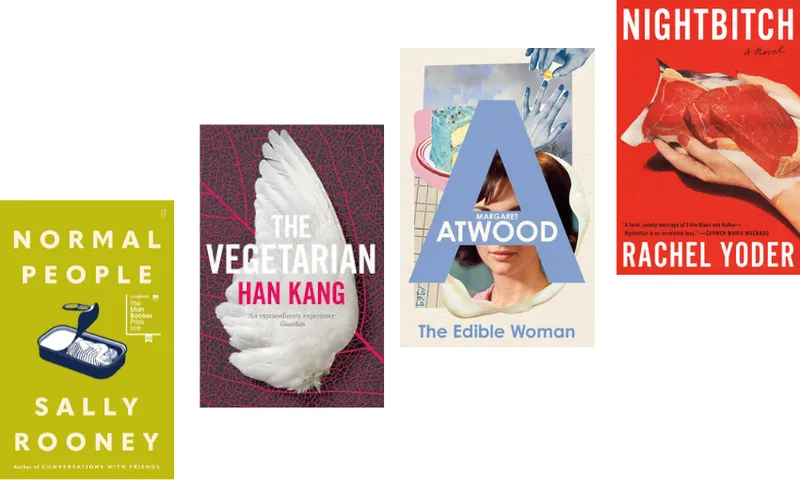
Some of the most commonly cited books in “weird girl lit” articles and #booktok videos include Ottessa Moshfegh’s My Year of Rest and Relaxation, Nightbitch by Rachel Yoder, Normal People by Sally Rooney, Butter by Asako Yuzuki, Breasts and Eggs by Mieke Kawakami, Bunny by Mona Awad, All Fours by Miranda July, among many others. What all of these novels have in common is a central female protagonist quietly trying to cope with the pressures of life in a particular body and the particular set of expectations that come with it.
Is this related to ‘sad girl lit’?
Yes. Books like The Bell Jar by Sylvia Plath could be looked at through the lens of both “weird girl lit”, and “sad girl lit”; as well as The Vegetarian by Han Kang, The Edible Woman by Margaret Atwood, most books by Banana Yoshimoto, Mrs Dalloway by Virginia Woolf and The Yellow Wallpaper by Charlotte Perkins Gilman. The “sad” in sad girl lit is problematic in my opinion – the sadness is often suppressed rage in the face of oppressive, violent and inequitable systems. There are also plenty of books about sad, weird men, but books by men tend not to be lumped into genres in the same way books by women are.
So is ‘weird girl lit’ also a problematic term?
Well, any term that tries to categorise women’s stories into tidy, marketable groups ought to be thoroughly questioned. The word “weird” when applied to women’s stories is an immediate red flag: what’s wrong with flying around on broomsticks at night and hexing ourselves whole after centuries of gaslighting, scapegoating and oppression? I also take issue with the persistent use of “girl” when really these book are written by women and are about women – to me the quippy “girl” label is re-infantilising, and undermines the wisdom of these novels.
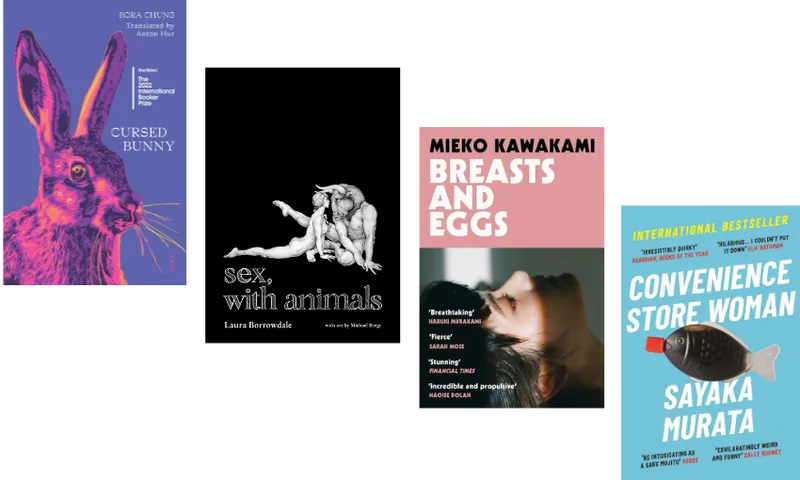
In an event called Weird Girl Lit at Auckland Writers Festival Jen Eastwood of Sick Sad Lit will be interviewing Mieko Kawakami (Sisters in Yellow, Breasts and Eggs), Bora Chung (The Midnight Timetable, Cursed Bunny) and Aotearoa’s Laura Borrowdale (Dead Ends; and Sex, with Animals) about the genre – I’m picking they’ll be talking about the problems with the term as much as they’ll be celebrating the stories and ideas the genre broadly includes.
Did ‘weird girl lit’ exist before the label?
Of course! Women have always written stories about their lives and because those lives are often butting up against expectations, the patriarchy and other dominant cultures then those stories are seen as subversive. Think about Wuthering Heights by Emily Brontë: that novel blew minds when it came out. “Ellis Bell” (Brontë’s pen name) was the freakiest chap on the dales with such a wild creation, horrifying the literary elite with characters who expressed lust, violence, rage and paradox. Above I mentioned Mrs Dalloway by Virginia Woolf: a modernist masterpiece that followed the thoughts of one woman over one day as she thinks about who she married, who she didn’t marry and who she couldn’t (a woman). Woolf busted expectations of what the novel could be with her “weird” approach to time (memories track back and forth), and by exposing the inner workings of a woman’s own, complex thoughts.
One of my all-time favourite novels that is rarely mentioned in “weird girl lit” discussions is Lolly Willowes by Sylvia Townsend Warner. It was published a year after Mrs Dalloway, in 1926 (happy 100th birthday Lolly!) and is about a spinster Aunt who makes a break from her family and moves to a village and discovers she’s a witch. It’s a very funny, very poignant plea to be left alone – to live as one chooses, even if that means sleeping outside under the trees and taking midnight walks to go chat with Satan.
None of those books sound that weird… how weird does it get?
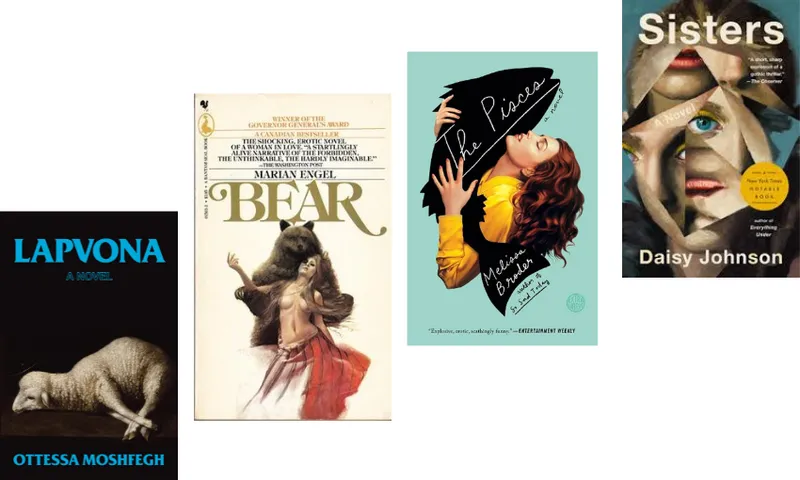
Pretty weird. But it depends on what you consider strange – one person’s normal is another person’s odd. The “weirdest” of the genre intersect with the age-old staples of horror and romance – themes of sex and death. I found Lapvona by Ottessa Moshfegh to be fairly unsettling: it’s about ugliness in appearance, temperament and ambition and involves a wood woman who suckles grown men (a fairy/witch trope). In The Bear by Marian Engel (1976) an archivist has a sexual relationship with a bear. The Pisces by Melissa Broder is about a woman who discovers a merman and has a sexy time with him. In Itch! by Gemma Amor, a woman discovers a dead body crawling with ants in the Forest of Dean, which triggers insect hauntings and creepy hallucinations. Daisy Johnson’s books, Fen (brilliantly strange short stories), Sisters (supernatural), and Everything Under (an Oedipus retelling) all skew towards “weird”, and centre on women’s stories.
Where should I start?
The Edible Woman by Margaret Atwood (1969)
Atwood’s first novel explores how marriage can consume a woman’s sense of identity: the novel features an unforgettable scene with a cake.
The Bear by Marian Engle (1976)
Lou moves from Toronto to Cary’s island where she’s to document the house and library of Colonel Cary. She mets the Colonel’s pet, a bear, and slowly makes friends with it. Then, more. Much more.
The Vegetarian by Han Kang (2007)
One of the greatest novels of all time (in my opinion). Kang’s masterpiece is about trauma and abuse and centres on the story of Yeong-hye who stops eating meat and tries to move towards a vegetal state.
The English Understand Wool by Helen DeWitt (2022)
Interesting aside: DeWitt was recently offered the prestigious Windham-Campbell Prize (comes with a ton of cash) but declined due to the expectation she’d have to do a lot of publicity for it. Weird and amazing.
The English Understand Wool is a deeply funny, exceptionally smart novella about a young girl who’s grown in a very particular way and must use all of her wiles to navigate a huge plot twist and the wily machinations of the publishing industry.
Convenience Store Woman by Sayaka Murata (2016)
Keiko Furukura tries to hem herself into “normality” by working at a convenience store and moving in with a guy who also wants to try and pretend like he’s everyone else.
The Bloody Chamber by Angela Carter (1979)
Carter was the queen of subverting age-old tales. In The Bloody Chamber she upends traditional (already quite weird) fairytales with feminist twists. Lots of human-animal transformations and other strange, wonderful happenings.
All Fours by Miranda July (2024)
July is herself kind of a poster child for weird art girls. All Fours was a huge hit in 2024 when it unleashed the story of a perimenopausal woman who checks into a motel and embarks on creating a world of her own there: one full of desire, pink coverlets and tonka bean soap. July’s first book, The First Bad Man, is also very much part of this sub-genre.
The Yellow Wallpaper by Charlotte Perkins Gilman (1891)
One of the original weird girl/feminist horror stories is about post-natal depression and how the controlling, gas-lighting tendencies of the patriarchy impact women’s mental health.
Ash by Louise Wallace (2024)
Thea is a mother and a vet and she is quietly enraged. Louise Wallace’s exceptionally good novel is an explosive, funny observational insight into how woman across time are burdened with having to hold it all together.
Nightbitch by Rachel Yoder (2021)
Hilarious and serious novel about the feral nature of motherhood.
Sex, with Animals by Laura Borrowdale (2020)
A powerhouse short story collection filled with perfect sentences, animal metaphors and explorations of being in a female body.
Cursed Bunny by Bora Chung (2021)
Astonishing short stories blending horror, surrealism and science fiction to explore the frights of capitalism and the patriarchy.
The Spinoff Books section is proudly brought to you by Unity Books and Creative New Zealand. Visit Unity Books online today.

Claire Mabey
Claire Mabey is a children's author of The Raven's Eye Runaways, The Raven's Eye Rebellion, and a picture book Cass and the Beast illustrated by Jill Calder. For a long time Claire worked on literary festivals and is the founder of Verb Wellington. She lives in Te Whanganui-a-Tara with her partner and son.


