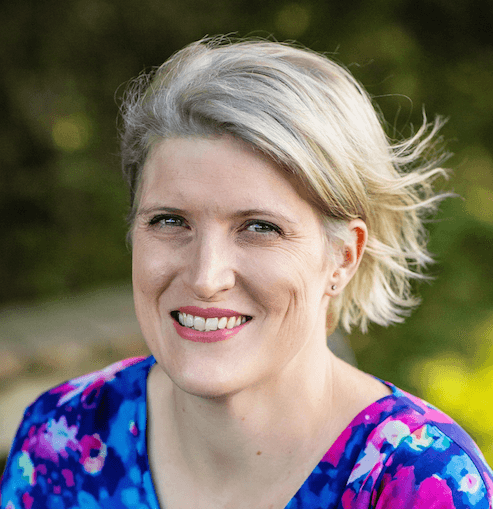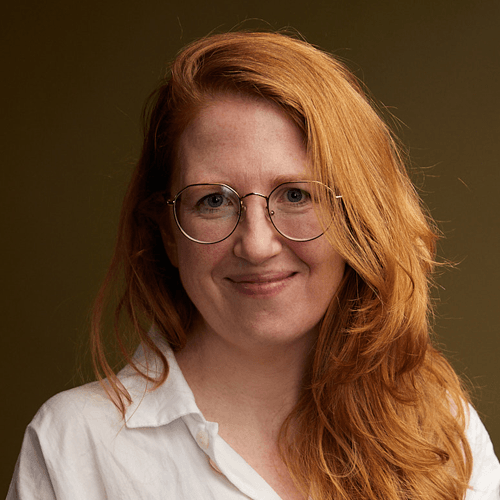
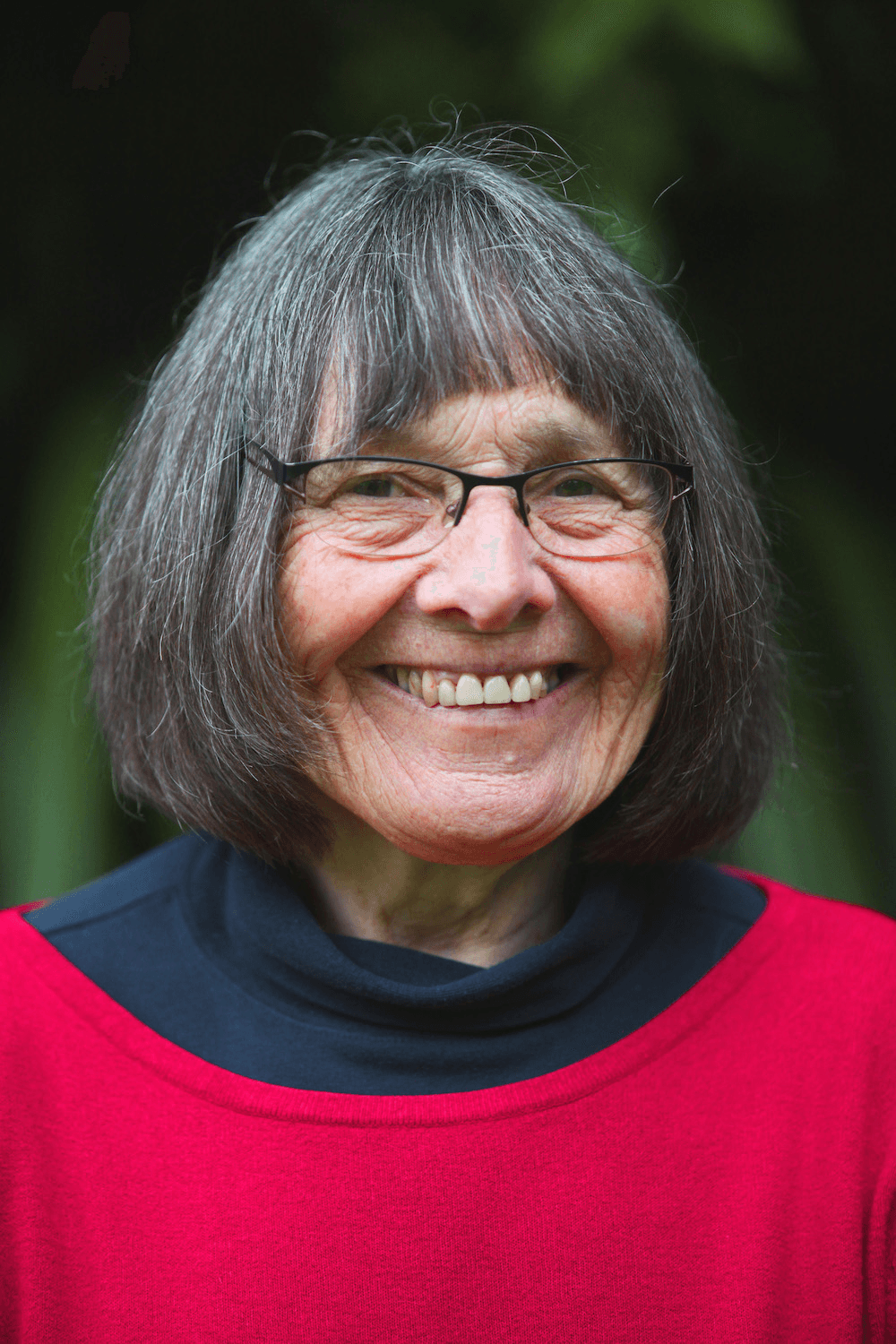


Ruth Shaw is the acclaimed author of Three Wee Bookshops at the End of the World, as well as a sailor – in this essay she explains how and why she made the decision to stop eating fish.
The last question I was asked during my session at the Auckland Writers Festival in May was “What is one thing we can do to help the environment?”
My answer? “Stop eating fish.”
This is easy for me to say as I have been a vegetarian for over 40 years, although I admit that while sailing the east coast of Australia, I was still catching the occasional fish to eat — and to give my shipmate, a cat named Hoffy, a fish head to chew on.
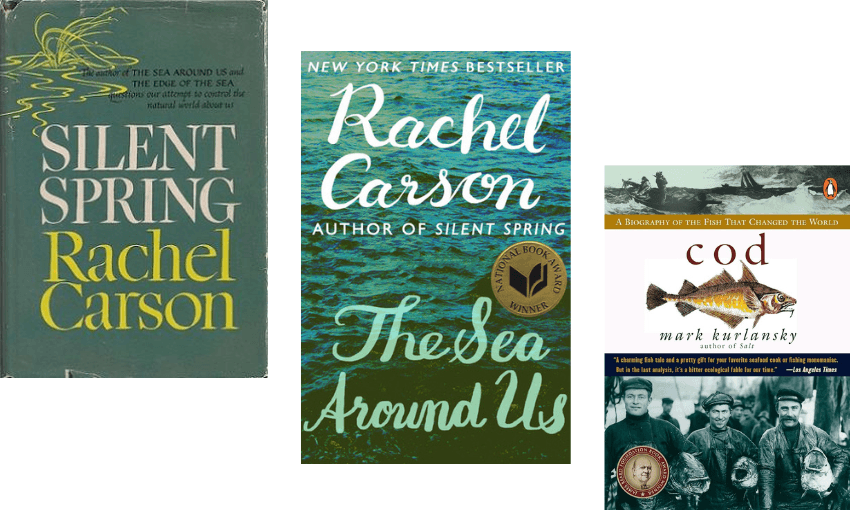
Rachel Carson wrote two books that left a lasting impression on me: Silent Spring, published in 1962, and The Sea Around Us, published in 1951. Both books were controversial bestsellers that revolutionised how we thought about our environment and, more importantly, made me aware of what I was eating. In 1999 I read Cod by Mark Kurlansky. This small book about the history of cod fishing (cod was one of the most profitable and soughtt-after fish for centuries and was pushed to near extinction) would become a bestseller.
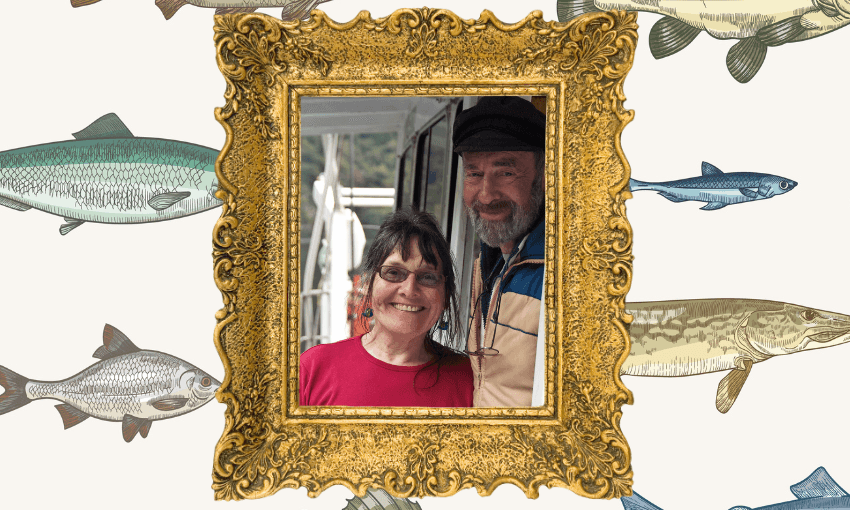
Two of the cornerstones of my life have been books and the protection of our environment. When my husband Lance and I purchased our vessel Breaksea Girl and started running multi-day trips on the Fiordland coast, and down as far as the subantarctic islands, we both agreed that one of the most important decisions we could make was to have a “no fishing” policy on board.
Bill Ballantine, director of the University of Auckland’s marine laboratory at Goat Island, is recognised as the founder of marine reserves in New Zealand. He established the first marine reserve at Goat Island in 1975, which was opened to the public in 1977. For Bill, the answer to protecting our underwater environment was to establish “no take areas with full protection”. The opposition to his idea was staggering. Thankfully we now have 44 marine reserves along the coastline of Aotearoa.
Before being employed by the Department of Conservation, Lance was a commercial fisherman. It was there he witnessed the decline of fish such as groper, blue cod and crayfish inside the fiords. After diving at Goat Island and seeing how the area had recovered, he too realised that the way to protect our underwater environment was through the establishment of marine reserves.
In 1995 the Guardians of Fiordland Fisheries was established, later known as the Fiordland Marine Guardians. They were formerly established as an advisory group under the Fiordland (Te Moana o Atawhenua) Marine Management Act 2005. This legislation also created eight new marine reserves and other protected areas throughout Fiordland known as “china shops” because of their delicate nature. Through their commitment to manage and protect the marine environment, the Fiordland crayfishing industry is now one of the healthiest and most sustainable in our country.
But how does this lead to me stating publicly that we should stop eating fish? In the 1970s, when the commercial fishing of orange roughy started, it was believed that they only lived for 30 to 40 years. By the mid-1990s marine scientists estimated that they lived between 125 and 250 years, the longest-lived commercial fish species. They don’t breed until they are between 20 and 40 years of age and, even then, not every year. By the end of the 1990s, three of the eight New Zealand orange roughy fisheries had collapsed and were closed. I was astounded. We were led to believe that it was a sustainable fishery practice, when in fact it was based on incomplete scientific information.
That was when I made the decision to stop eating fish.
We talk about sustainable fishing, but the orange roughy and the Atlantic northwest cod are just two examples of commercial fishing that were not sustainable.
We are also faced with a decline in penguin colonies. One of the reasons they are struggling is that they no longer have access to enough food to rear their young, due to the demand of commercial fishing fleets. Combine this lack of food with loss of habitat, pollution, disease and climate change, and we can see why many of the world’s penguin species are endangered, including our own yellow-eyed penguin which is considered the world’s rarest.
A third of the world’s studied fisheries are currently pushed beyond their biological limits, according to the Food and Agriculture Organisation of the United Nations. We have been fighting to SAVE THE WHALES, but what about SAVE THE KRILL? Without krill, which is being heavily overfished, a number of seabirds, whales, fish, penguins and albatross would starve. Millions of krill are scooped up from the Southern Ocean to be made into pet food, food for fish farms and health supplements.
My stand not to eat fish is based on solid ground, and there is more than enough evidence to prove that we need to look after our oceans. Read Colin Butfield and David Attenborough’s latest book, Ocean: Earth’s Last Wilderness. Like so many of the books on our oceans, the reading is harsh and confronting.
I am not saying that everyone should stop eating fish. Take, for example, communities who rely only on fish for their protein. Generally they have, or did have, low impact, traditional fishing techniques. What I would like to encourage is for more people to consider the health of our oceans which have over 80% of the world’s biodiversity.
Having dived in Fiordland, I have seen a world which is full of beauty, colour and life forms that could be out of a science fiction book. I have seen the stunning colour of inquisitive blue cod, witnessed the cheeky behaviour of girdled wrasse, and watched in wonder as dolphins and seals interacted with us. I want my grandchildren to witness the magic of our undersea world, and the only way I can do that is to help protect it by not eating fish.
I know I have made the right decision for me.
Three Wee Bookshops at the End of the World by Ruth Shaw ($40, Allen & Unwin) is available to purchase from Unity Books.