‘I’m cursed to forever be making a fool of myself’: Hannah Kent’s Atwood encounters

Hannah Kent will be appearing at Featherston Booktown this weekend.
Made possible by
Welcome to The Spinoff Books Confessional, in which we get to know the reading habits of Aotearoa writers, and guests. This week: Australian writer Hannah Kent, author of Always Home, Aways Homesick and guest at Featherston Booktown.
The book I wish I’d written
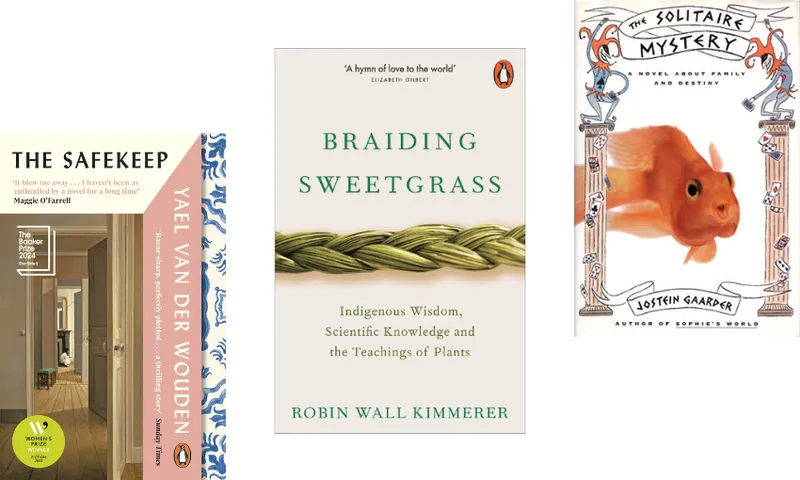
The Safekeep by Yael van der Wouden. It’s just charged with an extraordinary energy: it crackles. I never enjoy historical fiction because of the historicity alone; I like it most when it is filled with characters whose complexity is shaped by the times in which they live, but whose emotions and experiences of love and grief are universal and timeless. The Safekeep does this so well.
The book everyone should read
Braiding Sweetgrass: Indigenous Wisdom, Scientific Knowledge and the Teachings of Plants by Dr Robin Wall Kimmerer. This book gently but unquestionably changed the way I understand who I am as a human in the natural world. I was raised and taught under the “us and it” rhetoric that inflects much of Western/Anglo-centric rhetoric regarding science and “the environment”; Kimmerer’s book not only closed that distance between myself and the earth, animals and waterways I live in, but allowed me to be more aware of, and enable the connections of reciprocity and belonging that benefit us all.
The book I want to be buried with
My very worn copy of Little Women. I read it many, many times as a teenager, mostly because the sisters felt like my own friends, and to return to it was to share their company and feel less alone in my failings and hopes. I haven’t read it in many years, but I keep it close. To be buried with that copy would be like having an old friend beside me.
The first book I remember reading by myself
I was a voracious and independent reader from quite an early age, so I can’t actually remember the very first book I read to myself. The Solitaire Mystery was the first book that I felt changed by: it actively influenced the way I regarded the gift of my own life. Written by Norwegian author Jostein Gaarder, it introduced my kid self to many philosophical questions and encouraged my own sense of curiosity and wonder.
The book I pretend I’ve read
The Iliad. And the Odyssey. Classical references pop up so much in contemporary culture and literature that I now have enough of a general acquaintance to pretend I know much more than I do. I have the best of intentions to get to both – I own copies of Emily Wilson’s translations – but until then, it seems easier to just nod along whenever they come up in conversation.
Utopia or dystopia
If dystopia is born of fear and utopia of hope, then utopia. Both are too unequivocal for me to truly believe in them as social states (there will always be those working against the fulfilment of both), but I believe in their power to shape thinking and inform the decisions we make. Why not hope and strive for the equality and harmony fundamental to utopia?
It’s a crime against language to …
Regard it as stagnant, rigid and limited. Language grows with us. I’m all for writers pushing up against language to see how far it might stretch, for making up new words, and breaking the “rules” of genre, grammar and style to allow themselves new freedoms and possibilities for creativity. It’s also fun.
The book that made me cry
Foster by Claire Keegan. No other book has reduced me to a weeping mess in so few words. A novella about a child whose understanding of the world and those around her must be gleaned from silences and omissions, Foster similarly allows what is not said to speak loudest.

The book that made me laugh
I remember once trying to read aloud to my mum from David Sedaris’s When You Are Engulfed in Flames. It was absolutely impossible. I was convulsed with laughter, tears streaming down my face. Mum ended up having to take the book out of my hands and read it herself.
The plot change I would make
Growing up, most of the literature available to me about queer experience and queer love nearly always ended in death, exile, punishment, madness or depression. Think The Well of Loneliness by Radclyffe Hall, Affinity by Sarah Waters, ‘Brokeback Mountain’ by Annie Proulx, Nightwood by Djuna Barnes, Alone by Beverley Farmer… It was a long time before I found the literary representations of queer joy that allowed me to embrace my own. All of those early books are incredible, don’t get me wrong, but I’d love for Jack Twist to escape murder and for all those lesbian characters to be free from the relentless suicide ideation.
Encounter with an author
I’m cursed to forever be making a fool of myself around Margaret Atwood. During her Adelaide Writers’ Week event in 2005, I passed out from heat exhaustion, toppling sideways off my chair in front of her, and coming to a few minutes later in an undignified state on the ground, surrounded by festivalgoers flapping their programmes at my face. A few years later, I mispronounced Alias Grace during a book signing and had her sternly correct me. Then, a few years after that, I was in a tiny elevator at an Edinburgh Hotel with a huge suitcase when she came in. In my panic, I apologised for “being encumbered with such a cumbersome bag” and then trod on her foot.

Best place to read
Anywhere! But there is something rather cosy about reading in bed. Preferably when it’s raining or stormy out. With a nice cup of tea.
What I’m reading right now
I’m reading Potiki by Patricia Grace. I’ve recently read some great contemporary novels out of Aotearoa – Greta and Valdin by Rebecca K Reilly, Auē by Becky Manuwatu, The Book of Guilt by Catherine Chidgey – but, outside of Janet Frame and Katherine Mansfield, I haven’t read much published before the turn of the century. Potiki feels like a good place to begin!
Hannah Kent is a guest at Featherston Booktown this weekend, May 8-10; and is at Auckland Writers Festival the week after, May 12-17. Always Home, Always Homesick ($43, Macmillan) is available for purchase at Unity Books.
The Spinoff Books section is proudly brought to you by Unity Books and Creative New Zealand. Visit Unity Books online today.

The Spinoff Review of Books
A smorgasbord of books thoughts and formats by The Spinoff.


