‘When it comes to war, human rights and genocide, it all starts with language’

Brannavan Gnanalingam’s latest book grapples with the ongoing impact of the Sri Lankan Civil War. (Painting by Sahana Rahman; additional design: The Spinoff)
Made possible by

Brannavan Gnanalingam on his new novel U.X.O. and the civil war that has had so much impact on his and his family’s life.
The day of the 1987 global stock market crash, I was about to celebrate my fourth birthday, the first I’d have in Aotearoa, and my great-aunt and aunty were murdered by the Indian Peacekeeping Force in Jaffna, Sri Lanka. The bleak irony of their deaths at the hands of “peacekeepers” meant I was always aware of this particular period of the Civil War, even with the distance and comfort of being thousands of kilometres away.
The Indian Peacekeeping Force were deployed in my home country between 1987-1990, ostensibly as a neutral party, following internal pressure from Tamil Nadu placed on then Indian prime minister Rajiv Gandhi. The Sri Lankan Civil War had exploded following the Black July Massacre in 1983, and Gandhi’s government signed the Indo-Sri Lankan Accord with Sri Lankan president JR Jayewardene in 1987 to intervene.
The IPKF (as they became known) quickly took over the north of Sri Lanka, and occupied the main Tamil city of Jaffna. They were drawn into fighting the LTTE, the dominant militant organisation fighting for Tamil independence.
Over a thousand Indian soldiers are estimated to have died in the deployment. Over 10,000 Tamils are estimated to have died or disappeared during the Indian occupation. The era earned the sobriquet, “India’s Vietnam”. The Sri Lankan government, free from fighting in the north, brutally suppressed an uprising from the Marxist JVP, who opposed the Indo-Sri Lankan Accord. It is estimated that 60,000 to 80,000 people were killed there, too. In the global scale of things though, the events barely registered.
The biggest consequence that many New Zealanders would be aware of was the assassination of Rajiv Gandhi by an LTTE suicide bomber in the immediate aftermath of India’s withdrawal in 1991. This, in turn, led to a hardening of official Indian government policy against Tamil independence movements.
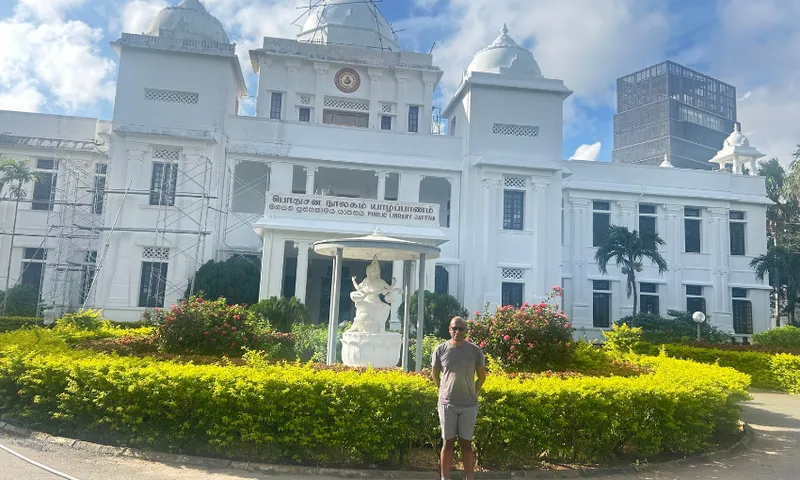
Today, that period is a black hole in terms of popular culture. Barely any contemporary Indian films or books explored the era, although more recent books from the Sri Lankan Tamil diaspora, like Brotherless Night by VV Ganeshananthan, have started to examine the time, and of course, the Booker Prize winning The Seven Moons of Maali Almeida by Shehan Karunatilaka captures the chaos of this era. There’s no Indian equivalent of The Deer Hunter or Platoon or Michael Herr’s Dispatches, although the likelihood of the increasingly jingoistic Bollywood exploring such a conflict in such raw terms is remote. History though, is always the primary site for contestation in the culture wars, and it’s notable how the IPKF era has been re-appropriated on YouTube as a “boys’ own” adventure.
Even in the Sri Lankan Tamil context, the IPKF is one of many horrors that arose across a 26-year Civil War (1983-2009), a conflict that not only split a country but also split Tamils politically, and where over 100,000 Tamils were killed. How can you prioritise talking about one catastrophe over another, when there is so much loss? Even now, mass graves are still being dug up, families still protest for details of their disappeared relatives, and the perpetrators of war crimes and their cheerleaders remain untouchable. Can focusing on a three-year period over 30 years ago have any resonance, outside of those who lost family in that period? Especially when the present remains so fraught.
I was in Sydney last year, and my cousin organised a family reunion to coincide with my visit. There were over 30 of us there; cousins, aunties and uncles I hadn’t seen for decades (or even met). We were part of the nearly one million Tamils dispersed across the world in the last few decades. I felt genuine joy in seeing all of my relatives again, but there was also this deep sense of sadness. The Civil War had such an impact, that we were forced to snatch these meetings, elsewhere. Thinking about my great-aunt and aunty in the context of that reunion was the spur that got me writing.
Franco Berardi (writing about Gaza) has recently written about the narrative cul-de-sac that results from focusing too much on the past. A group of people can end up defining themselves purely by the past. This creates an artificial hardening of views, this idea that the only way you can define yourself is by reference to horror. It prevents people from focusing on the future. It also excludes people who don’t fit the requisite definitions, depending on which narrative becomes privileged. I have some sympathy with this idea, and am especially drawn to the idea that we can never be a monolith, despite our shared histories. Berardi’s concerns, however, ignore the role of power in defining those narratives. Which narratives get privileged? Which narratives get ignored?
I prefer the viewpoint adopted by Heinrich Böll in Billiards at Half-past Nine, and specifically in the masterly adaptation of that novel by French / German filmmakers Jean-Marie Straub and Danièle Huillet in Not Reconciled (1965). The idea expressed in the book and film, through its fluid use of flashbacks, is that the past remains in the present, if you fail to reconcile with the past. And worse, history will subsume the present if we forget the past. Cycles repeat. People get dehumanised and there is more loss and displacement. This is hardly a new idea, particularly in a country like Aotearoa, where Māori have steadfastly and titanically fought to ensure that properly acknowledging the past remains a key part of our present.
I waver on what art and literature can actually do. It always feels like a milquetoast – second best to actual activism. One of the things that I’ve come to realise though, is that when it comes to war, human rights and genocide, it all starts with language. People get dehumanised for days, years, decades, before actual violence is carried out against them.
Michel Foucault talks about discursive frameworks as the way language can govern how we talk about a particular subject matter, about groups of people, about ideas. Through historical processes, certain words, phrases, patterns become used to define. How a discursive framework is established, sustained, re-defined, is an exercise of power.
This concept isn’t a hopeless one though – power can be used to change discursive frameworks. Foucault talks about how an “irruption” can be used to create a sudden rupture in a discursive framework, how discursive frameworks can mutate and start anew.
Perhaps, that’s the one thing literature can do. It can act as an irruptive force. Literature can do many things: don’t listen to people who say it can’t do one thing or another. There’s no actual rule that a novel can’t be political. That it can’t be activist or didactic. Who came up with those rules? A novel can do anything it wants to.
I don’t pretend to think that a single novel that I write will ever hold people to account. What does hold to account mean anyway – can you truly seek justice through literature?
That said, I can only try my best to form thoughts about a historical moment that has had so much impact on my life, and on my family’s life. U.X.O., my latest novel, is set during in the IPKF era, and is dedicated to my great-aunt and aunty. It looks at a former IPKF soldier’s attempts to explain to his grandson in Aotearoa about his time in Jaffna. It depicts what it’s like to describe what someone did when no-one cares about what they did.
The novel is a response to a sense of hopelessness that I’ve grappled with in the face of the horrors of Gaza or thinking about my own family’s histories, to the indifference (let alone downright hostility) of power and political and media institutions to war crimes.
It’s also about defiance. That we, as writers, can try to change the discursive frameworks. That we can express ourselves as complex human beings with an interiority, which is otherwise denied to us when people talk about us as statistics. In the grand scheme of things, I’m a nobody, and all I have is a pen. But at the very least, I can say that we have lived, we are living, and we will continue to live.
U.X.O. by Brannavan Gnanlingam ($30, Lawrence & Gibson) is available to purchase at Unity Books.
The Spinoff Books section is proudly brought to you by Unity Books and Creative New Zealand. Visit Unity Books online today.

Brannavan Gnanalingam
Brannavan Gnanalingam is a practising lawyer who lives in Wellington. He is the author is five novels, including A Briefcase, Two Pies and a Penthouse, and Sodden Downstream, which was shortlisted for the 2018 Ockham New Zealand national book awards. His sixth novel, Sprigs, is due for release in July 2020 through Lawrence and Gibson.


