The life and times of a 19th century Wellington bug collector

George Vernon Hudson (Image: Aljosha Daele/Supplied)
Made possible by


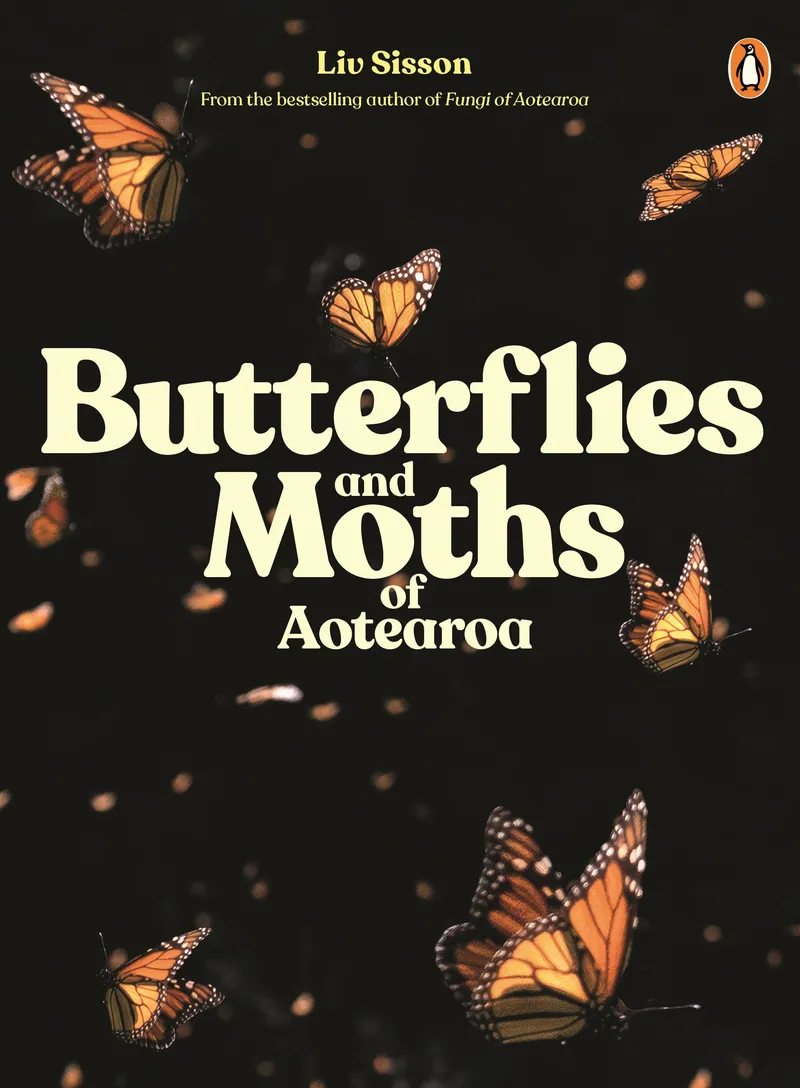
Liv Sisson's new book Butterflies and Moths of Aotearoa is a treasure trove of wings and wonder, and quirky stories like this one about avid bug man George Vernon Hudson.
Daylight saving time was actually first proposed by a New Zealander. His name was George Vernon Hudson. He was fascinated with moths, butterflies and other bugs, and he may have wanted more daylight hours to look for them.
We have a wonderful account of George Vernon Hudson’s life thanks to his grandson, George Gibbs. Gibbs’ book An Exquisite Legacy recounts the extraordinary life of his grandfather and I’ve drawn deeply on it here. Gibbs himself is one of the country’s foremost historical biogeographers (someone who studies when and how animals and plants became distributed around the world).
I met Gibbs one sunny Wellington day, deep in the basement of Te Papa, among kauri cabinets filled with carefully pinned moth and butterfly specimens that his grandfather had collected. Hudson always wore a three-piece suit on his insect-collecting adventures, Gibbs remembered fondly. One day, when Gibbs was about six, the pair were out looking for insects when grandfather Hudson slipped and fell into a creek. Undeterred, Hudson took off his suit, hung it on a tree, and the pair carried on with their adventure, returning in the afternoon to collect the sun-dried suit before catching the bus home.
George Vernon Hudson was born in London and spent his early years pottering around his father’s stained-glass workshop. There he would draw and paint the insects he found in the city. At age 12, he began daily diary entries where he recorded the date, the weather and his observations. The only day he failed to record the weather was the day he asked his future wife to marry him. Hudson had a lovely writing style. "This is undoubtedly the strangest insect I have ever met with", he noted in red ink after crossing paths with a Camberwell beauty (Nymphalis antiopa). The Camberwell beauty has deep, blackish red wings edged with a line of blue polka dots and a butter-yellow band.
In 1881, at age 14, Hudson immigrated to Aotearoa with his family. Four days after arriving, by boat, he took a walk up a hill in Nelson and captured his first insect here: a kahukura red admiral butterfly. Hudson spent the next year building up a collection of local butterflies: red and yellow admirals, coppers, blues, monarchs. Monarchs are now believed to have arrived here only about a decade prior to Hudson himself.
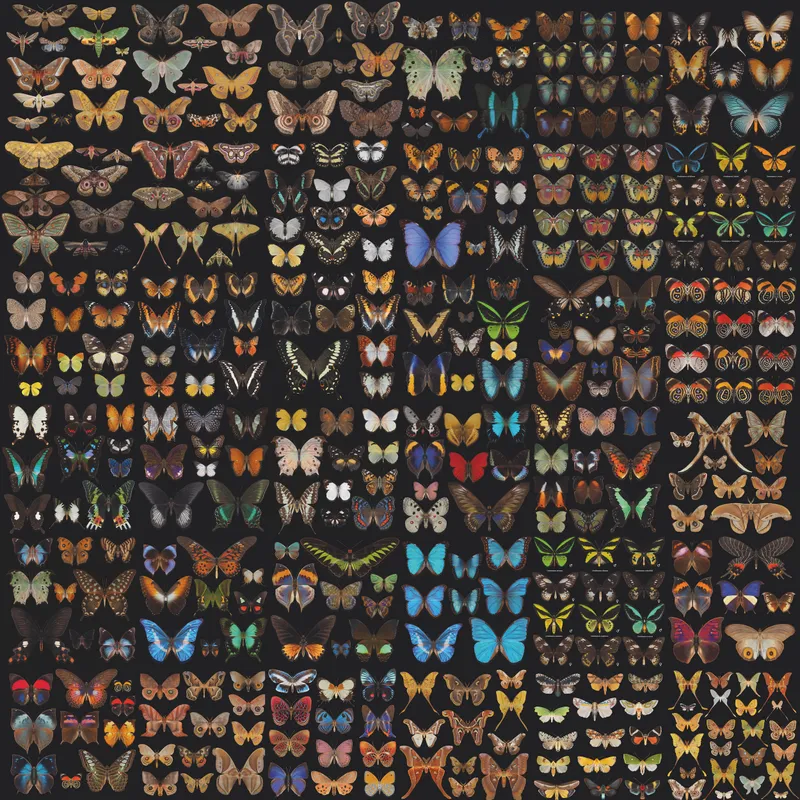
Hudson wasn’t just collecting for the sake of it, though. He was trying to understand insect lifecycles, or life histories. He wanted to know, for example, what caterpillar would turn into which butterfly, what it would look like along the way, and how it would behave. To Hudson, each insect’s life was a mystery to work at, observe, unravel and understand.
The pūriri moth was a subject of intense fascination for Hudson. On a Sunday night in 1883, he chopped down a tree. He had noticed holes in its trunk that were covered over with silk and wanted to find out what had made the holes; what was living inside the tree. As his axe struck and a portion of the trunk fell away, he found a very chunky caterpillar inside. Unfortunately, he’d killed it. But this alerted him to some kind of connection between the caterpillars, the holes and the silk camouflage coverings.
Hudson spent the next several years combing Wellington’s hillsides, wearing his signature three-piece suit and pocket watch, wielding a tomahawk and searching for tree tunnels. When he found some he’d chop the tree branch down, take it home and try to raise the caterpillars within it to find out what they’d become. In the end, he managed to work out the lifecycle of the pūriri moth.
Hudson was doing more than just collecting and describing insects; he was also visualising their lifecycles, painting their wriggling caterpillar stages, artful chrysalises and adult forms. His work is stunning: his hand steady, lines fine, colours expertly chosen and detail full of care right down to the delicate wing fringe on moths no bigger than a centimetre long. Hudson, committed to his craft and to biological representation, only ever painted in daylight. He left us over 3000 detailed, full-colour watercolour illustrations of the insect fauna of Aotearoa. These artistic masterpieces are tiny and exquisite. Many are smaller than a postage stamp.
Hudson was a naturalist; naturalists were the unpaid scientists of the time. For paid work, Hudson took up a shift-work position at the Wellington Central Post Office in 1883. The hours suited him. He liked the flexibility of shift work because it meant he could go out at different times of the day to look for insects. In the daytime he’d cross paths with diurnal species. At night he’d see nocturnalists. At dawn and dusk he’d cross paths with the crepuscular.
It was around this time that Wellingtonians began grizzling about the excessive use of artificial light in and around the city at night. It was energy-intensive and expensive. On Hudson’s many walks from Karori, where he lived, to his job at the post office, he had plenty of time to look for insects and to think, in both darkness and daylight. He also had a deep interest in astronomy, even building his very own observatory at his house. On 6 October 1895, he presented a concept of summer time adjustment to the Wellington Philosophical Society. The gist of his idea was simple: adjusting the clocks during the summer months could reduce the need for artificial light. In Hudson’s view, this was a practical solution to an energy problem and one that would benefit those (like himself) who valued leisure time in the open air. It would also be simple to implement: just adjust the clocks.
Unfortunately, Hudson’s concept was laughed at, labelled "wholly unscientific", "impractical" and "out of the question to think of changing a system that had been in use for thousands of years".
Hudson was eventually offered an official position as government entomologist but refused on principle, wanting complete freedom from bureaucracy for his work. In 1928 he published his magnum opus The Butterflies and Moths of New Zealand, which showed all his skill and finesse with fine brushwork and colour. He worked on this volume for 24 years, with the goal of including every known species in Aotearoa and its full lifecycle. He managed to cover 1471 species in this way – an immense feat of both creativity and scientific inquiry. His physical specimen collection, the one I visited with his grandson George Gibbs, has been described as ‘the finest and most perfect collection of New Zealand insects ever formed by one person’.
I left the Hudson collection amazed by his efforts, and inspired by what a curious and committed person can accomplish. Today we might call Hudson a ‘citizen scientist’ — a volunteer member of the public who contributes to scientific research without a formal science degree by collecting information, making observations and contributing to large-scale data collection. Hudson did not go to university; he was self-taught. He certainly contributed observations and data, but he did all of that in a pre-digital world before handy tools like iNaturalist were available. iNaturalist, if you haven’t checked it out yet, is incredible – it’s a community science platform where you can identify and log your plant, animal and fungus finds and peruse others’. There are close to 4 million observations on the platform from Aotearoa alone. Hudson, though, made his own databases in the form of his specimen collection, his illustrations and his books. What incredible gifts he left us.
Butterflies and Moths of Aotearoa by Liv Sisson ($50, Penguin NZ) is available to purchase at Unity Books.
The Spinoff Books section is proudly brought to you by Unity Books and Creative New Zealand. Visit Unity Books online today.

Liv Sisson
Liv Sisson is a writer, editor and author interested in nature, science and food. Her first book is a fun and informative guide to the fungi of Aotearoa.


