Review: Big Girls Don’t Cry captures the endless ache of adolescence

Ani Palmer as Sid in Big Girls Don't Cry (Photo: Jen Raoult/Supplied)
Alex Casey reviews Big Girls Don’t Cry, the award-winning coming-of-age film directed by Paloma Schneideman.
Every now and then, a film makes such a profound impact that the world looks a little different after the credits roll. I remember peering around the crowd as the lights came up on Big Girls Don’t Cry during Whānau Mārama, and noting how many people were sitting with tears in their eyes, swallowed into their seats as if hypnotised by Derren Brown on YouTube. The cinema was packed with people of all ages, but suddenly everyone looked precisely 14 years old again.
The astoundingly assured debut feature from director Paloma Schneideman (who also makes music as Polly Hill), Big Girls Don’t Cry has been one of the most anticipated local releases of the year. Opening at Sundance and receiving rave reviews from Variety and The Hollywood Reporter, it took out the Grand Prix at the Nouvelle Vagues in Biarritz in June and famously won the praises of judge Kristen Stewart (“I loved this film with my whole heart”).
Charting a remarkably raw and relatable journey across one yawning New Zealand summer break in Ōmaha, the film follows Sid (Ani Palmer), a 14-year-old trying to find her place as a misfit in small town Aotearoa. Palmer is equal parts captivating and devastating as Sid tries on different identities and makes questionable new friends, piercing her own bellybutton and boasting about mythical interactions with mythical Auckland boyfriends for clout.
Palmer is supported by a powerhouse cast including Noah Taylor as her grizzling, failed artist single father and Tara Canton as her too-cool older sister back for the holidays. It’s also hard not to watch newcomer Ngātai Hita as Sid’s loyal pal Tia and not reflect on your own childhood besties who stayed by your side through your “dumbass” quests for cool. “We should sneak out,” Sid suggests during a sleepover. “To where? The cow paddock?” Tia replies wryly.
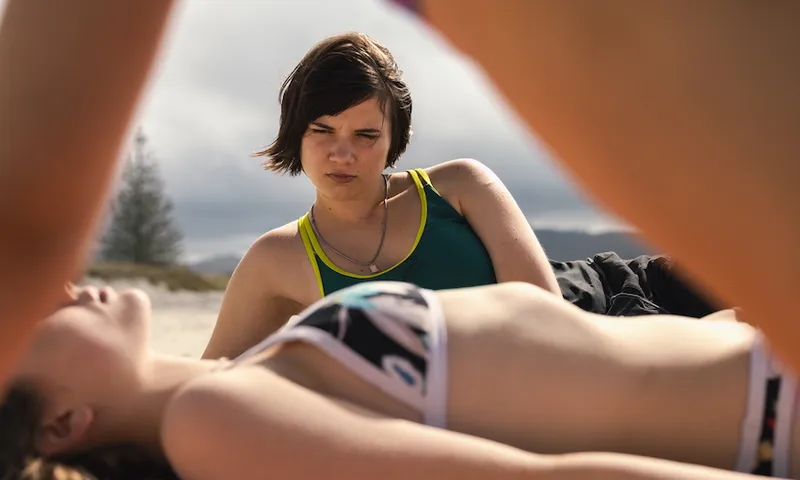
The film also takes a breathtakingly honest approach to the millennial coming-of-age experience, where the expectations of teen magazines and thin, blonde American culture (embodied by Rain Spencer’s elusive exchange student Freya) clash with the crushing reality of life in a dull seaside town in New Zealand. To pass the time, Sid lies on the trampoline, lies in the bath, and lies on the floor, silently pressing the TV cabinet open and shut with her big toe.
Anyone who went through adolescence in the mid-2000s will now yearn for this era, where we had the luxury of internet access while still being allowed to be bored to tears on the regular. Dial-up meant that social media was appointment-based, yet still provided a thrilling portal to flirting on MSN, having absurd encounters with total strangers in chatrooms and then being able to turn it all off to pore over the latest edition of Dolly Doctor without interruption.
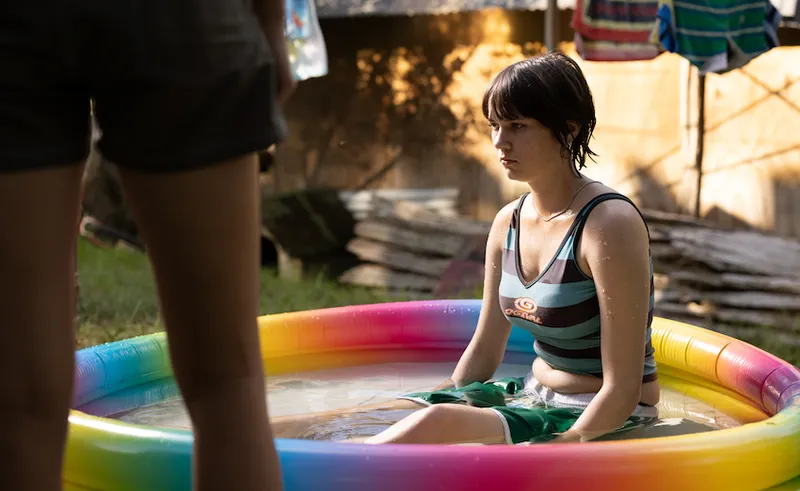
Schneideman captures a sense of longing for both this time in the world and this time in our lives, particularly in the long dreamy montages of girls splashing around in the waves at Ōmaha, or driving down the beach with older Auckland boys whose names they’ll forget in a matter of months. But the film stops short of romanticising this chapter too – particular around the gender dynamics and the murky state of consent among sex-obsessed, RTD-shotgunning teenagers.
When you watch Sid gently adjust her fringe and smooth her top while waiting to get picked up by the worst guys of all time, its hard not to be transported back to your own moments of teenage naivety. I couldn’t stop thinking about getting optimistically dolled up with tight curls and smoky eyes for the school ball, only to be surrounded on a party bus by greasy lads chanting “tits out for the boys” and feeling like a total idiot for thinking anything else was ever possible.
The film finds an astoundingly frank tone where it reflects on these memories without ever feeling too bleak, instead inviting audiences to gently forgive our younger selves for what we didn’t know back then. And while it shares DNA with other excellent local films released this year – the 2000s nostalgia of Caterpillar, the dissection of New Years-as-ritual in The Weed Eaters, Big Girls Don’t Cry feels like a coming-of-age for New Zealand cinema, all on its own.
Big Girls Don’t Cry is in cinemas nationwide from October 8.

Alex Casey
Alex Casey is a senior writer at The Spinoff with over a decade of experience writing about popular culture and social issues in Aotearoa. She lives in Ōtautahi and likes watching reality TV and walking the dog, occasionally at the same time.


