
In this excerpt from Emma Galloway's new cookbook, she offers hot tips on how to grow food in containers – plus two summery recipes you can make with the fruits of your labour.
In an ideal world we’d all have space to grow a veggie garden, but I know this isn’t always the case. That doesn’t mean you can’t grow veggies!
If you have a sunny deck or front doorstep, along with a little determination, you can grow all manner of food in pots. If you’re someone like me who always grows way too many seedlings to fit in the ground, utilising pots can also create more space to grow. For plants that spread and love to take over (I’m looking at you, mint), growing in pots is also a great way to contain them.
You can go as simple as planting into recycled plastic pots (great for herbs and salad greens) or small and inexpensive terracotta pots, to large ceramic pots (perfect for more permanent plants such as perennial herbs), grow bags, small planter boxes that can sit snugly up against your house (and in which you can grow almost any vegetable), or large plastic flexi-tubs with drainage holes drilled in the bottom. If you can put soil in it, it’s usually fair game (of course avoiding anything made from toxic or corrosive materials). We even have a couple of old concrete sinks that we grow berries in!
There’s just a couple of things to consider:
• Are you going to need to move it at some stage? If yes, make sure you go for smaller pots that won’t weigh so much when full. Or can you put wheels/casters onto the bottom of a wooden planter box and use that instead?
• Ensure adequate drainage, as most plants don’t do well in water-logged soil. If your container doesn’t already have drainage holes in the bottom, can some be added by drilling (if your container is plastic or wood)? If you really have your heart set on using a pot or container without holes, add rocks and/or gravel to the bottom before topping with potting mix, to help prevent roots from sitting in water.
• Plants grown in pots or containers will dry out much quicker than those in the ground, so regular watering is a must, especially over the summer months. In the peak of summer, we put our pots onto a saucer or tray, to help retain moisture. This is especially important if using terracotta pots, as they’re porous and like to absorb all the water, drawing it away from the soil.
• Use good-quality potting mix or a combination of potting mix and compost to fill your pots, for healthy plant growth. You can also buy potting mix that is specifically designed for vegetable growing or a garden mix in bulk from landscaping shops.
• Liquid feed your pots at least once a month with a good-quality organic fertiliser, store bought or homemade. Being contained to a pot means they have no means of drawing in extra nutrients from elsewhere, so you have to be the one to add it for them.
• Consider the size of the vegetable you’re growing when choosing the size of the pot. Carrots, for example, grow long and deep, so a tall pot is essential. Lettuces, on the other hand, only have shallow root systems, therefore you can use a shallow, wide pot. See growing guides for individual container garden needs for different vegetables.
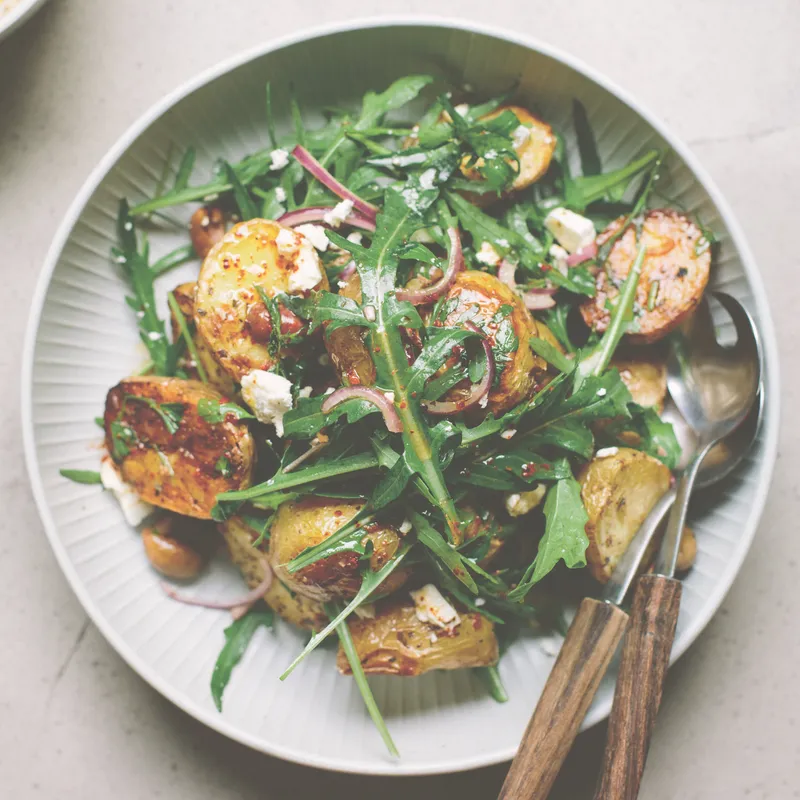
Recipe: Lemon and oregano roasted potato salad with feta and rocket
This is a lovely substantial salad that travels well, which is a bonus over the summer months when pot-luck dinners are peaking! Make sure your potatoes are a variety that roasts well (most baby potatoes are better suited to boiling), such as Agria. For a dairy-free and vegan option, omit the feta and use sugar in the dressing.
Serves 4 | Gluten-free | Vegan option
Salad
1kg small roasting potatoes, cut in half or into large chunks (depending on size)
3 tablespoons extra virgin olive oil
2 teaspoons dried oregano
Good pinch each of fine sea salt + freshly ground black pepper
½ lemon
½ red onion, thinly sliced handful flat-leaf parsley leaves, roughly chopped
2 big handfuls of rocket (arugula)
Handful of kalamata olives, pitted
Crumbled feta cheese, to taste (optional)
Lemon dressing
½ teaspoon honey or golden caster sugar
½ teaspoon Aleppo pepper flakes or pinch of dried chilli flakes
juice of ½ lemon
1 tablespoon extra virgin olive oil
fine sea salt + freshly ground black pepper
Preheat the oven to 200°C (400°F). Combine the potatoes, olive oil and dried oregano in a large bowl. Season with salt and pepper and mix well. Transfer to an oven tray.
Roast for 25–30 minutes, stirring once or twice during cooking, until golden and tender. Remove from the oven, squeeze over the juice from the lemon half and mix through. Return to the oven for a further 5 minutes. Remove from the oven and set aside to cool to room temperature.
To make the lemon dressing, combine the honey or sugar, Aleppo pepper or chilli flakes and lemon juice in a bowl. Whisk in the olive oil and season with salt and pepper to taste.
Combine the cooled roasted potatoes, onion, parsley, rocket and olives in a bowl. Pour the dressing over and mix well. Scatter with crumbled feta (if using) to serve.
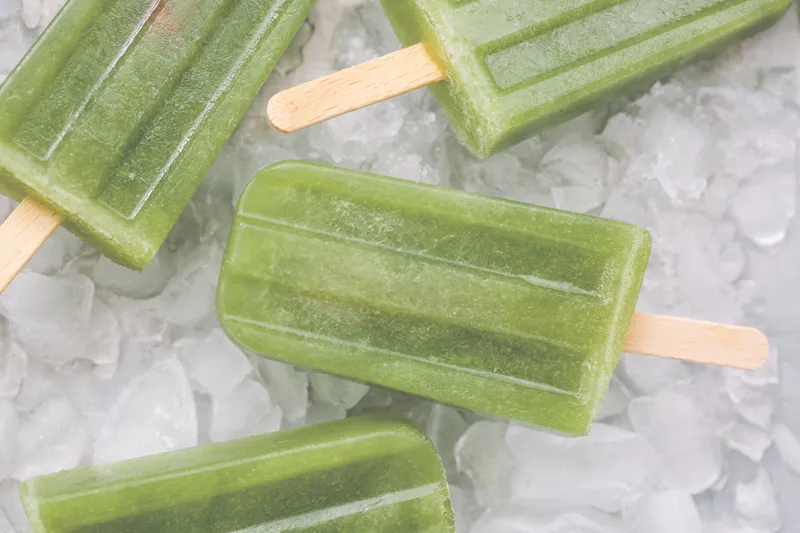
Recipe: Cucumber, mint and lime ice blocks
The one thing my kids have always craved in the middle of winter and/or when sick with a cold, is cucumbers. They love them so much and will happily munch on a whole one like one would eat an apple. Sadly for them I don’t often buy cucumbers over winter, unless we’re really desperate (or I’m trying to cheer up a sick kid).
Instead we go crazy and try and get most of our yearly quota in over summer, when they’re in season and abundant (and cheap in the store, if you don’t grow your own).
Makes 10–12 | Gluten-free | Vegan
4–5 limes
100g (½ cup) golden caster sugar
Handful of mint leaves
1 telegraph (continental) cucumber, roughly chopped
Finely grate the zest from the limes and place into a saucepan with 500ml (2 cups) water, the sugar and mint. Bring to the boil, then reduce the heat and simmer for 2 minutes. Remove from the heat and set aside until cold. Strain and discard the solids.
Juice the limes – you’ll need 125ml (½ cup) lime juice. Pour into a blender, add the cucumber and lime-mint syrup. Blend on high until smooth. Strain the mixture through a fine sieve and pour into ice-block moulds.
Freeze for 2 hours until partially frozen, then add wooden ice-block sticks. Freeze for a further 4 hours or overnight, until firm.
Run the moulds briefly under warm water to help release the ice blocks.
Thyme to Cook: Grow and Cook Real Food at Home by Emma Galloway ($60, HarperCollins) is available to purchase at Unity Books.

Emma Galloway
Emma Galloway (Te Atihaunui a Paparangi, Ngati Raukawa ki te Tonga, Ngati Rangi) is the bestselling author of My Darling Lemon Thyme, A Year in My Real Food Kitchen and Every Day.


