An overhang election could be terrible for our democracy

It's looking increasingly likely an overhang may swing our election. (Image: Tina Tiller)
Voters face the prospect of electing a government they didn't vote for.
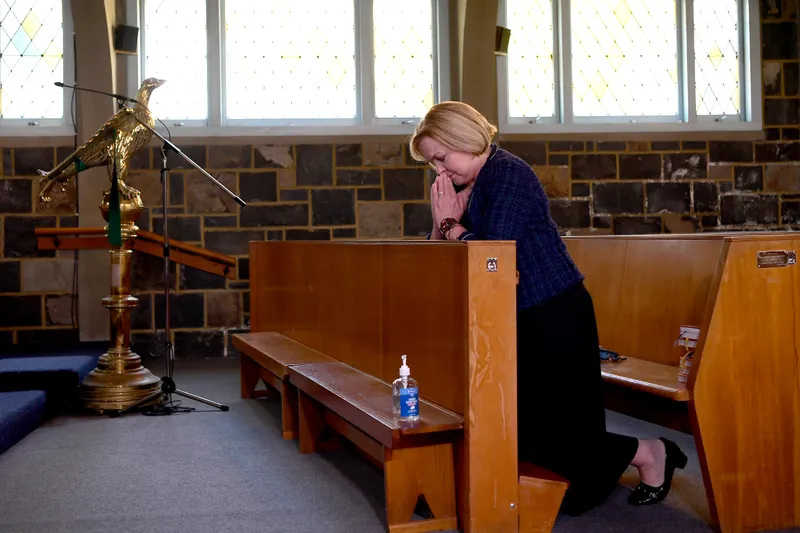
Left-leaning politicians erupted in a chorus of hooting and hollering at the release of the RNZ-Reid Research Poll on Thursday. They had reason to be joyful. It had National’s support at 24.8%, its lowest level since the 2020 general election, when then-leader Judith Collins resorted to praying for electoral mercy. Green co-leader Chlöe Swarbrick said it showed National’s “childish” attack politics were failing. Labour leader Chris Hipkins saw real momentum for change. In classic centrist form, Opportunity’s Qiulae Wong was both cautious and encouraged.
But amidst the clouds of social democratic champagne, our top political minds have been wincing into their spreadsheets. They see a fish hook in the latest poll data. Many of them worry that, should the numbers from the Reid Research poll actually carry through to the general election, it could wind up shaking the public’s faith in MMP or even breaking it entirely.
The problem, as they see it, is the increasing likelihood of an overhang result defining the makeup of our next government. At 25% of the party vote, National would be entitled to 30 seats in parliament. But it currently holds 43 electorates and according to analysis carried out by The Overhang blog, it could well retain up to 40 of those seats. National gets to keep its electorate seats no matter what, meaning it could wind up with a potentially election-defining 10 more MPs than it’s actually owed under its party vote entitlement.
Not only that, but the resulting government could diverge significantly from the will of the electorate. Even if the party vote indicates a preference for an Opportunity-tinged centrist bloc, an overhang could allow National to cobble together a majority with its current coalition, only with more seats for Act and NZ First.
This isn't the first time a vigorous overhang debate has erupted this campaign. Te Pāti Māori came under fire in August after explicitly telling its voters to give its candidates their electorate votes but to party vote Labour or the Greens.
Whether its an election-defining Te Pāti Māori or National overhang, critics see the potential for – to use the technical term – a democratic clusterfuck. Otago University law professor Andrew Geddis says it would subvert the purpose of MMP. “You end up with a government that doesn't actually reflect the will of the majority of the people, which is what democracy is meant to be about, and that's what MMP was meant to deliver,” he says. "I think every time the government tries to bring in some policy, it would be questioned a lot. The voters did not choose this, and yet you're shoving some ideologically tinged policy down our throats.”
Lara Greaves (Ngāpuhi, Pākehā, Tararā), an associate professor of politics at Victoria University, is similarly nonplussed about the prospect of an overhang deciding the government. “You could have a crisis of sorts where people are like, ‘what just happened?’" she says.
Greaves anticipates lingering questions about the election’s legitimacy in the event of an overhang deciding the result. That effect could be heightened by the fact that wealthy and well-connected New Zealanders have been throwing their money around in an effort to engineer that exact situation. Businessman Harry Mowbray is under investigation by the Electoral Commission for his split your vote website, which it believes may constitute an unauthorised election ad. Former National and Act leader Don Brash has also been placing newspaper ads calling on people to give their party vote to Act or NZ First and electorate vote to National.
Former Labour prime minister Geoffrey Palmer says the right's overhang strategy could backfire even if it’s successful. “I think the perception will be that it's a fake result,” he says. He’s already concerned about the coalition government’s record-breaking use of urgency and says an overhang would plunge us further into crisis. “We might be in a democratic crisis of double sort.”
Another former Labour prime minister agrees. Though Helen Clark is sceptical it will eventuate, she thinks a large overhang would shake people’s faith in our democratic system even if it’s technically legal. “An overhang at scale would be a crisis,” she says. “It’s been expected that there will be some small overhang – but this would be the result of deliberate manipulation.”
Some see help in the event of a right overhang potentially coming from an unexpected place. Geddis disagrees with Te Pāti Māori’s strategy on democratic and strategic grounds, but he sees a scenario where it ironically serves to save people’s faith in MMP by tempering the impact of an overhang on the right. “If you watch American football, sometimes on a play there'll be offsetting penalties so essentially there’s no foul. If everyone does it, you might get a situation where it's offsetting penalties and it doesn’t affect the overall makeup of parliament.”
But Te Pāti Māori only has seven Māori electorates to work with and The Overhang blog is projecting it will generate an overhang of three seats at best. The distorting effect of its purposeful effort to lower its party vote could be less pronounced than National’s accidental one.
Even if it helps in this instance, it’s not ideal for democratic institutions to rely on everyone gaming the system. Oliver Hartwich, executive director of the right-leaning NZ Initiative think tank, is frustrated it’s come to this. “They should have fixed this ages ago,” he says, ruefully.
In Hartwich's eyes, this problem was structural and predictable. MMP is designed to encourage increasing diversification of the party vote, with people finding smaller political niches that fit their values more closely. But electorate races are still run under a winner-take-all FPP system and nearly all are carried by the two major parties. He has long advocated for an expansion of parliament’s numbers to 170 MPs to diminish the potential impact of that mismatch.
At the moment the house is made up of 120 seats, of which 65 are electorate MPs. Upping the number of MPs entering the house would make it much less likely that a party’s electorate entitlement would eclipse the number of MPs it should get under the party vote. “I want to get to a 50-50 split between electorate and list seats, which makes gaming the system much harder,” he says.
Hartwich points to his native Germany as a place that has grappled with this same issue. It initially instituted levelling seats, eliminating the distorting effect of an electorate overhang by giving the disadvantaged parties more MPs. But that ended up swelling the size of its parliament from the intended 630 seats to 736. More recently the country has gone for a more extreme solution, simply culling any seats that create an overhang and leaving areas without a local MP.
Increasing the number of politicians might be unpopular, but not as much as those moves would be, Hartwich says. Greaves is on the same page. “More MPs is good generally,” she says. But she’s sceptical that the next government, whoever it may be, will vote to make those sorts of changes to the system, particularly if it owes its existence to the distorting and arguably undemocratic effects of the current one. “It’s the ‘turkeys don't vote for Christmas’ problem, because then the bloc that are in power have to be the ones that change the system that put them into power,” she says.
It’s true, turkeys don’t vote for Christmas. But in the event of an overhang, there’s also a good argument that people didn’t vote for those turkeys. The calls for Christmas to arrive will likely be loud, vociferous and enduring. Eventually even the most stubborn landfowl may have to listen.

Hayden Donnell
Hayden Donnell is a senior writer for The Spinoff. He previously worked at RNZ, TVNZ and the New Zealand Herald, alongside other media companies that have since closed down or been renamed. His primary passions are local politics and the Big Fresh animatronic fruit and veggies.
Sign up to Two Ticks, delivered straight to your inbox.


