Echo Chamber: The Winston Peters double standard

Chlöe Swarbrick and Gerry Brownlee.
Next time you try to come for the speaker’s favourite octogenarian, maybe prove that you’re part of parliament’s furniture too?
Christopher Luxon’s post-cabinet press conference on Monday was a landmark, in terms of recognising our most vulnerable communities. Following a few gaffe-filled days – Luxon telling business owners to suck it up, and Winston being Winston – the daddy of the country apologised for suggesting business and government had a “parent-child” relationship. In doing so, he confirmed a long-held belief in this country: there is no one more oppressed than a small business owner.
But in admitting defeat (on the business front), Luxon left the door wide open for a barrage from the opposition during Tuesday’s question time. Labour leader Chris Hipkins’ quizzing of his opponent in blue was stinging; which of Luxon’s views best represent New Zealand business owners? “That they have ‘a parent-child mentality’, that they are ‘C-listers’, that they are ‘wet, whiny and inward-looking’, or that they are ‘soft’ – all statements he has made in the last three years?”
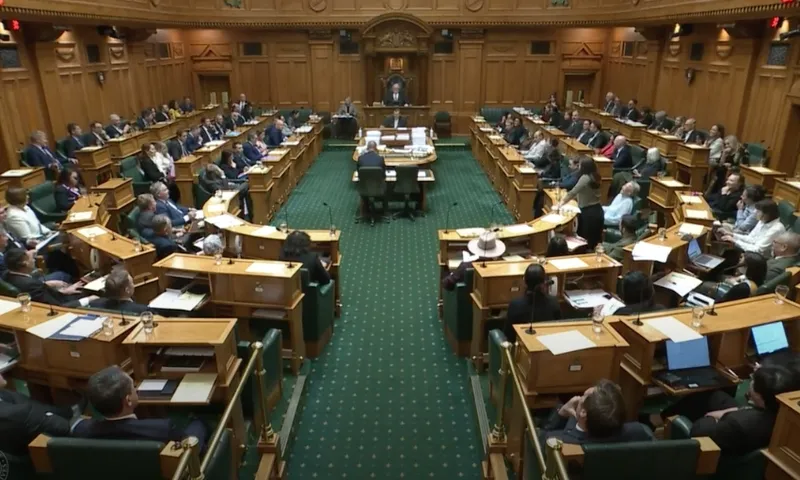
Hipkins was back a few questions later, this time to grill Luxon on Peters’ behaviour. It didn’t take long for the foreign affairs minister to feel fed up with Hipkins’ accusation that telling another MP to go back to their own country could be perceived as racist. As Peters rose for a point of order, Green MP Francisco Hernandez’s voice could be heard above the barracking: “Here comes the real prime minister!”
“There is so much of a din coming from the Labour Party,” Peters declared. “I wonder if you could do us a favour and call Helen Clark and ask her to quieten them down?”
“She quietened him down when she dumped him from cabinet,” Hipkins retorted.
Now he’d done it. That statement was a lie, Peters grumbled – breaking a golden rule of the House: thou shalt not be named a liar. Even if you’ve seen the worst of them, parliament operates on the basis that all MPs are considered well-intentioned and honourable people; question that, and you question the integrity of this whole democracy.
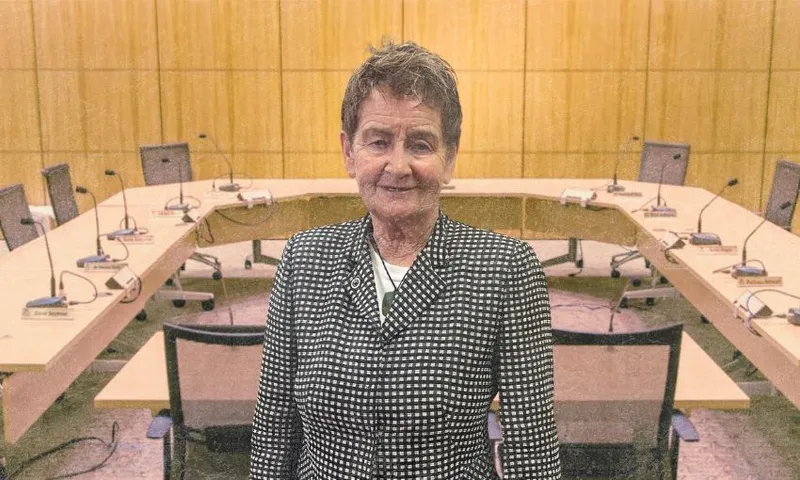
That’s a lesson Green Party co-leader Chlöe Swarbrick knows all too well. She once came close to sitting in front of the privileges committee after calling a statement from Luxon a “demonstrable lie” in the House in 2023. Ever the justice seeker, Swarbrick pressed speaker Gerry Brownlee on Peters’ statement: “I just am seeking your guidance as to whether this rule applies universally or there’s one rule for us and another for him.”
As is his wont of late, Brownlee told Swarbrick he’d check the Hansard later. But when it was Swarbrick’s turn to question Luxon – this time on data centres – later in the session, her heckling of the prime minister saw her on the wrong side of the speaker. It was “ridiculous” for the House to be making so much noise, Brownlee growled, and expect the man expected to be across everything to actually be across everything.
“Respectfully, the problem is your double standards,” Swarbrick replied. And with that, Swarbrick was kicked out of the House.
By Wednesday’s question time, Brownlee had finally checked Hansard and was ready to give his take on Peters’ unparliamentary language (the lying part, not the racist part). When “considered alongside historical facts”, one could come to the conclusion that Hipkins’ version of the Clark-Peters fallout was a “debatable point uttered in the hurly-burly of the House’s proceeding”. “This will satisfy no one,” Brownlee said, five words that could also apply to this entire term of parliament.
Hipkins was next to rise, to correct himself on that debatable point. He’d got it wrong, Hipkins admitted: “It was Jenny Shipley and Jim Bolger who fired him from the cabinet. Helen Clark allowed him to resign as a minister outside of cabinet after the Serious Fraud Office started investigating political donations to New Zealand First.” He promised to be “more precise in the future”.
Wednesday’s session saw the opposition in a coordinated dance, though the tango got tangled once they invited Peters into the mix. Questioning of the prime minister continued to revolve around his comments to business owners, Peters’ racist remarks and a third scandal that had arisen that day: the PM’s use of Defence Force planes.
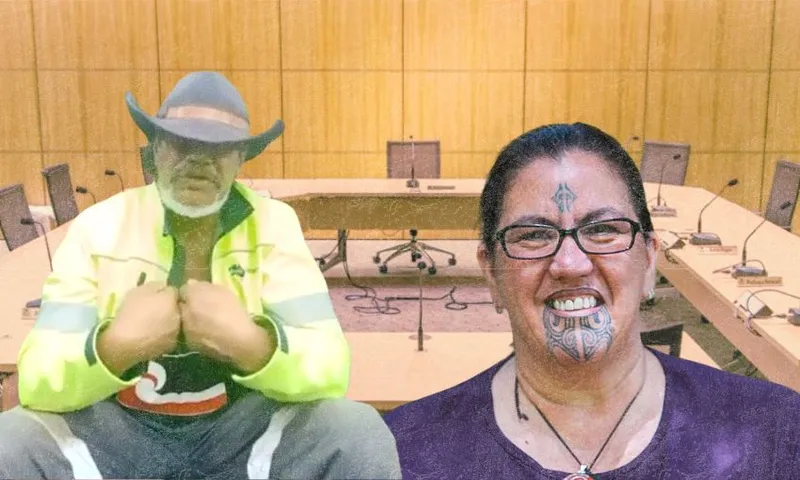
Green MP Lawrence Xu-Nan, the target of Peters’ tirade last week, finally went head-to-head with the minister. But the Greens’ attempt at a gotcha stood no chance against Peters’ semantics, as he argued he couldn’t speak for comments made by the leader of NZ First while taking questions as the foreign affairs minister. Brownlee tried to rescue Xu-Nan’s line of questioning by letting him reword his supplementaries, but slight blunders over direct quotes and who said what when had already tripped everyone up.
Later, it was finally Te Pāti Māori’s turn. Co-leader Rawiri Waititi’s questions largely concerned reforms to treaty clauses, and who was actually leading the government – Luxon, or Peters? “In the words of Eminem, would the real prime minister please stand up?” Waititi asked.
There was a pause. Deputy prime minister and Act Party leader David Seymour looked ready to pounce when it seemed Luxon wouldn’t take Waititi’s invitation. But the prime minister eventually got to his feet: “I’m standing, and that would be me.”
By Thursday, solutions to the Peters problem came thick and fast. The first involved a referendum on MMP announced off-the-cuff by Luxon. The second was an expansion of citizen’s arrest powers, a part of the Crimes Amendment Bill that passed its third reading that afternoon. Neither are designed to specifically deal with Peters, but both could provide options.

Lyric Waiwiri-Smith
Lyric is an award-nominated politics reporter at The Spinoff. She covers parliament from the press gallery, pens the weekly column One MP, One Pint and is endlessly curious about what makes our decision-makers tick. Off the clock, Lyric loves a live gig, a cold brew, and being a Wellingtonian (on a good day).


