‘Minimum viable opposition’: Is Labour’s election strategy backfiring?

Chris Hipkins (Photo: Getty Images. Design: The Spinoff)
Despite weeks of bad headlines for the government, Labour’s poll numbers don’t seem to be improving. What’s going on?
The government has had a bad couple of weeks. The foreign minister offended the Chinese ambassador. The prime minister offended small business owners in Rotorua. And the economic indicators keep getting worse, with the unemployment rate rising to an 11-year high of 5.6%. Many in Labour hoped this might be a turning point.
It came after two months where Labour topped National in seven out of eight public polls, and where the rise of Opportunity has presented a new potential pathway to victory for the left bloc. And yet, the two polls released last week showed no sign of things turning around for the centre-left party: A Roy Morgan poll had National 6.6 ahead, while a Taxpayers’ Union-Curia poll had them 3.2 points ahead. Both showed the three current coalition parties would comfortably have the numbers to govern again.
The Spinoff spoke with some of New Zealand’s top campaign strategists and political insiders about the state of Labour’s election plans and whether these latest polls showed it was time for a change of strategy.
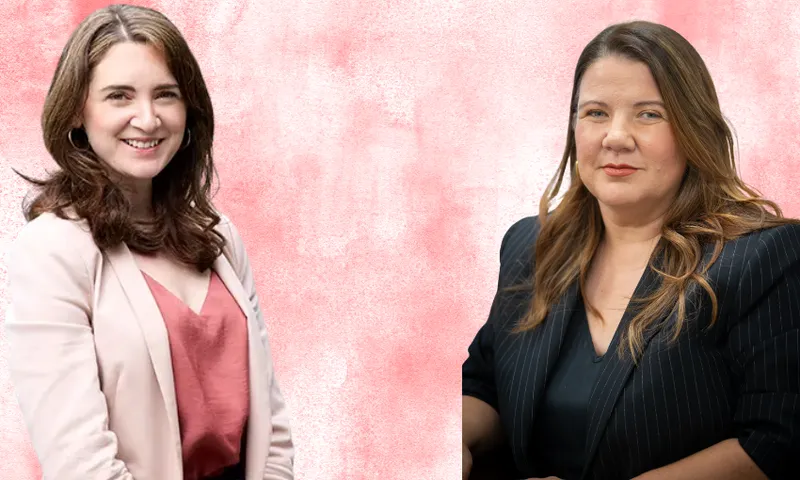
Georgina Stylianou, a director of government relations firm BRG, said Labour’s strategy “seems to be controlled visibility, or a minimum viable opposition. They’re doing enough to be credible but not so much that it risks the election becoming a referendum on them before voters finish judging the government”.
Neale Jones, the director of public affairs firm Capital and a former chief of staff to Jacinda Ardern and Andrew Little, said the party had so far aimed to avoid “culture wars and other distractions” and limit expensive or controversial policies. “They’ve rightly identified tax as a risk which is why they did a limited CGT and got it out early and have ruled out other parties’ tax policies,” he said.

Brigitte Morten, a director of law firm Franks Ogilvie and former National government advisor, compared it to the “small target” strategies of the UK Labour party under Keir Starmer and Australian Labor under Anthony Albanese. “They’ve been focusing on not attracting attention,” she said. “They’ve announced small policies like free GP visits but nothing to demonstrate what they’d do differently. They’ve done that deliberately to avoid scrutiny, and are relying on winning disaffected voters by default.”
However, she argued the MMP environment changed the equation. “This year, the minor parties are making up a much bigger party vote than ever before. The problem for Labour is the Opportunity party vote is mostly coming from Labour and the Greens. Hipkins needs to acknowledge there are other options out there, and right now he’s struggling to make that pitch.”
“We live in an attention economy,” Jones added. “The minor parties hog the headlines. Labour has to show it can be a credible government and not blow the money and be responsible, while also promising that people’s lives will change. That’s a difficult tension to manage.”
Jones and Stylianou said aspects of the strategy had served Labour well so far and the party was in a better position than would have been expected three years ago. “If you’d asked me in 2023 where Labour would be right now, I’d have guessed they’d be polling around 25% and on their third leader of the term,” Jones said.
“You’ve got to give credit to Hipkins,” Stylianou said. “He’s managed to keep the leadership without any rumours swirling. The media focus has been on National’s leadership not Labour’s. He’s lifted Labour from their abysmal results in 2023, and he’s running a pretty disciplined ship where the MPs all seem united”.
Morten acknowledged that the small target strategy had helped Labour to outperform its fundamentals. “People still connect Hipkins with a government that spent billions and didn’t deliver. The memory isn’t that old. They’re still the same group of people who did those things. It’s hard for the opposition to make an argument that they’re different from three years ago when it’s literally the same people.”
However, she felt the strategy had run its course. “I think they’re executing, but I think the strategy doesn’t work anymore. They’re getting the result that they need. They’re not really getting the hits on the government that you might see from a strong opposition.”
Stylianou believed there was an active debate among Labour insiders between those who want to continue the small target strategy and those who want to “go bigger, go bolder and roll out more policies”. She described Labour’s existing suite of policies, such as free GP visits and discounted public transport fares, as “tangible little droplets – they’re all good retail policies but they don’t have an overarching pitch.” Though, she added “if you’re someone who is genuinely battling, you can’t write them off”.
If Labour were to make a big splash in a particular policy area, she suggested it should be in the energy sector. “It has all the ingredients for Labour – cost of living, climate, national security, resilience. So I’m looking there and expecting something pretty bold and transformative.”
Morten also felt Labour needed to take some bigger swings policy-wise. “If they’re going to take soft National or Opportunity votes they’re going to have to be bolder with policies. They have to go out and say what they’re going to do and get people to actively vote for them. People have to want to vote for them”.
“I personally think there’s more opportunity for Labour to be economically populist,” Jones added. “I think there is a mood of genuine anger and frustration at the economic system we have. But Labour has to build a coalition of 50%. It needs to win people over who might have voted for National, they might be doing OK and are scared of change. So Labour always has to look both ways, which makes it far more constrained.”
Labour enters this election campaign with a considerably smaller war chest than National, which may have added to the perception that the party has been less visible – though Morten noted that visibility has become harder to gauge. “One of the joys of an algorithm-driven election campaign is that things are targeted to you. People say ‘I see nothing from National’ or ‘I see nothing from Labour’, but those ads just aren’t being targeted to them.”
Now that we have entered the regulated campaign period, Jones, Morten and Stylianou expected Labour – and especially Hipkins – to be more present on the airwaves. “The very nature of a campaign is that it becomes more presidential,” Jones said.
Stylianou thought the presidential-style campaign between the two major party leaders would suit Hipkins. “Politics is hearts and minds and that applies to whatever part of the spectrum you’re on. While people might like Luxon’s policies, he’s always had a problem on likability. Hipkins has that quality to him, and I expect we’ll see him leaning into that,” she said.
She thought it would be a mistake for Labour to try to recreate the same energetic campaign style that worked under Jacinda Ardern. “Hipkins trying to emulate that would be dumb,” she said. “I remember working on a Bill English campaign [in 2017] and it felt like they rolled out a John Key campaign and it wasn’t the right fit for him. It’s the same thing here – Hipkins is his own bloke and should do politics the right way for him, not try to do Jacindamania.”
However, Morten felt Labour needed to find some way to recapture the energy of the Ardern years in order to ensure its base, particularly Pasifika voters in south Auckland, showed up to the polls. “Jacinda Ardern had the ability to capture the imaginations and emotions of voters, and that’s one of the things Labour struggles with now. So that’s a major risk: can they turn out their people?”

Joel MacManus
Joel MacManus is a senior writer for The Spinoff. He previously worked at RNZ and Stuff, and began his career at Critic Te Ārohi. His writing explores the political, economic and cultural systems that underpin modern New Zealand. He won the 2025 Voyager Media Award for Best Columnist, Opinion or Critique.


