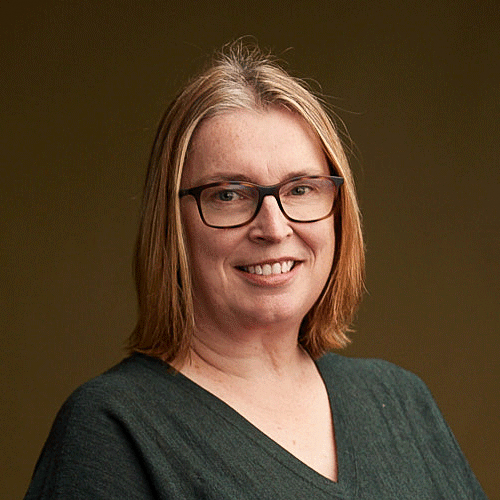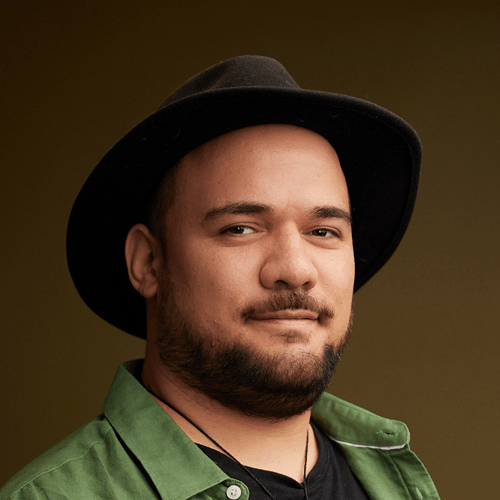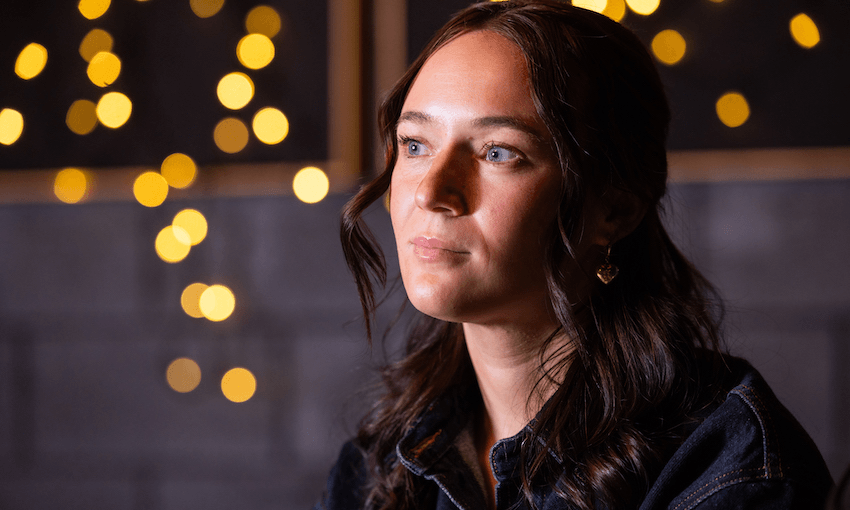



Sky’s three-part documentary examining the journey to criminalise stalking in Aotearoa is told through three women’s harrowing stories.
It’s the stuff of horror movies. Social media star Jazz Thornton opens her unread DM folder to find weeks of increasingly obsessive messages from a man in the Netherlands, culminating in him revealing he has flown all the way to New Zealand to meet her. Soon after, she sees a figure lurking on a bench near her house, and finds a paper bag of dutch treats with a hand-written note in the letterbox. “I don’t think I’ve ever felt fear like that in my life,” she says. “He found out where I live, and he found it so quickly.”
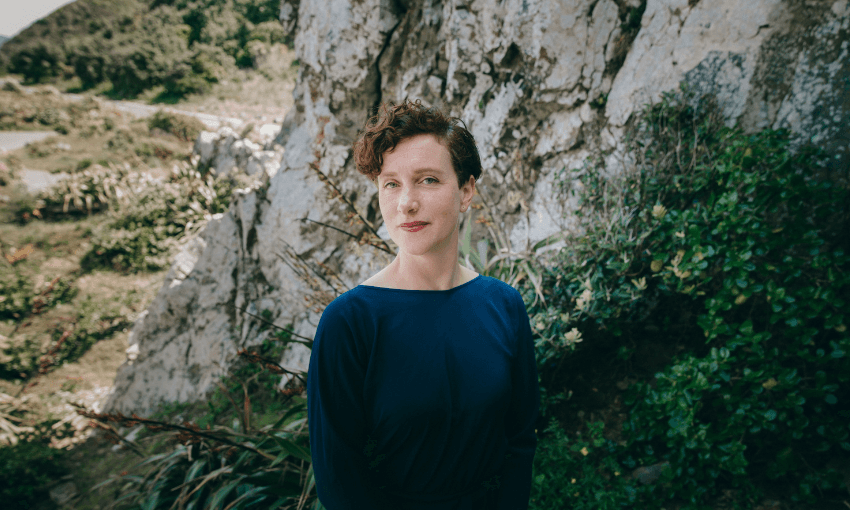
Thornton’s story is just one of a trifecta of living nightmares featured in Stalked, Sky’s new documentary series exploring stalking in Aotearoa, and the fight to criminalise it in a country in which it is “chronically underreported”. Also sharing their experiences are Zeni Gibson, who was subjected to a decade of increasingly violent and sexual threats by a rejected suitor, and Nortessa Montgomerie, whose attempts to leave a controlling relationship led to her being “hunted” across the country and eventually kidnapped from her own home.
All the content warnings in the world won’t prepare you for how sickening and terrifying these stories are, and yet more staggering still is the strength and clarity with which these women recall the worst chapters of their lives – some of which are yet to even come to a close. Directed by Justin Hawkes (Dark Tourist, Patrick Gower On Weed), the documentary centres the survivors and their experiences, scrapping an omniscient narrator and any additional interviews with police or experts to keep the story laser-focussed on their voices.
As they speak down the barrel of the camera from a spookily liminal kitchen set, the intimacy makes the moments of escalation all the more shocking – such as when Montgomerie reveals her ex-partner followed her across the country, or Gibson’s stalker makes threats against her family pet. It also brings the audience closer to the impact this harassment can have. “Every message I got over those years I put into an invisible bag on my back and it got heavier and heavier,” says Gibson, who suffered from anxiety, depression and body dysmorphia as a result of being stalked.
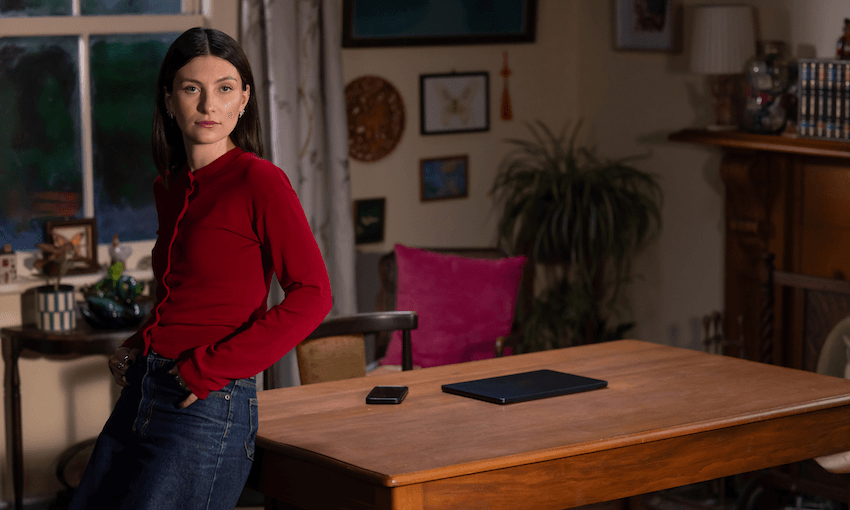
But perhaps the true horror of Stalked is when the women turn to the authorities for help and discover the law can’t protect them. The police show up an hour after Thornton calls 111, by which time her stalker has left, and inform her that “there’s nothing they can do until he does something” because stalking is not illegal. Instead, the police send forensic psychologist Nathan Brooks, who coaches Thornton on what to do if she ever encounters her stalker on the street (“If he approaches you, you should be thankful to see him”).
It’s extremely frustrating to see the onus once again put back on women to de-escalate and defend themselves against violence, while they must also spend so much time raising red flags and advocating for themselves in the system. Gibson forwards hundreds of concerning, threatening messages onto the police . While a criminal harassment order allows her a period of silence – “I felt like I could breathe again” – the violent messages eventually start returning through new avenues. “I felt like, until Greg killed me, the police weren’t interested,” she says.
For Montgomerie, that threat becomes all too real when, while on bail for a previous assault against her, her ex-partner tracks her down, kidnaps her from her childhood home on Great Barrier and violently assaults her in the bush for 38 hours.

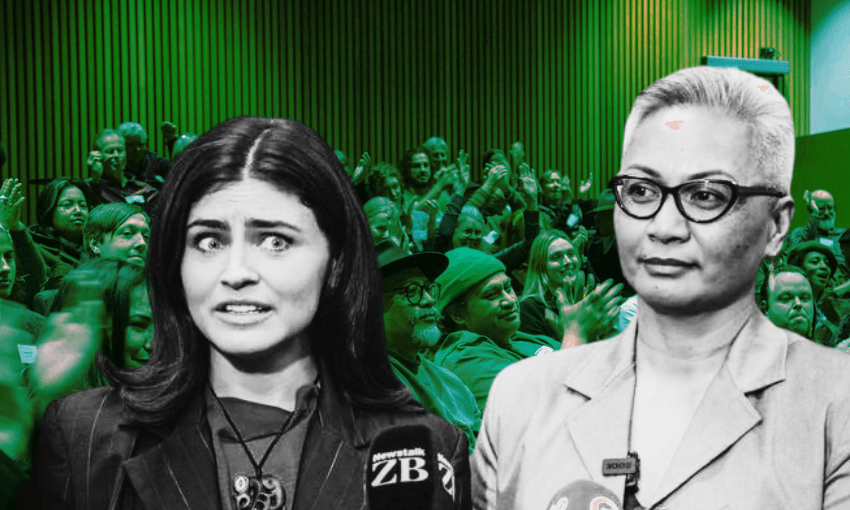
The harrowing stories at the centre of Stalked highlight the need for urgent change to our outdated stalking laws, and the documentary manages to capture the women fighting for that change in real time. After Gibson first shared her story publicly on The Spinoff in 2024, Green MP Tamatha Paul read out excerpts of her experience in parliament while advocating for a new stalking bill. By November 2025, parliament passed an amendment to the Crimes Act which makes stalking a criminal offence that is punishable for up to five years.
It is this enduring message of action and hope that shines through the darkness of Stalked. While the audience will quickly forget the names of the men who made their lives hell, the strength of Jazz Thornton, Zeni Gibson and Nortessa Montgomerie will connect with every woman who has ever been made to feel scared by a man. The scenes where the trio meet up in real life, laughing, crying and hugging while revisiting the most traumatic moments of their lives, are a testament to both their bravery, and the bravery of so many silent survivors.
“There’s a victory in it,” says Montgomerie. “He didn’t get to win.”
Click here to watch the complete series of Stalked on Neon