Louise Upston was advised not to invest in concerts. She did it anyway

Louise Upston’s Events Attraction Package has poured funds into bringing Robbie Williams and Bruno Mars to Aotearoa. (Photos: supplied. Design: The Spinoff)
What 300 pages of documents released under the Official Information Act tells us about the government’s $40 million concert fund.
On April 30, 2025, a briefing document was sent to Louise Upston, National’s tourism and hospitality minister. With nearly 50 bullet points spread over 12 pages, it detailed why global superstars like Taylor Swift and Olivia Rodrigo stopped coming to New Zealand to play shows. “The main reasons are costs against potential ticket sales,” the document said.
Yet that document, sent by the government’s economic arm MBIE and just released under the Official Information Act, recommends Upston should not step in to offer promoters help. “Officials recommend that concerts do not get funded by the government,” it says. “The sector is largely self-sufficient… it is unlikely the benefits will outweigh the costs…”
Fast forward and we all now know that Upston didn’t heed that advice. It has been a year since she announced an invite-only $40 million Events Attraction Package was open to concert promoters. This was designed to entice major artists back, drive economic activity and boost tourism. “This investment will allow New Zealand to compete with Australia to host those big acts,” Upston said last September. “We know big events deliver.”
But the package has attracted not only events but criticism. Critics say funded acts may have come anyway, and that the fund does nothing to promote Aotearoa artists. Labour’s arts spokesperson Rachel Boyack has slammed a “lack of transparency”. Rob Warner, a DJ and nightlife advocate, says, “This was a huge missed opportunity to do something good”.
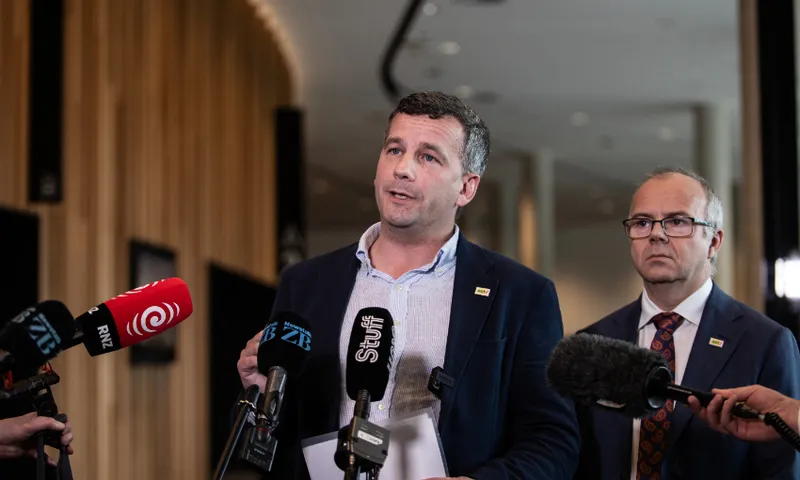
Even one of National’s coalition partners has been unimpressed, with Act’s Todd Stephenson calling it a “slush fund” and describing it on X as “politicians picking winners and spraying public money around in the hope of a headline”.
Then there was the Post Malone’s Big Ass Stadium Tour, which was funded then called off for unspecified reasons, as well as criticism of the five-person panel making funding decisions. It includes chair Dame Therese Walsh, and Steve Tew, Nick Becker, Terry Davies and Bailey Mackey. Most have sporting backgrounds and appear to have little concert, music or promotions experience, though MBIE says Davies is the “former CEO at Dunedin Venues and therefore has experience with concerts”.
The Spinoff can now reveal the scheme has a new problem: Deborah Jones, MBIE’s major events manager and the person who oversees the team making decisions about Upston’s fund, has quit her role. She only started in May.
Should the controversial fund have been launched at all, especially given we now know MBIE advised against it? Upston says yes, telling The Spinoff it is “normal that governments do not always take the same view as officials”. Nora Burghart, MBIE’s general manager tourism and hospitality, agrees. “Ministers… are responsible for making final decisions on investments,” she says. “That is a normal part of the decision-making process.”
Upston’s fund has now paid for seven major tours, including Linkin Park, System of a Down and Bruno Mars. More appear to be coming, and Upston has delighted in helping promote them. Her comments appear in press releases and she stars in social media videos championing economic benefits. “It’s fantastic to welcome a showstopper,” she said when her fund paid for two Robbie Williams performances.
But the fund, which wraps up at the end of this year but will fund shows happening in 2027, remains cloaked in secrecy. She and MBIE won’t say how much they’ve paid for any of those shows, citing commercial sensitivities. Upston says a report will be made available once all funded events have taken place, potentially in the second half of 2027.
As for the absence of any rules demanding local openers, Upston says she was “pleased” to see Auckland-based heavy metal singer Vana open for Linkin Park, and several on the line-up for Wellington’s funded Ultra festival.
That’s not good enough for Rob Warner. He is an outspoken critic of Upston’s fund. In an attempt to understand how it is operating, Warner filed multiple OIA requests with MBIE, then shared the results with The Spinoff. He received more than 300 pages back, much of it heavily redacted.
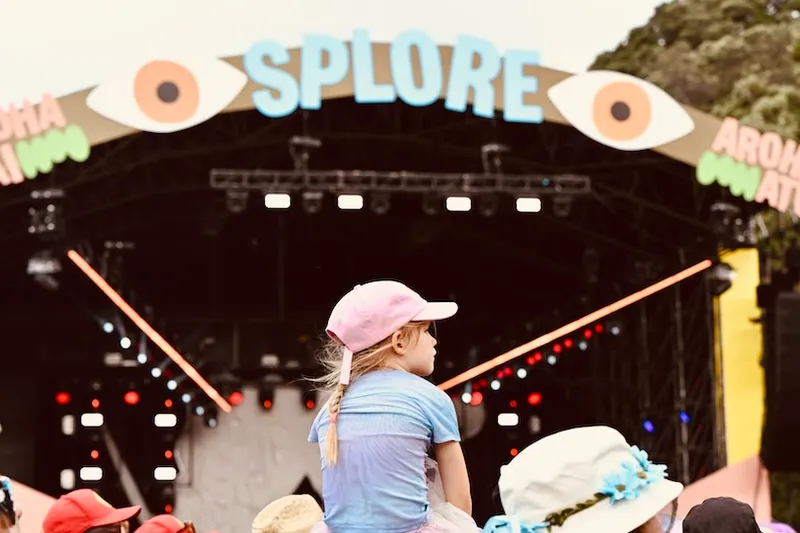
They reveal MBIE’s reasoning as to why it advised the government against investing in concerts, including a lack of “wider benefit opportunities” and “no international brand visibility”, though it said many countries, including Australia and Malaysia, offer concert funds. Instead, MBIE suggested funding local music festivals with a smaller, discrete, one-off fund. This is advice which Upston also seems to have ignored; late last year, the long-running music festival Splore called it quits, saying its $240,000 funding request had been denied.
The documents also show that ahead of the scheme’s launch, there were meetings between MBIE, Upston and New Zealand’s biggest touring companies, Live Nation NZ, TEG Live and Eccles Entertainment, which represents Frontier Touring.
Those touring companies all now report the scheme has been a success. “The fund has made a real difference,” says Live Nation NZ’s managing director Guy Ngata. Bruno Mars couldn’t play three Eden Park shows without it, he says. “A year in, it’s proving the model works, and we’d welcome a long-term and sustainable mechanism that delivers for more artists and fans in more places.”
TEG Live’s content partnerships manager, David Benge, tells The Spinoff he believes the fund has given New Zealand “a seat at the table” and he wants it to continue. Brent Eccles, of Eccles Entertainment and Frontier Touring, agrees. “Anyone who knows anything about freight or looks at the dollar [knows] there’s a problem here. Any importer would have it. It’s not unique to the music business.”
Warner, however, wants to see a fund that is open to all, with local acts, events and companies put front and centre. Giving 500 events $10,000 each every year would be “massively more beneficial to the ecosystem,” he says.
Labour’s Rachel Boyack also thinks any fund should be fair to New Zealand acts. “Artists are absolutely right in saying, ‘Hold on, how do these people get given money and… we don’t have a foot in the door?” she says.
Even Upston is refusing to commit to the fund. She calls it a “one-off” and says she has commissioned an independent review of the country’s approach to events, and the findings will inform her next steps. That, she says, “includes the development of a new national events strategy”.
Will that strategy keep promoters happy and invite more criticism from local artists, or channel funds to locals and risk the future of major international shows? “The daggers have been out,” admits Brent Eccles. “But which way do you want it?”

Chris Schulz
Chris Schulz is a contributing writer at The Spinoff. He's an award-winning journalist from Tāmaki Makaurau who has spent 25 years working for local publications. His specialties include live events, pop culture, infrastructure and Aotearoa music.


