How ‘Pō Atarau’ made it all the way to Ryan Gosling’s Project Hail Mary

The te reo Māori anthem soundtracks the climactic scene of Ryan Gosling’s new space blockbuster, but how did it make it to Hollywood? Alex Casey investigates.
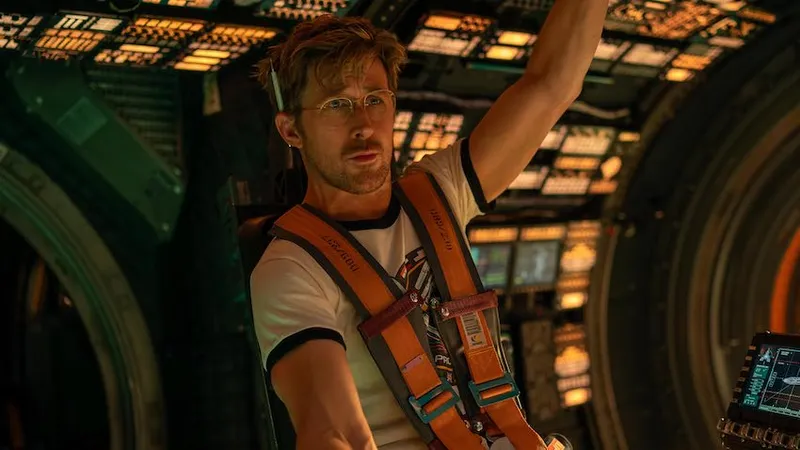
There are many memorable soundtrack moments in Ryan Gosling’s new space blockbuster Project Hail Mary, from his tight-lipped German supervisor unleashing a poignant karaoke version of Harry Styles’ ‘Sign of the Times’, to four noble space pods heading Earth-bound to ‘Two of Us’ by The Beatles. But for local audiences here in Aotearoa, no scene comes close to the emotional climax of the film, when a choir of women’s voices starts to ring through outer space with a very familiar melody and lyrics: “Pō atarau / E moea iho nei”.
The song is ‘Pō Atarau’, a te reo Māori wartime anthem penned by composer Emira Maewa Kaihau in 1915. Inspired by Clement Scott’s 1913 ‘Swiss Cradle Song’, Kaihau’s version was used as a farewell to soldiers fighting in the first world war (Kaihau also wrote the lyrics for ‘Now is the Hour,’ which became intertwined with ‘Pō Atarau’ in 1935). Over the 20th century, the song would come to be associated with a range of farewells, including funerals, leaving parties and memorials, and in 2024 it was included in The Aotearoa Songbook, celebrating the legacy of waiata Māori.
‘Pō Atarau’ also became a favourite for choirs across Aotearoa, which is how it came to eventually be recorded by Keith and Nancy Southern for Viking Seven Seas in Wellington. In the late 50s and early 60s, Viking owner Murdoch Riley developed a keen interest in recording Tahitian, Samoan, Fijian and Māori music, which musician and owner of music publisher Songbroker Jan Hellriegel describes as “groundbreaking” for that time in New Zealand. “Words cannot express how important that catalogue is,” she explains. “We are so lucky to still have those recordings.”
Among this extensive Viking catalogue is the LP Turakina Sings, recorded with the Turakina Māori Girls Choir in 1976. According to a brochure from the school, students attending the private Presbyterian boarding school came from “Nauru, the Tokelaus, New Hebrides, The Chathams, from Gisborne, Dargaville, The Haast – and everywhere in between”. The tracklist features ‘Pokarekare Ana’, ‘Whakaaria Mai’ and of course ‘Pō Atarau’. “It’s the most beautiful song and the most beautiful recording,” says Hellriegel, “It just has so much heart and soul and magic”.
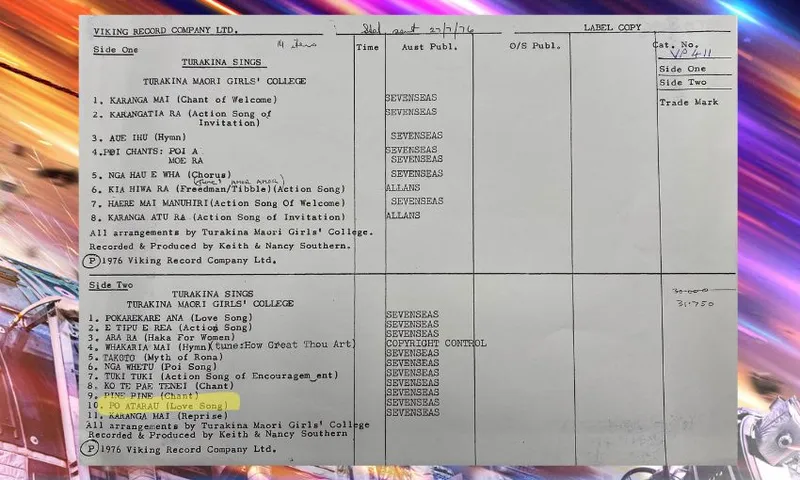
It is that same magic that would resonate nearly 50 years later, on the other side of the world in Los Angeles, when Project Hail Mary music supervisor Kier Lehman was tasked with creating a “mixtape from Earth” for the blockbuster space movie soundtrack, one that would incorporate music from all around the globe. “While searching for goodbye songs from different cultures, I came across ‘Pō Atarau’ and I knew the song was special because of how it conveyed the sentiment of saying goodbye, even if you didn’t understand the lyrics,” he tells The Spinoff.
Lehman listened to many different recordings of the song, and found that the version sung by the Turakina Māori Girls’ Choir in 1976 “fit perfectly with the tone and pace of the scene” as well as the “vintage quality” of most of the soundtrack. “When I played it for the directors, they got goosebumps and were instantly sold,” he says. “It became a standout moment we kept referring back to throughout the process as the perfect example of what we wanted to achieve with the soundtrack, highlighting the richness of global music and the shared human experience.”
Back in Aotearoa, Hellriegel describes being “blown away” to receive the request for ‘Pō Atarau’ to be licensed to Hollywood. “I’ve been around the business for a long time, and I still get excited when this sort of thing happens,” she says. While she has brokered deals including The Clean on UK television and The Nukes in an Avatar promotion, she says ‘Pō Atarau’ holds a unique place in our culture. “My parents used to sing that song, it’s been in the fabric of our communities for years,” she says. “It was really neat to think about a whole new audience finding it.”
She knew it would be special, but Hellriegel was not prepared for the public response. “I knew it was coming, but it’s really been something else,” she says. “There’s a sense that no one’s expecting it, and so they hear it, they look at each other, and slowly realise there’s a familiarity there that is close to the beating heart of New Zealand.” While she hasn’t even managed to see Project Hail Mary yet, she’s been devouring the social media feedback. “These comments are all talking about their hairs standing up on end, meanwhile my hairs are standing up on end just reading them.”
While people continue to get goosebumps hearing ‘Pō Atarau’ in cinemas across the country, and indeed the world, Hellriegel hopes it also serves to illustrate the power of our creative industries on a global stage. “These industries are very valuable, both culturally and in terms of what they can achieve with our economy,” she says. “I am constantly exporting our creative copyright all around the world, which is great for all of us, but people don’t seem to understand the opportunity in the same way because it’s not butter or meat.”
The moment is also a reminder of the importance of preserving our own back catalogue. “One of the other biggest things for me is making sure that we protect all of our music like this, and that we continue to make it available for everyone,” Hellriegel says. “It’s exciting that local musicians can be reminded that there are still amazing opportunities out there in music. You never know when one of your songs is going to be picked up for a TV show or film, but I’ve learned that great pieces of art have a habit of finding the perfect place to be.”
“And this? This was just meant to be.”
Project Hail Mary is in cinemas nationwide

Alex Casey
Alex Casey is a senior writer at The Spinoff with over a decade of experience writing about popular culture and social issues in Aotearoa. She lives in Ōtautahi and likes watching reality TV and walking the dog, occasionally at the same time.


